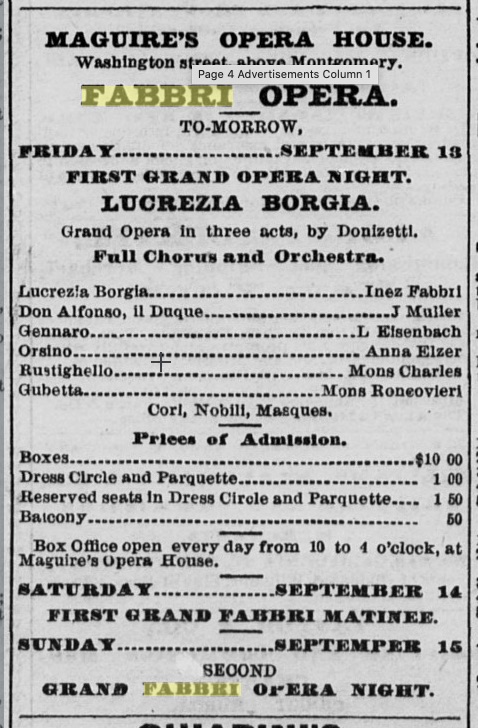
In the later nineteenth century, if the words 'an American soprano' appeared, in European music-press paragraphs, you knew what, not always (vide Durand, Escott et al), but most often, it meant. The Continental music press knew what it and they meant whe they wrote it, anyhow. A lass with a light, often extravagantly high, mobile, voice, but, all too often, little or nothing more. Scores of such young ladies passed through the schoolrooms of such well-publicised teacher-agents as Mathilde Marchesi, a decidedly reduced proportion of them got to the operatic stage, a few made some sort of career ... most, finally realising that height was not everything, went home disappointed and poorer, to give their G in alt to hometown concerts. But not all. The cream, as it does, did float to the top. From the days of the earliest, outstanding New York coloratura soprano, Laura Harris, onwards ...

Which brings us, decades on, to the tale of Evangeline Florence Houghton. A part of the cream. Who did not fall into the hands of the Italian and French 'star-makers', who did not sing Amina at Rimini, Lucia at Valetta, and then go back to Massachussetts ... but who made a fine, long career doing what she, as her excellent (American) teacher had done, did so well. A in alt in her baggage. On the concert platform.
Here's my extract of her grand career ...
.
FLORENCE, Evangeline [HOUGHTON, Florence [Ev]angeline] (b Cambridge, Mass 12 December 1867; d Kensington, London 1 November 1928)
Stratospheric American soprano who made her career and life in Britain.
‘Miss Florence’ was born in Massachusetts. Her birth was registered in Cambridge, she always said she was born in Cambridge, yet the family seems to have lived in Charlestown, where they can be seen in the 1870 census. Father Henry, from West Gardiner, Maine, working as a cooper, mother Julia (née Rowell, m 11 December 1858) and their surviving children Ella, Frank, Emma, Angeline, and twins, Albert and Alfred. Julia would manage one last child before her death, aged 30, on 17 November 1871.
‘Evangeline’, of course, being listed in the 1870 census, obviously wasn’t born in 1873 or 1874, as most reference books tell us. She was born in 1867, and we don’t know what her forenames officially were, as she was registered just as a ‘female child’. But she’s Angeline in the 1870 census, and Florence in 1880. By 1880, Henry is listed as a pork-cutter and he has a second wife, Dora R née Jones (m 13 August 1873) …
And the music? Well, we are told in a biographical note that (a) she studied with the fine Boston soprano, Edna Hall, and that (b) she made a debut as Henrietta in Martha at the age of 18, when ‘she created a sensation by her singing of ‘The Last Rose of Summer’ an octave higher than originally written’. Well, you would think that something as vulgarly catchpenny as that would surely have made the press, but I haven’t yet found it. Of course, ‘aged 18’ could be anywhere between 1886 and 1892. We are also told that she was ‘a Worcester girl’ and sang in the local church. I can’t find that either. But I do spot her, at Wellesley College (14 July 1891), Miss Evangeline Houghton ‘of Worcester, singing’ … oh no! Alabieff’s ‘Nightingale’ already, Bachmann’s ‘Everywhere’, and Ambroise Thomas’s … what?

(4) Finally, the Worcester Daily Spy of 22 November 1890, has an ad for ‘Miss Evangeline Houghton, Assisted by Her Three Brothers, Vocalists, and Orchestra of Six Pieces’ at Piedmont Church, Tuesday, November 23. Reserved Seats 50c. Admission 25c.’ Her brothers! Frank the farmer? Albert the plumber? Charley the Insurance Man? Excellent.

So, was she to be yet another American soprano, with more height than quality, who would find that, for Europe, top Z above Q, alone, wasn’t enough? No. Because Miss Florence had other attributes. To add to the lightweight vocal gymnastics, she had a sweet and appealing tone of voice and pleasing performance talents, and it was these, rather than her A in altissimo, that was to bring her more than a decade of engagements and success on the world’s concert platforms.
She followed up her ‘debut’ swiftly, with appearance in a number of second-tier London concerts, and then headed to the provinces. Here, there was no pudeur in the advertising: Manchester and Glasgow billed her as ‘the sensational American soprano’, Chester more sagely as ‘the new high soprano’, and, somewhere along the lines, someone advertised her as ‘the Eiffel soprano’ (not, pace Sterling Mackinlay, ‘the Eiffel Tower soprano’, and anyway the embarrasing tag only lasted one campaign). Her ‘birdlike melodies were much enjoyed’. In September she sang at the Eisteddfod.
She was now taking lessons from Georg Henschel, so it was no surprise to see her featured at his London Symphony Concerts, and in other Henschel affairs, for a number of years, but there was an even greater opportunity coming. On 7 December 1892, she appeared, for what I think was the first time, at the Boosey Ballad Concerts. She would sing at many, many more of these. Even if they were no longer in their heyday, the Boosey programmes were still a feature of the London concert scene: and, by the turn of the century, Miss Florence would be the soprano queen of the series. Mind you, like others, she did not stick to what could, even by a stretch of the imagination, be called ‘ballads’. I see her singing Eckert’s frilly ‘Echo Song’ and David’s extravagant Perle du Brésil aria ‘La Chanson de Mysoli’. Even Henschel’s successful new ‘Spring’ (‘charming interpretation’) was scarcely a ballad. But they would come.


On 1 July 1893 she sang on Llandudno pier, and a few days later sailed for America. But it was only an out-of-season visit. She was soon back in Britain giving the north her ‘Russian Nightingale’ with the A in alt, ‘Spring’, Handel’s Alessandro aria and a song, ‘Butterflies’, by the pianist-songwriter Felix Corbett. She would revisit Middlesborough for Corbett annually, and promoted several of his songs. (‘Her style is exquisite and her voice of great clearness and purity’).
She sang with the Scottish Orchestra Company under Henschel, at a number of northern ‘ballad concerts’ (‘Spring’, the Viardot-Chopin ‘Aime-moi’, Couplets de Mysoli), and was back in town for the Boosey concerts, and a host of other Queen’s Hall concerts, in the early months of 1894. She also put in an appearance at the Crystal Palace (‘Hirt am Felsen’, Mireille waltz ‘Non muta il core in me’), before returning north to sing, less conventionally, Goring Thomas’s The Sun Worshippers and Walthew’s The Pied Piper of Hamelin with Ben Davies at Sunderland, The Spectre Bride at Middlesborough and give ‘Butterflies’, ‘Spring’ the Mireille or the Perle du Brésil couplets, from Cardiff to Llandudno Pier.
In September, she took a part in the Three Choirs Festival at Hereford, singing the first performance of Bridge’s The Cradle of Christ with Charles Santley (too low...'), the high-set role of the Angel in the Christmas Oratorio, and joining Anna Williams and Edward Lloyd in the Lobgesang.
Then she popped off to America again. With a purpose. On 17 October 1894, Miss Houghton married America-based Scotsman Alexander Crear, ‘West Africa merchant’, in Somerville.

Back in Britain, in November, she took up the concert rounds again. If the Boosey concerts and the annual series of northern concerts staged by Percy Harrison made up, as they would for much of her career, the bases of her season, there was some variety in performances such as Felix Mottl’s Wagnerian concert, in which she joined Minna Fischer and Agnes Janson as a Rhinemaiden, alongside Marie Brema’s Brünnhilde. At the concerts, she featured Madame Gassier’s famous Venzano Waltz, Solveig’s Song, Cowen’s ‘Love lies asleep in the Rose’, the Dinorah Shadow Song, and, still and always, her Mireille and Perle du Brésil as well as the hardy ‘Butterflies’. A new song, ‘The Nightingale’s Courtship’, fashioned for her by Corbett didn’t catch on.

Hull gasped ‘the gifted lady’s voice is of a range rarely heard in a concert room’, ‘exceptional compass and light and flexible in quality’ nodded Birmingham when she gave Goring Thomas’s The Swan and the Skylark.
In 1895, Evangeline made a scheduled 30-concert trip to Australia, under the management of C J
Back in London, it was into the Boosey concerts and the Harrison concerts – Cowen’s ‘The Swallows’, Delibes’s ‘Les Filles de Cadix’, Bishop’s florid ‘Lo, here the Gentle Lark’, an ancient Pastorella (‘Meco verrai su quella’ ‘arranged by A L’) from the 1744 opera, Rosalinda, by Francesco Maria Veracini, which would become a frequently-sung regular -- Henschel’s London Symphony concerts (Choral Symphony), a visit with Hambourg to the Crystal Palace …
In September, she featured in the Queen’s Hall Promenade Concerts with the most familiar of her standard coloratura arias and songs, and she made a venture into oratorio with The Golden Legend at Crystal Palace and The Creation at the Queen’s Hall. She ‘sang very sweetly’ but was soon back on the concert platform with ‘The Swallows’, her Veracini, and a new Corbett ballad, ‘Blossoms’.

However, another new piece was to have a much longer life than the not unsuccessful ‘Blossoms’. At the Monday Pops of 14 December 1896, a new song cycle for four voices was given its first public performance. Liza Lehmann’s Omar Khayyam cycle In a Persian Garden had been performed in private, with Albani in the soprano role; for the Pops, it was Evangeline who was teamed with Marian MacKenzie, Ben Davies and Thomas Meux. The men had the gems of the set, but the whole cycle was a great success. Davies and she were also the soloists for another novelty, Erskine Allon’s The Oak of Geismar, mounted the following month by the Highbury Philharmonic Society, but not destined for a future.
Well, it wasn’t a year. More like six months; from April to September. And I have not found any indication of with whom she is supposed to have studied in Europe. Suffice it that, in October 1897, she was back, engaged for a small appearance behind Albani and Brema at the Birmingham Festival (King Arthur), and for another round of Harrison concerts.
On 4 February 1898, Evangeline Florence mounted a concert of her own at St James’s Hall. It was not a concert of the old stuffed-full-o’-stars Benefit type, but a recital, in which she was joined by Mark Hambourg. Neither was it a tiresome salvo of As in alt. She sang Mozart, Brahms, ‘Mein Herz ich will dich Fragen’, ‘Caro selve’, ‘Fairest Isle’ (King Arthur), ‘Orpheus with his lute’, ‘Fleur des alpes’, Godard’s ‘Reveillez-vous’. And then it was back to the Harrison circuit, until the Queen’s Hall called again. On 26 February she sang in the London showing of Michele Esposito’s Irish cantata Deirdre.
During the year she sang her usual round of Boosey concerts – with material from the inexhaustible Perle du Brésil to Liza Lehmann’s ‘You and I’ and ‘The Minuet’. She had, apparently, now become part of the Lehmann music-factory: and was taking lessons from Mrs Amelia Lehmann. She sang at the opening of London’s latest concert room, the Salle Erard, ‘sweetly warbled’ Cowen’s music at his concert, visited Brighton for Wilhelm Kuhe, trekked to Ireland for a little more oratorio, and north for more Harrison concerts. Dundee sighed ‘her voice retains its wonderful flute-like clearness and purity of tone and [her] range is as marvellous as ever… [she] sang with even more charm of manner and grace and expressiveness of style than when we last heard her’.

In late 1898 and the early part of 1899, she gave a series of concerts on the Continent, under the management of Alexander Rosé, with pianist Carrie Townshend (Vienna, Graz, Lemberg, Cracow, Brünn, Budapest), visited Paris to sing at Jean ten Havé’s concert (21 April Handel, Henschel and … Veracini) and an Orphanage concert, with the Clara Butts (2 May) and many Baroness patronesses, and in September returned to Worcester, Mass, to sing The Creation in the city’s 42nd Music Festival. In between times, Boosey and Harrison continued to call upon her frequently and she delivered her Venzano, her Veracini, her Eckert, her Viardot ‘without her exceptionally high notes’ as well as such ditties as Alicia Adelaide Needham’s ‘The Fairy’s Lullaby’ and ‘Little Orphant Annie’, to audiences round the country. Maybe, in fact, the exceptionally high notes were gone because the newest American high Q above Z exponent – Miss Ellen Beach Yaw – was in town, purveying her Q sharp.

However, the most interesting engagement of her professional year of 1899 was that for the North Staffordshire Musical Festival in Hanley. Evangeline, Herbert Grover and Andrew Black gave Paradise and the Peri, and, on 26 October, premiered Samuel Coleridge-Taylor’s The Death of Minnehaha, the second leg of his Hiawatha trilogy. Although nowhere near as successful as the first, it nevertheless won repeat performances, and Evangeline was called upon to repeat her ‘creation’.
Through 1900, she interleaved the usual concert engagements with performances of The Light of the World, Mackenzie’s The Dream of Jubal, The Creation and Hiawatha and a second engagement at the Birmingham Festival behind Albani, Esther Palliser and Marie Brema. Her share of the Festival’s soprano work included Parry’s De Profundis, Byrd’s Mass and the Brahms Requiem with David Bispham. Albani sang Hiawatha. Following the Festival, she took part in the Farewell Tour of the great tenor, Edward Lloyd. She sang the ‘Voce di primavera’ of Strauss, Mrs Needham’s ditties, the inepuisable Venzano waltz, and Leicester voted ‘no more beautiful soprano ever charmed the ears of a Leicester audience’.
The high notes had, incidentally, Miss Yaw or no Miss Yaw, not disappeared wholly from Evangeline’s repertoire. She revived the brilliant Arditi Waltz, ‘L’Ardita’ (‘with much lightness and grace’) at the Boosey concerts, interpolated an F in alt into ‘Lo, Here the Gentle Lark’, ended her Mireille on an F sharp in alt ... and when, in 1902, she went with Antoinette Sterling on that lady’s Farewell tour, she brought out La Perle du Brésil, yet again.
Her work and travel-loads had now, however, largely decreased. She gave the odd Messiah and even an Elijah, she turned out in concert. or in a work such as Cowen’s The Sleeping Beauty or Hiawatha, and she made up a party presenting Lane Wilson’s song cycle Flora’s Holiday, and then his less successful Dorothy’s Wedding Day. And she had time out with peritonitis.
But she was still visible, although the notices were not quite what they had been. When she sang at a Halle concert, giving ‘Zeffiretti lusinghieri’ and an aria from Graun’s Passionmusik, the Manchester critic wrote: ‘she has a voice of no great volume and of a somewhat colourless character, but the possession of a very considerable range, especially upwards, and a facile vocalisation enable her to give prettily effective rendering …’

Her husband died in 1921, and she in 1928, but she was still to be heard on the airwaves. And, to this day, on you-tube, there are her rusty recordings of ‘Lo, here the gentle lark’ and the Couplets de Mysoli , which seems to exist solely for their high notes. But I think, for quite a while there, she was more than just a something-or-other-in-alt.

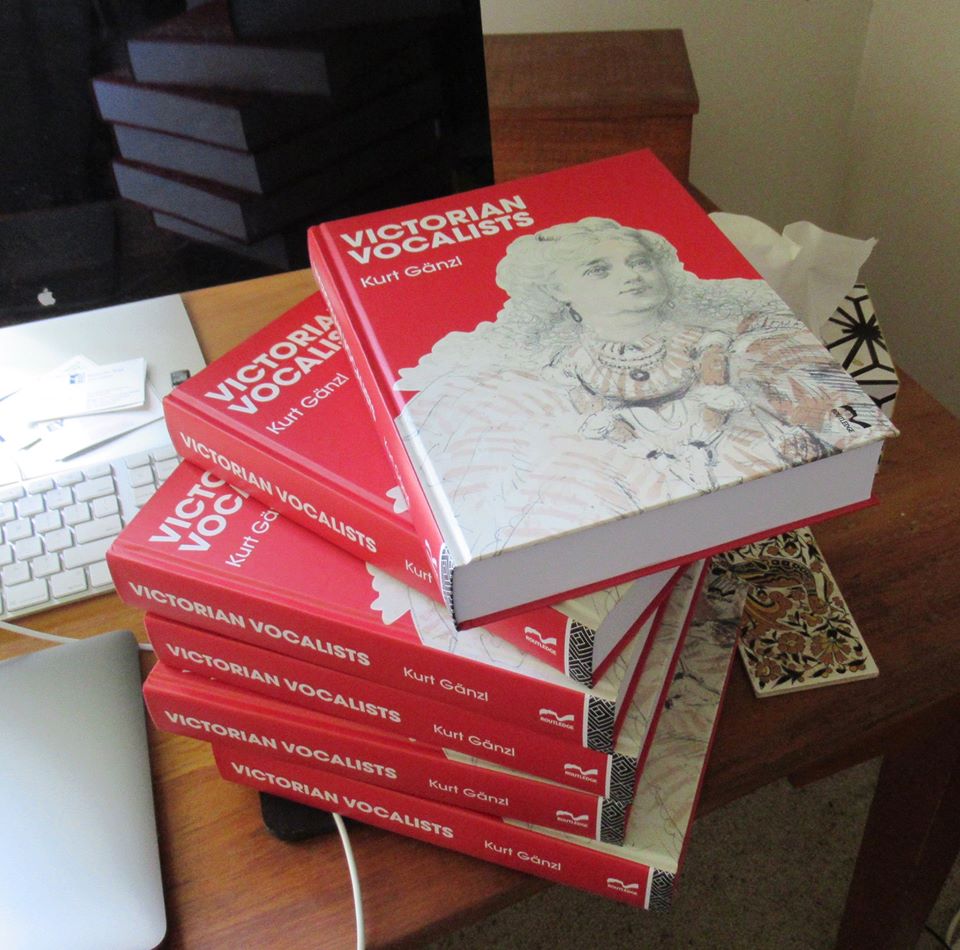
Nota bene: full biographies of Laura Harris, Marie-Louise Durand and Lucy Escott, America's greatest sopranos of the nineteeth century, are included in my book, Victorian Vocalists (2017). Miss Busk didn't make the cut, evidently, but I have her article in my files, should anyone be interested.

FLORENCE, Evangeline [HOUGHTON, Florence [Ev]angeline] (b Cambridge, Mass 12 December 1867; d Kensington, London 1 November 1928)
Stratospheric American soprano who made her career and life in Britain.
‘Miss Florence’ was born in Massachusetts. Her birth was registered in Cambridge, she always said she was born in Cambridge, yet the family seems to have lived in Charlestown, where they can be seen in the 1870 census. Father Henry, from West Gardiner, Maine, working as a cooper, mother Julia (née Rowell, m 11 December 1858) and their surviving children Ella, Frank, Emma, Angeline, and twins, Albert and Alfred. Julia would manage one last child before her death, aged 30, on 17 November 1871.
‘Evangeline’, of course, being listed in the 1870 census, obviously wasn’t born in 1873 or 1874, as most reference books tell us. She was born in 1867, and we don’t know what her forenames officially were, as she was registered just as a ‘female child’. But she’s Angeline in the 1870 census, and Florence in 1880. By 1880, Henry is listed as a pork-cutter and he has a second wife, Dora R née Jones (m 13 August 1873) …
And the music? Well, we are told in a biographical note that (a) she studied with the fine Boston soprano, Edna Hall, and that (b) she made a debut as Henrietta in Martha at the age of 18, when ‘she created a sensation by her singing of ‘The Last Rose of Summer’ an octave higher than originally written’. Well, you would think that something as vulgarly catchpenny as that would surely have made the press, but I haven’t yet found it. Of course, ‘aged 18’ could be anywhere between 1886 and 1892. We are also told that she was ‘a Worcester girl’ and sang in the local church. I can’t find that either. But I do spot her, at Wellesley College (14 July 1891), Miss Evangeline Houghton ‘of Worcester, singing’ … oh no! Alabieff’s ‘Nightingale’ already, Bachmann’s ‘Everywhere’, and Ambroise Thomas’s … what?
 |
| Imgene Busk from Baltimore had been an earlier dancer on the leger-lines |
Parentheses. At this stage, I called for help. My Californian friend, Betsy, waded through the Boston and Worcester press archives (not available to foreigners) and she not only came up with all the answers, but also nailed the odd inaccuracy.
(1) The Boston Herald of 18 March 1888 says that ‘La Sonnambula is to be given at Music Hall on 27th under the direction of Charles R Adams with Rose Stewart, Evangeline Houghton, Carita Benedict, Charles R Adams, Fred Marston, Harry Young, Dr George R Clark.’ (As Lisa, I imagine)
Then, (2) a brief clip in the Boston Journal of 15 March 1889 tells us that Martha was presented in Odd Fellows' Hall at Winter Hill, Somerville, last evening, complimentary to Evangeline Houghton. She was Lady Harriet ‘and was well supported.’ Hm. Scarcely a ‘debut’. And, not unexpectedly, twenty-one, not eighteen.
(3) The Boston Herald, 16 November 1890, said she was to take part in the 12th annual festival of the South Eastern Massachusetts Musical Association, directed by Carl Zerrahn. The sopranos also included Clementine de Vere.
(1) The Boston Herald of 18 March 1888 says that ‘La Sonnambula is to be given at Music Hall on 27th under the direction of Charles R Adams with Rose Stewart, Evangeline Houghton, Carita Benedict, Charles R Adams, Fred Marston, Harry Young, Dr George R Clark.’ (As Lisa, I imagine)
Then, (2) a brief clip in the Boston Journal of 15 March 1889 tells us that Martha was presented in Odd Fellows' Hall at Winter Hill, Somerville, last evening, complimentary to Evangeline Houghton. She was Lady Harriet ‘and was well supported.’ Hm. Scarcely a ‘debut’. And, not unexpectedly, twenty-one, not eighteen.
(3) The Boston Herald, 16 November 1890, said she was to take part in the 12th annual festival of the South Eastern Massachusetts Musical Association, directed by Carl Zerrahn. The sopranos also included Clementine de Vere.

(4) Finally, the Worcester Daily Spy of 22 November 1890, has an ad for ‘Miss Evangeline Houghton, Assisted by Her Three Brothers, Vocalists, and Orchestra of Six Pieces’ at Piedmont Church, Tuesday, November 23. Reserved Seats 50c. Admission 25c.’ Her brothers! Frank the farmer? Albert the plumber? Charley the Insurance Man? Excellent.
Evangeline, as we obviously have to call her, made her London concert debut on 11 May 1892, at a concert given by Marguerite Hall, the singing daughter of Edna. Apparently there had been some advance publicity for her high notes, for the press reacted, without total enthusiasm: ‘the reports concerning the phenomenal compass of her voice proved to be in no way exaggerated. Whether this young lady’s highest notes are absolutely pleasant to listen to is another matter. For our own part, we prefer her singing when she remains within the limits of reasonable compass. All the rest savours too much of claptrap. Her voce is very pleasant in quality and she possesses great ease of execution’. ‘In the cadenza of Alabieff’s Nightingale Song, she proved that she possessed a voice of extreme compass. Otherwise there is nothing remarkable about her voice’.

So, was she to be yet another American soprano, with more height than quality, who would find that, for Europe, top Z above Q, alone, wasn’t enough? No. Because Miss Florence had other attributes. To add to the lightweight vocal gymnastics, she had a sweet and appealing tone of voice and pleasing performance talents, and it was these, rather than her A in altissimo, that was to bring her more than a decade of engagements and success on the world’s concert platforms.
She followed up her ‘debut’ swiftly, with appearance in a number of second-tier London concerts, and then headed to the provinces. Here, there was no pudeur in the advertising: Manchester and Glasgow billed her as ‘the sensational American soprano’, Chester more sagely as ‘the new high soprano’, and, somewhere along the lines, someone advertised her as ‘the Eiffel soprano’ (not, pace Sterling Mackinlay, ‘the Eiffel Tower soprano’, and anyway the embarrasing tag only lasted one campaign). Her ‘birdlike melodies were much enjoyed’. In September she sang at the Eisteddfod.
She was now taking lessons from Georg Henschel, so it was no surprise to see her featured at his London Symphony Concerts, and in other Henschel affairs, for a number of years, but there was an even greater opportunity coming. On 7 December 1892, she appeared, for what I think was the first time, at the Boosey Ballad Concerts. She would sing at many, many more of these. Even if they were no longer in their heyday, the Boosey programmes were still a feature of the London concert scene: and, by the turn of the century, Miss Florence would be the soprano queen of the series. Mind you, like others, she did not stick to what could, even by a stretch of the imagination, be called ‘ballads’. I see her singing Eckert’s frilly ‘Echo Song’ and David’s extravagant Perle du Brésil aria ‘La Chanson de Mysoli’. Even Henschel’s successful new ‘Spring’ (‘charming interpretation’) was scarcely a ballad. But they would come.

‘[She] appeared in the first production of Parry's Job, given by the Highbury Society’ says the biggest press biog. No, wrong again. Job had been premiered at the Gloucester Festival, the Highbury Philharmonic Society merely gave it a London suburban showing, on 16 January 1893. The little part of the shepherd had been cast with a boy soprano, but the laddie fell sick. So, Evangeline sight-read his music.
She sang at the Boosey concerts, at the Albert Hall, at Lane’s Manchester concerts (‘the Eiffel note soprano’) with the most bat-squeaky bit of her repertoire, with the Liverpool Philharmonic Society, and at Chester in Bridge’s cantata, Rudel. She sang the Choral Symphony for Henschel, and at his Wagner concert at St James’s Hall (14 March 1893). I’m not sure if this is the concert where the biog asserts that she sang Elsa’s Dream, but anyhow she didn’t. She sang a piece of the Elsa/Ortrud duet with Marie Brema. Not bad, already. ‘… a voice of wonderful sweetness and purity as well as great range and power’ wrote one scribe after another concert. Power? Really?

On 1 July 1893 she sang on Llandudno pier, and a few days later sailed for America. But it was only an out-of-season visit. She was soon back in Britain giving the north her ‘Russian Nightingale’ with the A in alt, ‘Spring’, Handel’s Alessandro aria and a song, ‘Butterflies’, by the pianist-songwriter Felix Corbett. She would revisit Middlesborough for Corbett annually, and promoted several of his songs. (‘Her style is exquisite and her voice of great clearness and purity’).
She sang with the Scottish Orchestra Company under Henschel, at a number of northern ‘ballad concerts’ (‘Spring’, the Viardot-Chopin ‘Aime-moi’, Couplets de Mysoli), and was back in town for the Boosey concerts, and a host of other Queen’s Hall concerts, in the early months of 1894. She also put in an appearance at the Crystal Palace (‘Hirt am Felsen’, Mireille waltz ‘Non muta il core in me’), before returning north to sing, less conventionally, Goring Thomas’s The Sun Worshippers and Walthew’s The Pied Piper of Hamelin with Ben Davies at Sunderland, The Spectre Bride at Middlesborough and give ‘Butterflies’, ‘Spring’ the Mireille or the Perle du Brésil couplets, from Cardiff to Llandudno Pier.
In September, she took a part in the Three Choirs Festival at Hereford, singing the first performance of Bridge’s The Cradle of Christ with Charles Santley (too low...'), the high-set role of the Angel in the Christmas Oratorio, and joining Anna Williams and Edward Lloyd in the Lobgesang.
Then she popped off to America again. With a purpose. On 17 October 1894, Miss Houghton married America-based Scotsman Alexander Crear, ‘West Africa merchant’, in Somerville.

Back in Britain, in November, she took up the concert rounds again. If the Boosey concerts and the annual series of northern concerts staged by Percy Harrison made up, as they would for much of her career, the bases of her season, there was some variety in performances such as Felix Mottl’s Wagnerian concert, in which she joined Minna Fischer and Agnes Janson as a Rhinemaiden, alongside Marie Brema’s Brünnhilde. At the concerts, she featured Madame Gassier’s famous Venzano Waltz, Solveig’s Song, Cowen’s ‘Love lies asleep in the Rose’, the Dinorah Shadow Song, and, still and always, her Mireille and Perle du Brésil as well as the hardy ‘Butterflies’. A new song, ‘The Nightingale’s Courtship’, fashioned for her by Corbett didn’t catch on.

Hull gasped ‘the gifted lady’s voice is of a range rarely heard in a concert room’, ‘exceptional compass and light and flexible in quality’ nodded Birmingham when she gave Goring Thomas’s The Swan and the Skylark.
In 1895, Evangeline made a scheduled 30-concert trip to Australia, under the management of C J
Stevens and P A Howells of Adelaide, in a party with contralto Lily Moody and pianist Mark Hambourg. They opened at Adelaide, 8 August, and over the following weeks progressed to Melbourne and Sydney to an excellent reception. ‘Miss Evangeline Florence's voice is wonderfully beautiful, a perfectly-trained, pure soprano’. Evangeline, of course, trotted out her Mireille, her Perle du Brésil,‘Aime-moi’, ‘Butterflies’, the Alessandro aria, Eckert’s Swiss Echo Song, The Russian Nightingale, Solveig’s Song, the Shadow Song and the other staple items of her repertoire, but also gave songs by Chaminade, Schumann, Rubinstein, Anna Kinnison’s ‘Love Song of the Mavis’, Henschel’s setting of ‘I Once had a Little Doll, Dear’ and, contrastingly, the Mad Scene from Thomas’s Hamlet. The tour was a decided success, before, on 5 October, the team returned to London.
Back in London, it was into the Boosey concerts and the Harrison concerts – Cowen’s ‘The Swallows’, Delibes’s ‘Les Filles de Cadix’, Bishop’s florid ‘Lo, here the Gentle Lark’, an ancient Pastorella (‘Meco verrai su quella’ ‘arranged by A L’) from the 1744 opera, Rosalinda, by Francesco Maria Veracini, which would become a frequently-sung regular -- Henschel’s London Symphony concerts (Choral Symphony), a visit with Hambourg to the Crystal Palace …
In September, she featured in the Queen’s Hall Promenade Concerts with the most familiar of her standard coloratura arias and songs, and she made a venture into oratorio with The Golden Legend at Crystal Palace and The Creation at the Queen’s Hall. She ‘sang very sweetly’ but was soon back on the concert platform with ‘The Swallows’, her Veracini, and a new Corbett ballad, ‘Blossoms’.

However, another new piece was to have a much longer life than the not unsuccessful ‘Blossoms’. At the Monday Pops of 14 December 1896, a new song cycle for four voices was given its first public performance. Liza Lehmann’s Omar Khayyam cycle In a Persian Garden had been performed in private, with Albani in the soprano role; for the Pops, it was Evangeline who was teamed with Marian MacKenzie, Ben Davies and Thomas Meux. The men had the gems of the set, but the whole cycle was a great success. Davies and she were also the soloists for another novelty, Erskine Allon’s The Oak of Geismar, mounted the following month by the Highbury Philharmonic Society, but not destined for a future.
The Boosey concerts continued, with their quota of songs new(ish) – Stanford’s ‘The Calico Dress’, Burns’s ‘Thou hast left me ever, Jamie’, German’s ‘Who’ll buy my lavender’ -- and old – ‘Who is Sylvia’, ‘The Swallows’, the Veracini – and, at the same time, she gave Handel’s ‘Caro selve’ at the Pops, the Brahms Requiem at Henschel’s concerts … and then she was off again. Not on a concert tour this time, but for ‘a year in the Black Forest’ ‘studying in France and Germany’.
Well, it wasn’t a year. More like six months; from April to September. And I have not found any indication of with whom she is supposed to have studied in Europe. Suffice it that, in October 1897, she was back, engaged for a small appearance behind Albani and Brema at the Birmingham Festival (King Arthur), and for another round of Harrison concerts.
On 4 February 1898, Evangeline Florence mounted a concert of her own at St James’s Hall. It was not a concert of the old stuffed-full-o’-stars Benefit type, but a recital, in which she was joined by Mark Hambourg. Neither was it a tiresome salvo of As in alt. She sang Mozart, Brahms, ‘Mein Herz ich will dich Fragen’, ‘Caro selve’, ‘Fairest Isle’ (King Arthur), ‘Orpheus with his lute’, ‘Fleur des alpes’, Godard’s ‘Reveillez-vous’. And then it was back to the Harrison circuit, until the Queen’s Hall called again. On 26 February she sang in the London showing of Michele Esposito’s Irish cantata Deirdre.
During the year she sang her usual round of Boosey concerts – with material from the inexhaustible Perle du Brésil to Liza Lehmann’s ‘You and I’ and ‘The Minuet’. She had, apparently, now become part of the Lehmann music-factory: and was taking lessons from Mrs Amelia Lehmann. She sang at the opening of London’s latest concert room, the Salle Erard, ‘sweetly warbled’ Cowen’s music at his concert, visited Brighton for Wilhelm Kuhe, trekked to Ireland for a little more oratorio, and north for more Harrison concerts. Dundee sighed ‘her voice retains its wonderful flute-like clearness and purity of tone and [her] range is as marvellous as ever… [she] sang with even more charm of manner and grace and expressiveness of style than when we last heard her’.

In late 1898 and the early part of 1899, she gave a series of concerts on the Continent, under the management of Alexander Rosé, with pianist Carrie Townshend (Vienna, Graz, Lemberg, Cracow, Brünn, Budapest), visited Paris to sing at Jean ten Havé’s concert (21 April Handel, Henschel and … Veracini) and an Orphanage concert, with the Clara Butts (2 May) and many Baroness patronesses, and in September returned to Worcester, Mass, to sing The Creation in the city’s 42nd Music Festival. In between times, Boosey and Harrison continued to call upon her frequently and she delivered her Venzano, her Veracini, her Eckert, her Viardot ‘without her exceptionally high notes’ as well as such ditties as Alicia Adelaide Needham’s ‘The Fairy’s Lullaby’ and ‘Little Orphant Annie’, to audiences round the country. Maybe, in fact, the exceptionally high notes were gone because the newest American high Q above Z exponent – Miss Ellen Beach Yaw – was in town, purveying her Q sharp.

However, the most interesting engagement of her professional year of 1899 was that for the North Staffordshire Musical Festival in Hanley. Evangeline, Herbert Grover and Andrew Black gave Paradise and the Peri, and, on 26 October, premiered Samuel Coleridge-Taylor’s The Death of Minnehaha, the second leg of his Hiawatha trilogy. Although nowhere near as successful as the first, it nevertheless won repeat performances, and Evangeline was called upon to repeat her ‘creation’.
Through 1900, she interleaved the usual concert engagements with performances of The Light of the World, Mackenzie’s The Dream of Jubal, The Creation and Hiawatha and a second engagement at the Birmingham Festival behind Albani, Esther Palliser and Marie Brema. Her share of the Festival’s soprano work included Parry’s De Profundis, Byrd’s Mass and the Brahms Requiem with David Bispham. Albani sang Hiawatha. Following the Festival, she took part in the Farewell Tour of the great tenor, Edward Lloyd. She sang the ‘Voce di primavera’ of Strauss, Mrs Needham’s ditties, the inepuisable Venzano waltz, and Leicester voted ‘no more beautiful soprano ever charmed the ears of a Leicester audience’.
 |
| Ellen Beach Yaw |
The high notes had, incidentally, Miss Yaw or no Miss Yaw, not disappeared wholly from Evangeline’s repertoire. She revived the brilliant Arditi Waltz, ‘L’Ardita’ (‘with much lightness and grace’) at the Boosey concerts, interpolated an F in alt into ‘Lo, Here the Gentle Lark’, ended her Mireille on an F sharp in alt ... and when, in 1902, she went with Antoinette Sterling on that lady’s Farewell tour, she brought out La Perle du Brésil, yet again.
Her work and travel-loads had now, however, largely decreased. She gave the odd Messiah and even an Elijah, she turned out in concert. or in a work such as Cowen’s The Sleeping Beauty or Hiawatha, and she made up a party presenting Lane Wilson’s song cycle Flora’s Holiday, and then his less successful Dorothy’s Wedding Day. And she had time out with peritonitis.
But she was still visible, although the notices were not quite what they had been. When she sang at a Halle concert, giving ‘Zeffiretti lusinghieri’ and an aria from Graun’s Passionmusik, the Manchester critic wrote: ‘she has a voice of no great volume and of a somewhat colourless character, but the possession of a very considerable range, especially upwards, and a facile vocalisation enable her to give prettily effective rendering …’
She toured with old colleague, contralto Ada Crossley – but now it was Ada who was in the large print while Evangeline did her ‘dainty vocalising’ behind – and again with Carmen Hill, Lloyd Chandos and Ivor Foster. She sang at the Savoy Theatre – offstage – the soprano music in Marie Brema’s inventive staging of L’Allegro, she turned out for the Lehmanns, and at Kensington Town Hall singing the ballad, ‘The Slumber Tree’, composed by a young man named Ivor Novello …
In 1911 she topped the less than exciting bill for the 45th season of the Boosey Ballad Concerts, now at the Albert Hall.
By now, Evangeline Florence was more likely to be heard on record or radio than she was in the flesh, but she continued to appear in pieces such as dancer Ruby Ginner’s Love and the Dryad and Harrison Frewin’s Pan and the Woodnymph (1914), and, in 1916, she was announced to appear … in opera. Mr Thomas Harrison Frewin’s Opera Company was not bulging with known names, but it did not lack ambition. The repertoire included La Juive, Tannhäuser, La Traviata … and Evangeline Florence in Faust and Rigoletto.
Madame Florence had been, for some time, teaching, and the occasional pupil from her lists made the concert reports, while she herself continued to be heard by the medium of the radio.
In 1911 she topped the less than exciting bill for the 45th season of the Boosey Ballad Concerts, now at the Albert Hall.
By now, Evangeline Florence was more likely to be heard on record or radio than she was in the flesh, but she continued to appear in pieces such as dancer Ruby Ginner’s Love and the Dryad and Harrison Frewin’s Pan and the Woodnymph (1914), and, in 1916, she was announced to appear … in opera. Mr Thomas Harrison Frewin’s Opera Company was not bulging with known names, but it did not lack ambition. The repertoire included La Juive, Tannhäuser, La Traviata … and Evangeline Florence in Faust and Rigoletto.
Madame Florence had been, for some time, teaching, and the occasional pupil from her lists made the concert reports, while she herself continued to be heard by the medium of the radio.
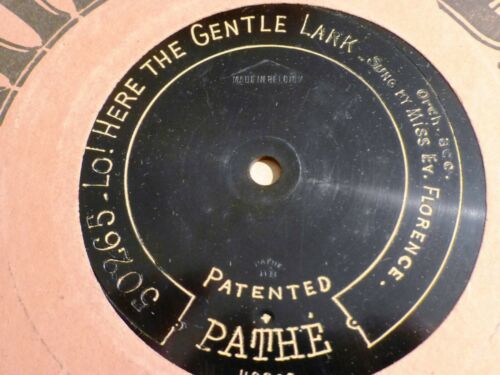
Her husband died in 1921, and she in 1928, but she was still to be heard on the airwaves. And, to this day, on you-tube, there are her rusty recordings of ‘Lo, here the gentle lark’ and the Couplets de Mysoli , which seems to exist solely for their high notes. But I think, for quite a while there, she was more than just a something-or-other-in-alt.

Nota bene: full biographies of Laura Harris, Marie-Louise Durand and Lucy Escott, America's greatest sopranos of the nineteeth century, are included in my book, Victorian Vocalists (2017). Miss Busk didn't make the cut, evidently, but I have her article in my files, should anyone be interested.