Sunday, November 7, 2021

Gaulois-Revue of 1868. The comic and the show girl ....


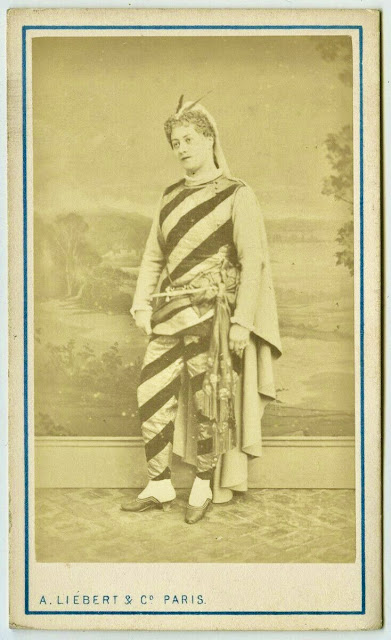
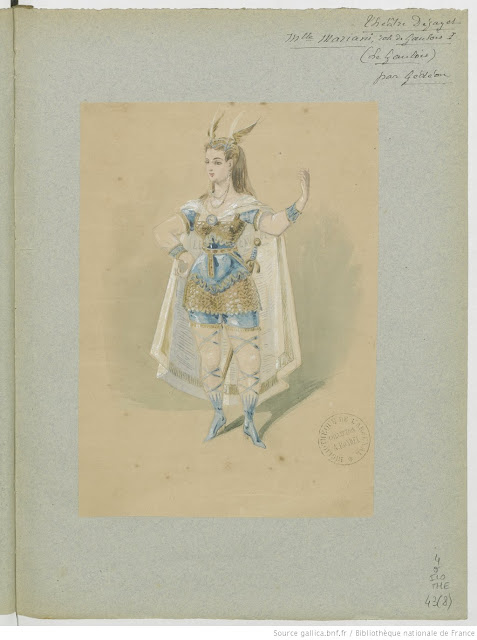
A theatrical photo gallery .... two artists from the cast Gaulois-Revue of the Théâtre Déjazet (1868). Two very different artists ... one the fun, the other the glamour!


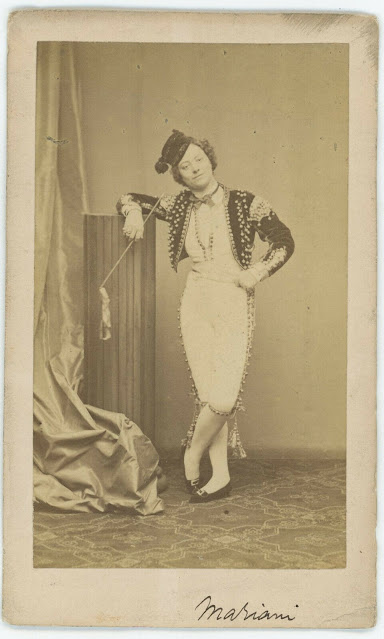
Mademoiselle [Berthe] MARIANI

Here is the lady (below) as Luciole, La Fée des Vers Luisants (Glow-worm fairy) who did duty for the magical business -- the pumpkin coach, a gown of pink satin -- in the Théâtre du Châtelet's production of Cendrillon (June 1866) 'féerie in 5 acts and 30 scenes by Clairville, Albert Monnier and Ernest Blum'. Marie Desclauzas (later Delphine Ugalde) was the prince, Irma Marié (later Mlle Luce) the heroine, and Clarisse Miroy scored as Uranie de la Houspignolle (=the stepmother) ..
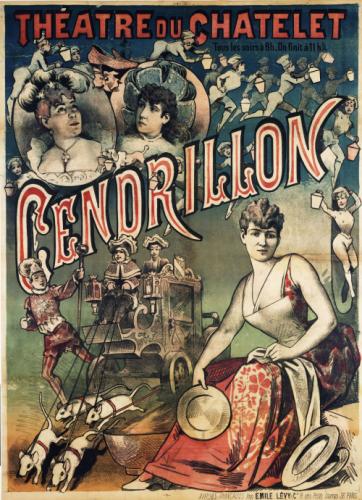


One newspaper, Le Courrier français, wrote 'Mlle Mariani représente la fée qui mène toute l'action. Elle a eu un grand succès de beauté. Dans un des dernières tableaux elle apparaît seule (lisez: sans l'accompagnement d'aucun vêtement) dans le lointain, à travers les rideaux de gaze, debout sur un conque. L'effet est magique'. The critics didn't mention any of the other players.
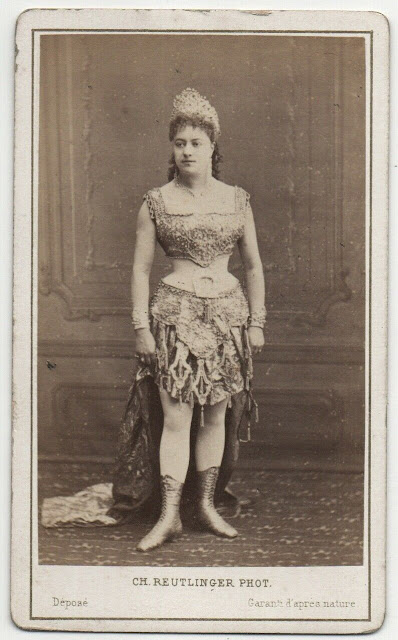
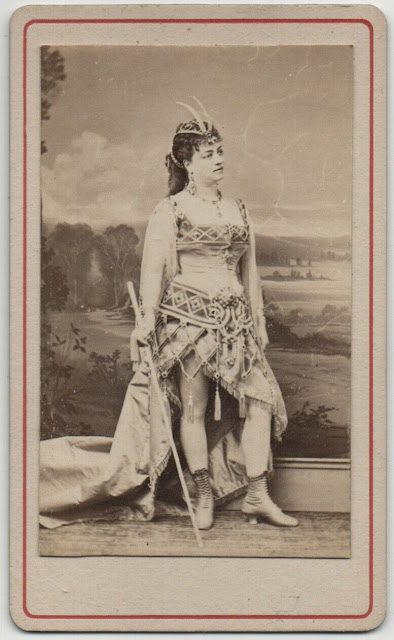
I don't know if this photo is from the same show. Mariani went on to play l'année 1867 in the 1866 revue Le diable boiteux, Samiel in Les Voyages de Gulliver and Le Poudre de Perlinpinpin


dated 1867


Phazel in Gulliver

She was loaned by the Châtelet to the Déjazet to create the title-role in Le Gaulois Revue, 
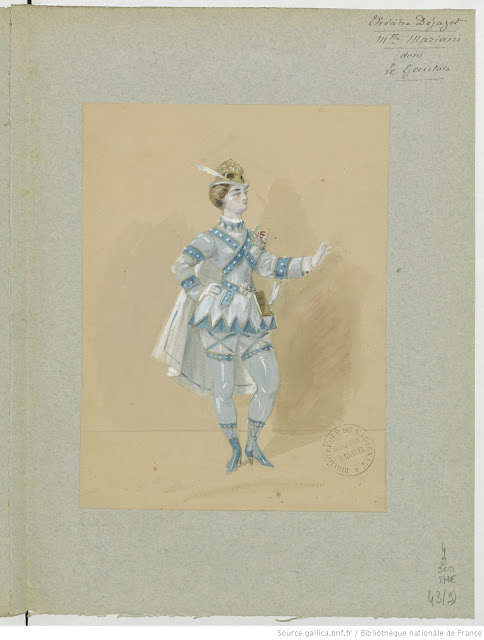


and then cast as the wicked fairy, Coloquinte, in Sardou's Le Roi Carotte ('elle éblouit par la perfection mythologique de sa taille' but sported a chamberpot for headdress), and as Madame Méphisto in the première of La Poule aux oeufs d'or (1873, 'sa beauté est bein faite pour damner les hommes')...


Coloquinte

Nobody, reported the press, some years later, has pushed further than she near-nudity on the stage ...

Arnold Mortier

Mortier related in Les Soirées Parisiennes 'les deux génies en question étaient invariablement créés par deux petites femmes sans aucun talent, mais de formes agréables, qui menaient le spectacle en étendant leurs baguettes magiques. Mlle Mariani était fait une spécialité dans ce genre, ainsi que Mlle Delval et beaucoup d'autres. ..
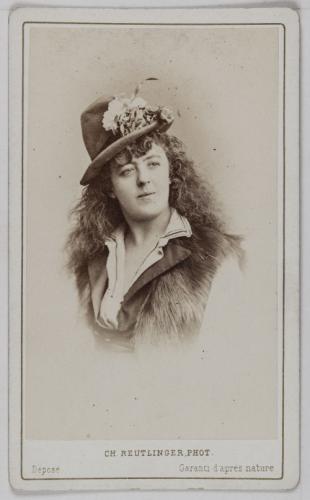


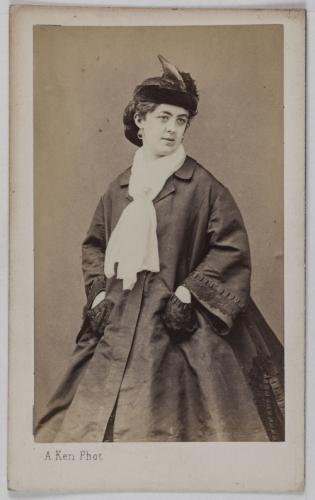
No one seems to have sorted out the who and when of Mlle Mariani. There are a number of photos of her for sale on the web (none 'nude'), but the posters have merely parroted meagre information. Some of them add 'cocotte'. Really, I wonder what Mons Mariani thought of that. Apparently there was a 'Mons'. And I don't suppose 'Mariani' was real. But there were so many of them. In France, already, a singer and a pianist, a mesmerist, in England there was a famous, tall beauty and undeniable cocotte (with a strong cockney accent!) showgirl who was sometimes 'Marini'


a veritable prima donna whose real name was Marion Sophia Hayne ...   anyway, ?Berthe apparently (going from other people's say-so) appeared at the Gaîté, at the Delassements-Comiques e tutti quanti ...


Work in progress.  (PS I see someone has suggested that her real name was Alice Balanahi ... )

I see an ebay vendor lists her as 'actress, courtesan, prostitute'. How pathetic. I'm sure she did go 'with a man or two' but of what 21st century actress can one not say that!

Mlle Luce as Cendrillon

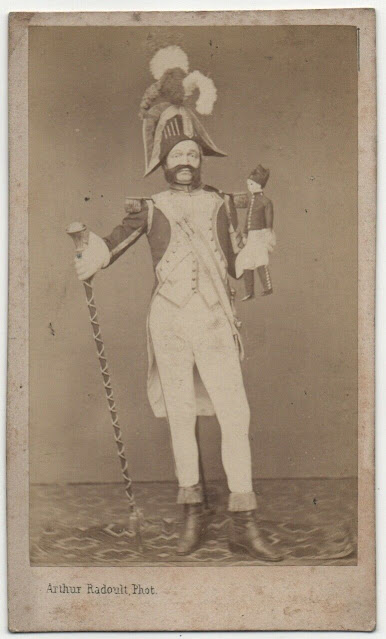
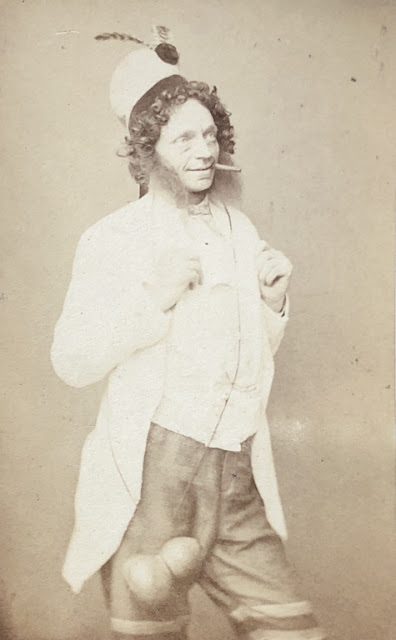
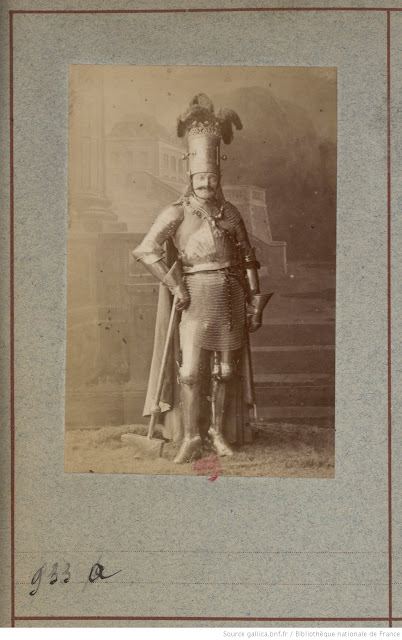
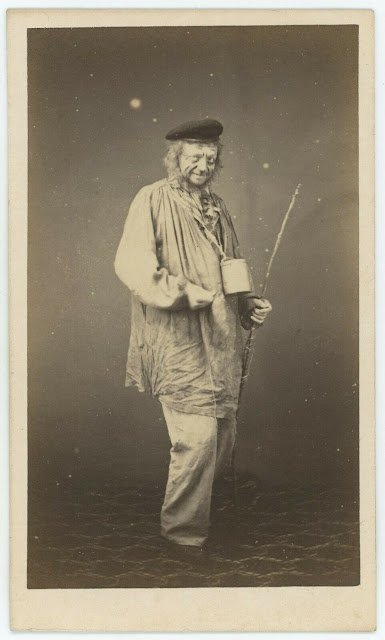
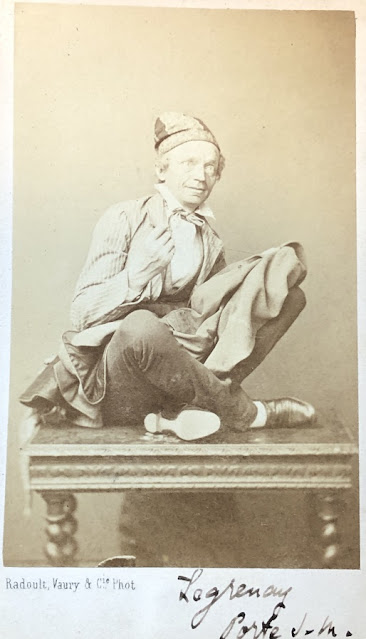
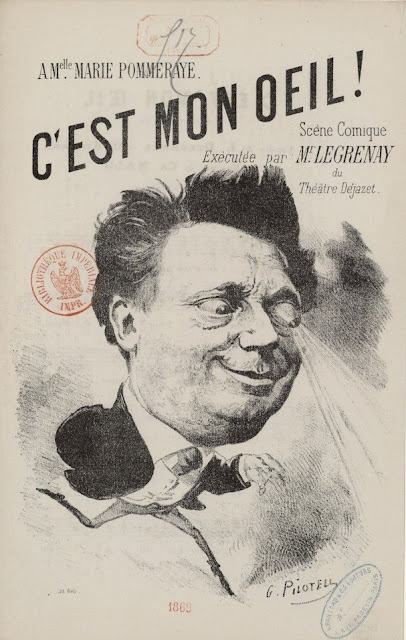
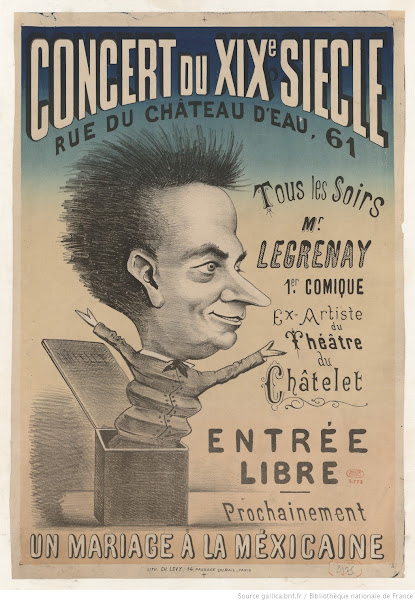
Here we have a jolly photo of the well-known singing comedian mostly known just as LEGRENAY


Victor Pierre Desiré Legrenay was born in Paris 27 April 1826, one of the large family of one Jean Nicolas Marin Baptiste Legrenay and his wife Suzanne Elisabeth Mortagne, and apprenticed to a locksmith. However, he quit his job to go on the stage. He wandered France in provincial theatres and fit-ups, until, in 1853, he was engaged at the suburban Théâtre de Belleville. 
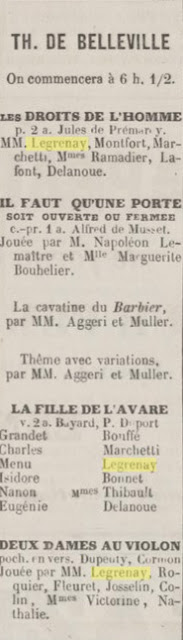
May 1858

There he played Deshouilleurs in Sardou's popular play Monsieur Garât (1860), then running at the Théâtre Déjazet. And, as in all good stories, when the artist playing the role at the Déjazet was suddenly indisposed he was called into town.  His success was such that he remained at that theatre, playing comedy roles, with his googly eyes and skinny legs, from more than eight years. One of his burlesque roles was Romeo Monstraigus to the Juliette Crapulet of Mlle Boisgontier in a burlesque of Gounod's Roméo et Juliette, and the revues of the theatre (for which he became compère) gave him the opportunity to parody many others of the town's plays and players. 
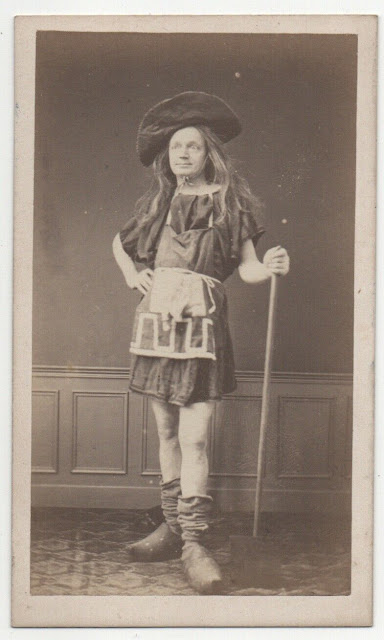
Paris in a burlesque of Belle Hélène

Elise Boisgontier

This photo is of him in Edouard Brisebarre's 5-act La Comédie de la Vie (1869) in his last months at the Déj́azet
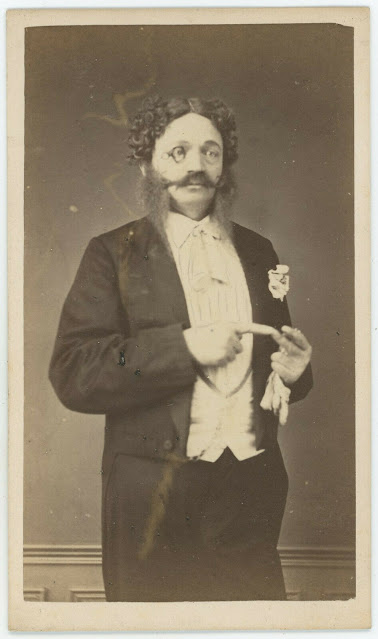


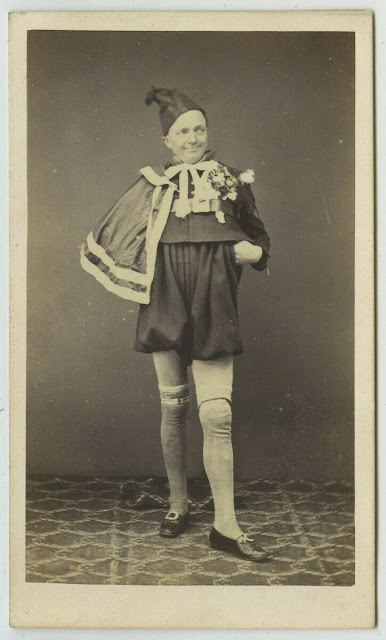
In 1869, he moved to the Théâtre de la Gaîte, where he was featured as Le Roi Mignonnet in La Chatte blanche, as Charles Martel (with a lantern on his head)
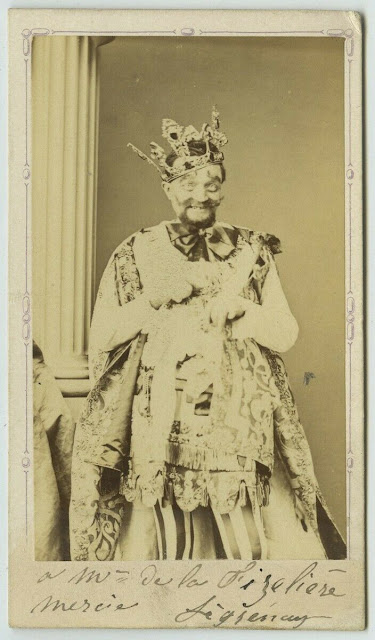
La Chatte blanche

in Offenbach's spectacular rewrite of Geneviève de Brabant. 

Martel

Over the next years he was much seen in the spectacular theatre -- the Gaîté, the Châtelet, the Ambigu, the Porte Saint-Martin -- in pieces such as Les Pilules du diable (Sottinez), La Faridondaine, as Parabase in the first production of Le Voyage dans la lune, in a revival of Geneviève de Brabant, Les Sept Châteaux du diable (Satan), the Brazilian Caramba in Le Voyage au Philadelphie (where he caricatured Offenbach), as the Chef des Carabiners in Les Brigands, he played the lead role of Hurluburlu in Cendrillon in the provinces, succeeded Guyon as Avaltoucru in Le Chat botté, and was much photographed.


The splendid photo of him with the doll is identified only by the word 'Châtelet'. What is it?, I wonder. I can't place it. He was only at that theater during 1873-6, before moving on to the Gaîté ...

After his period as a 'véritable roi de féeries' in the spectacular theatre, he carried on in comedy at the Folies-Dramatiques, the Vaudeville.


He died, aged 63, of bronchitis consequent upon an unnamed internal disease, at 132 Faubourg St Martin, 3 May 1889.

During his career, he appeared in London with the Déj́azet troupe, and in Belgium. He wrote comic lyrics and performed in the cafés-chansons, and at times worked as a florist.  


Married in 1862 (11 November) to Jeanne Augustine Chartier, he was the father of the rather odd Hippolyte Legrenay, who followed in his father's footsteps with some success. He committed a rather messy semi-suicide in his dressing room at the Cluny in his twenties, and died, soon after his wife, at 36.  Legrenay's second wife was the young actress Henriette Blancheteau.

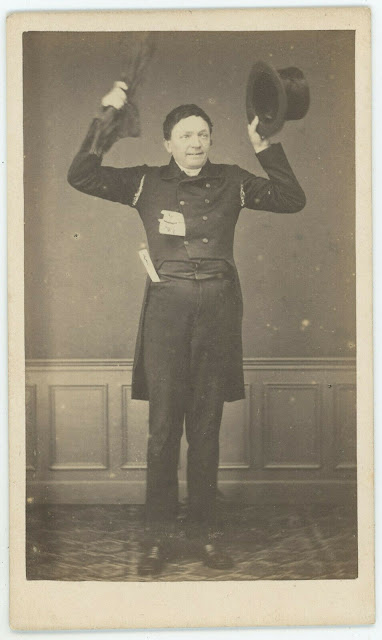
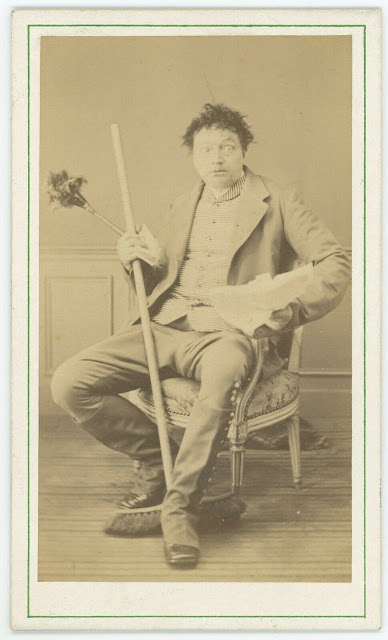
These photos are of our actor in burlesque. At the Dej́azet?
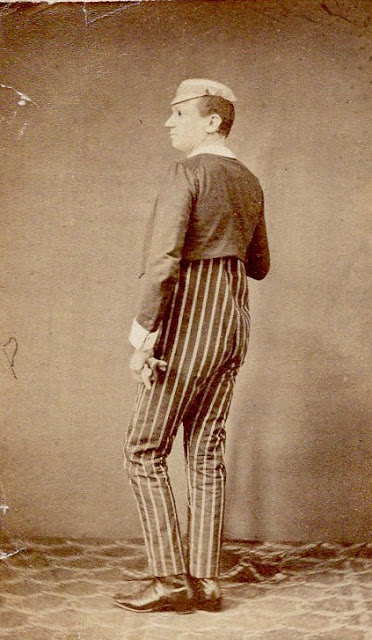
Les idées de Mme Aubray (1867)

Nos bons villegois


Some simply give no clue 


parodie de ????

This one, of course, was not difficult. Une Noce en visite was a little burlesque of Une Visite de noce produced at the Alcazar 15 November 1871. Legrenay played the heroine Lydia de Morrencerf, Tissier was M Gobert. 
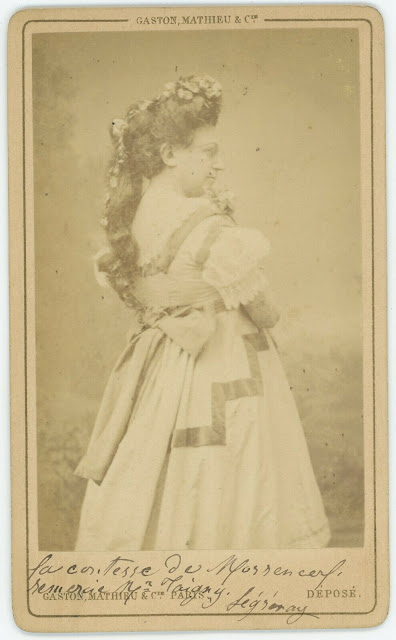
the dedicatee, Emile Taigny, was stage director at the Gaîté


There is as much of and on Victor Legrenay around the place as there is little of Mlle Mariani .... but this is a start ...

and now its time for my nap ...

This photo appeared, unidentified, on ebay some time later. 'A ma bonne camarade Paër ..' 


PS Mlle Luce [COUTURIER] daughter of playwright Edmond Couturier and his actress wife 'Madame Cornélie'. 


Saturday, November 6, 2021

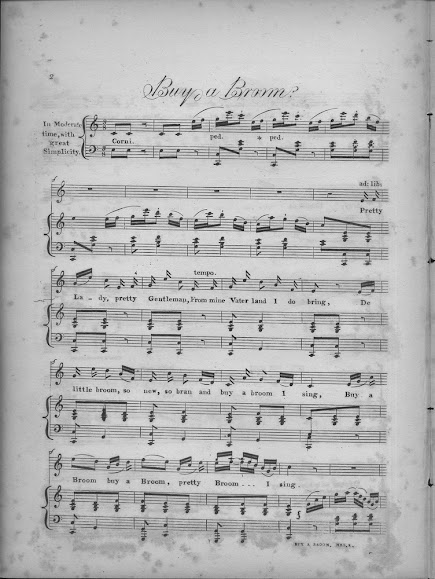
"Buy a broom"


That nice bundle of old music produced enough interesting sheets to keep me busy for a good while. This one, from 1826, isn't exactly a rarity, but it poses the odd question which I'm not able to wholly solve from my Australian eyrie ..


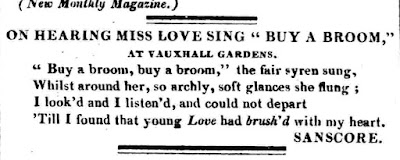
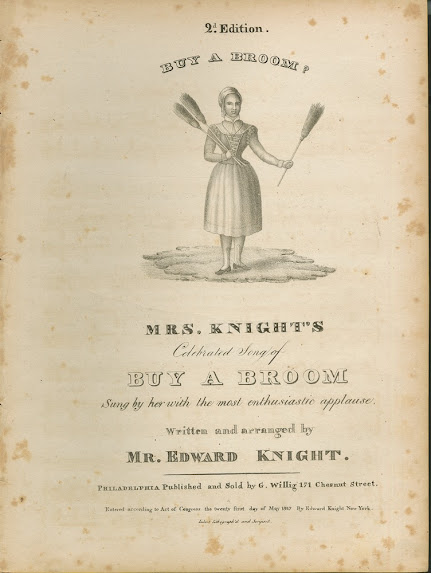
This is, as it says, a 'second edition'. Published in October. The first had sold out in the three months since the song had been introduced by Emma Love at the Vauxhall Gardens ...


Yes, three months. In spite of what you read on the www, it was not published in 1824 or 1825 ...

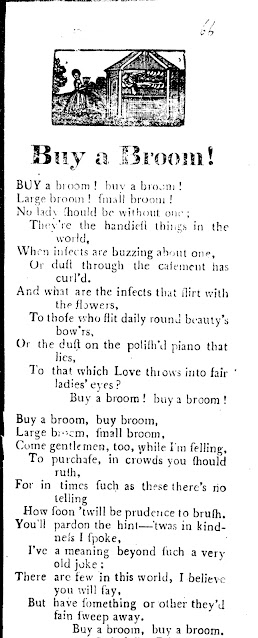
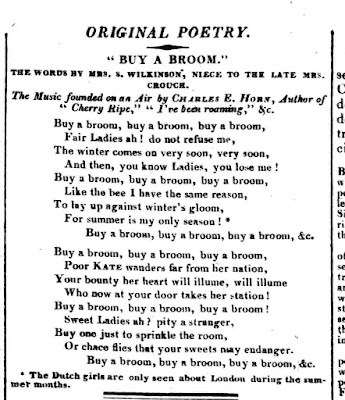
You see what it says. Poetry by James Robinson Planché, music by Henry R Bishop. Well, here's the poetry ..


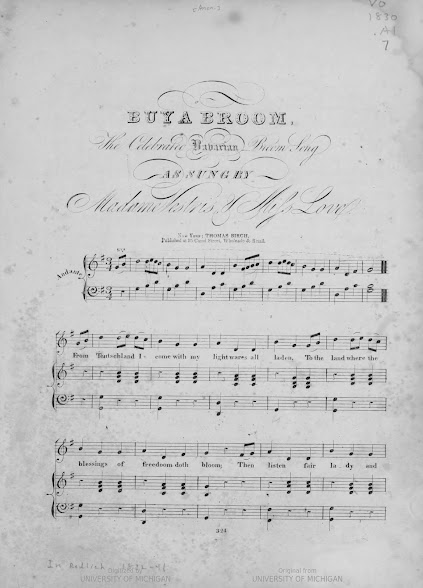
And the music? Composed by Bishop? Or arranged, as one paper averred 'on an old Germany melody'? Others spoke of 'Bishop's air'... but was it?

Anyway, contralto Emma Love, dressed as a vaguely Flemish/Netherlandish/Deutsch peasant girl, made an instant hit with the song down Vauxhall way ..


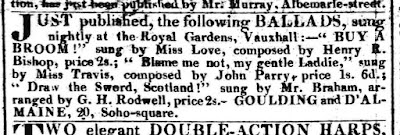
OK. Braham's song is 'arranged by G H Rodwell'. Emma's is specifically 'composed' by Bishop.

Emma sang her song (and others) to the end of the Vauxhall season ...


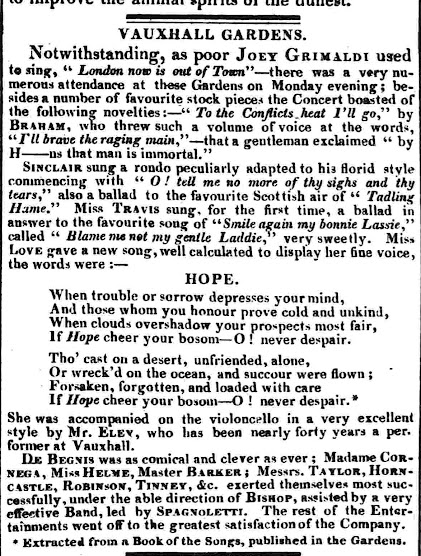
As you can see, Vauxhall was no second-rate organisation..  Braham, deBegnis, Sinclair, Deborah Travis, George Robinson of 'My Pretty Jane' fame ... Spagnoletti as leader, Bishop as conductor ... those were top names.

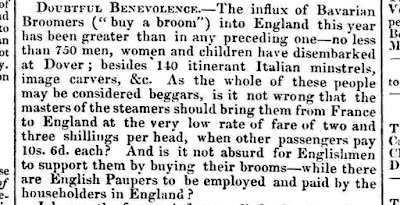
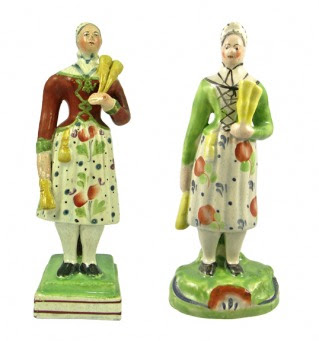
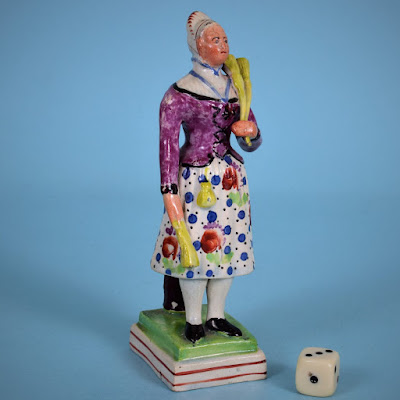
Now European broom-sellers, with their street cry 'buy a broom' were not a novel sight in England. Yates of the Adelphi had included an impersonation of one-such (male) in his Entertainment shortly before. But with the beauteous Miss Love, Planché's cute words, and a catchy tune ... suddenly these Mädchen were in the glamourised limelight ... It seemed everbody wanted to be a Bavarian Broom-seller. Fashionable fancy balls featured a host of Ladies in their guise, and little girls with mini-brooms thronged Sunday School teaparties ... Marie Antoinette and the milkmaids ..

The theatre world wasn't far behind. The Morning Post quickly published a 'version' said to be penned by a relation of the late Mrs Crouch of Drury Lane ..  The Horn version got itself published by T Williams of 2 Strand, but whether it was sung I know not


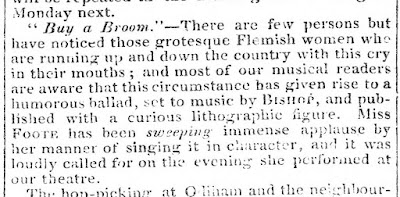
But while Emma took her song to Liverpool, interpolated into the 1805 musical farce The Weathercock (music: M P King), two other Bavarian broomgirls surfaced. And by no means of the least well-known variety.  Maria Foote (the future Countess of Harrington) exceedingly promptly interpolated a 'Buy a Broom' 'dressed in a foreign character' into her travelling Weathercock production in Birmingham ..


You would have imagined it was the same song as Miss Love's, but it appears not so. A surprised newspaper critic, in a town where Emma arrived after Maria, recorded that 'her 'Buy a broom' is totally different to the one sung by Miss Foote'. Totally?  So what was the Foote song ... one paper assured us it was the Bishop ...


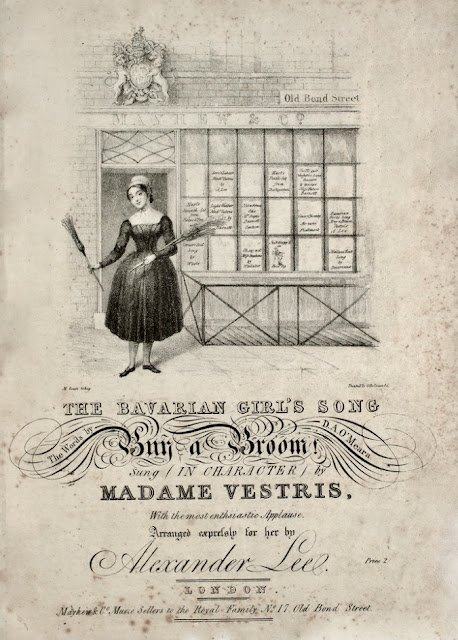
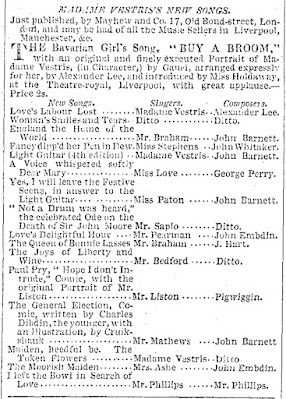
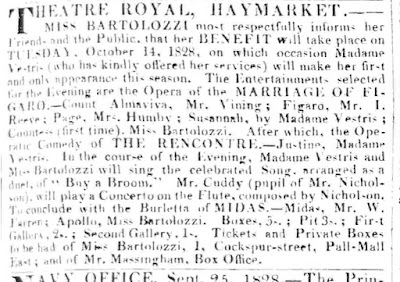
Meanwhile, back in London, what must have been a third song of the title surfaced at the Haymarket Theatre. Sung by Eliza Vestris! This one was credited as being 'arranged and partly composed by Alexander Lee' ...and it was apparently sung for the first time on 18 September, at Liston's Benefit 'for this night only'. She repeated it at Farren's Benefit two nights later ...  then again ...


And in the meanwhile Weippert picked up 'the celebrated melody' for one of his Quadrilles ... alas, they don't say whose melody. If it was a celebrated old German tune, why hadn't it been used before ...?

Emma took her song 'in the garb of a Flemish peasant' around the provinces, sandwiched between such as My Native Land and Inkle and Yarico, even in classy concers with such as Caradori and Sapio, and even -- goodness gracious' -- at the Covent Garden oratorios ('inappropriate'), as others picked up her act.


Mrs Waylett in Ireland, Catherine Holdaway in Liverpool and Manchester ... yes, they picked up her act. But were they singing Bishop and Planché ... or Alexander Lee and ..  Well, it seems Catherine was doing the Vestris version ..


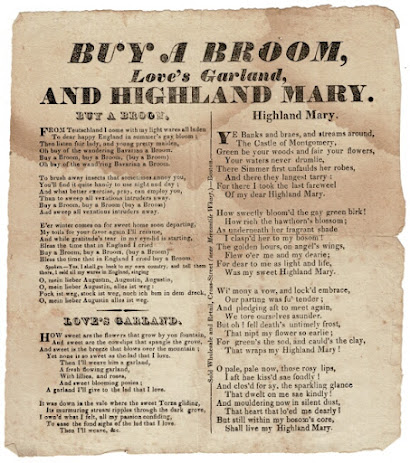
So, let's go back to the Lee version. Post-Bishop. Post Miss Foote? These are the words:


Written by ...? One copy of the piece printed in America credits 'D A O'Meara'. An American? No, indeed. Daniel A O'Meara was a striving British writer who had written, with Lee, the song 'Love's Labours Lost' for Vestris and the Haymarket. So, I guess it was he. Ah! Yes, there he is among the curlicues on the London music!

And the music ...? It seems Lee's 'composed' bit consisted of the German tag and a waltz routine to follow. Which Miss Foote promptly appropriated ...  but surely he hadn't 'arranged' Bishop? 


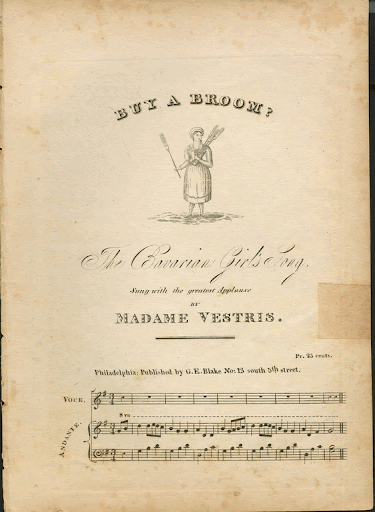
Now why does this copy have no credits at all?  Pirated? But that's the Vestris tune ..

And this one has, at least, pirated the art work if only 'colourably imitated' the song!


The story of 'Buy a Broom' doesn't, by any means, end there.

Madame Vestris liked her song so much, that she had a play created by the dramatist Richard Brinsley Peake around her and it. The play was called The Hundred Pound Note (allegedy founded on an incident in the courtship of Mr Brougham and Miss Tree) and it found her the opportunity, in the role of Miss Arlington, to disguise herself as a comic Bavarianne and sing her song.  The provinces snapped the little play up, and with it the song. 


While Miss Love was singing the song at Covent Garden, and Miss Foote was vulgarly advertising how much money she was being paid to do so (doubtless on the old principle of I'll pay you 50L and tell the press it's 500L), other versions appeared. The Lee 'Broom' was transmogrified into a duet, 'as sung by Vestris and Liston', in which Liston frocked up, and which showed up in concerts and Benefits round the country. Vestris later performed it with her sister. 

Liston as the broom seller


A Mr Henry performed it 'in character' in his illusionist entertainment Henry's Whims and Wonders, and the comedian Harley brought out a parody at his Benefit (29 May 1827). Emma sportingly sang her favourite number and Harley followed up with 'Buy a  Mop', credited to John Parry, in the character of a Southwarkonian


Needless to say he gave it on other such occasions thereafter, in town and country. And needless to say others tried their hand at using the popular song as a basis for songs of a different purpose


I think, at this period, the Lee version had taken supremacy. Emma Love had got herself into all sorts of a mess in her private life -- a 'secret' husband, then a not so secret aristocratic lover, at whose side she passed for more than a decade as the Countess of Harborough -- and faded from the theatrical scene. 

But ... BOTH of them?


And I know this tune. It's the tune of 'Ach, du lieber Augustin[e]'!  Bishop-Schmischoff!!! Flemish? Bavarian?  The melody is pure Viennese ...

1829 ...


Anyway, the song's popularity was rather dented as soon people came to realise at the Broom Girls were as much hoydens as hawkers ... one group (one of whom was a transvested man) was had up for highway robbery in deepest Wandsworth, others were involved in murder and other torts. In Whitechapel, three girls, 'managed' by a Mr Jacobs, were had upon vagrancy charges. Fagin time. In Monmouth one such was arrrested for robbery. And the press railed in 1833 


Broom Sellers were no longer so 'cute' and 'charming'. It was no longer entirely chic to go to milady's fancy ball dressed as a broom-seller ...

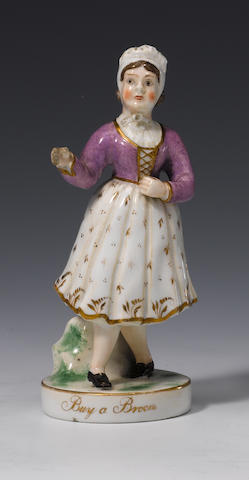
 In 1851, The Hundred Pound Note was revived at the Adelphi, with Mary Keeley in the Vestris role. The Era reminisced on the days when 'the Bavarian broom-girl, represented after the Vestris fashion, was portrayed in pictures, and modelled in plaster all over the country that then resounded with the notes of the national melody that she had made so popular'. In 1851, the song went for nothing. Likewise the play.


But the character -- or more accurately, the disguise -- of 'a Bavarian Broom-girl' had become a stock one, and it put in the odd theatrical appearance here and there for many years. The most notable was that by Mrs German Reed in William Brough's A Peculiar Family (1865). The Praeger family also sported a 'Bavarian Broom-Girl' comic song in their act in the 1870s, which was probably based on the same melody.

And here is Mr Thomas Crampton's 'arrangement' published ... well, 'Mr Crampton' (editor of 'The Part Singer' and apparently a footman-turned-Greenwich-schoolmaster named Thomas Turner from West Grinstead) was publishing 'Juvenile Songs' from Paternoster Row in the late 1860s and specialised for many years in kiddie ditties  ...  Hart & Co seem to have only started in 1883...  by which time Mr Turner was 5 years in his grave.


Of course, with a slight decalage of time, the hit of 1826 reached the colonies. America first. It was being advertised (along with Vestris's other hit 'Hurrah for the Bonnets of Blue') 'as sung by Miss Clary Fisher' as early as October 1827. She dressed as a Flemish peasant, so was she copying Emma or Eliza? 

Seemingly introduced to  Australia by Cordelia Cameron, circa 1834, it became decidedly popular, there, being sung in concert for many years, in its solo, duo and parody versions, and the title-phrase became long ingrained down-under, as it had elsewhere, in the slang of the times. From there the song voyaged to Patna and Dinapore and spots and eras beyond...


In 1969, I danced (believe it or not) on the London stage an Englishman's idea of a Schuhplattler to the strains of 'Buy a Broom' aka 'Ach, du lieber Augustin' ...


And look! Jean-Christophe Keck has come up with a French broom seller ... sung by the wonderful Joseph Kelm ..


Must find the words ...

Miss Love tried another working girl, without success, I see ...


Thursday, November 4, 2021

Little EMILY becomes a racehorse ...


Way back in the year, just after I had dared cross the Tasman sea to escape the New Zealand winter, our little filly EMILY went to the qualifying trials. She won the trial, but didn't qualify ... well, I've related the story in my blog Emily: triumphant for ten minutes ... but here it is again

"Today was little Emily's big day. Her first run in an official trial, at Rangiora racetrack, with the carrot of a qualification as a racehorse at the end ...


Murray and Emily arrived from Motukarara, Wendy and the other owners, John and Frank, and Faye from Hornby (representing me, in Australia) all foregathered. Best friends Robin and Geraldine Wilson came up from Kaiapoi ... I was sitting, with a link to Wendy's video-phone, in Yamba, NSW ...

A little hiccough. My colours haven't been worn on the racetrack for a few years. I had loudly chucked the game in disappointed disgust. And when Murray came to put them on they er ... didn't fit. Shrunk? Or has Murray's chest expanded ... So Emily paraded out in the stable colours ...

I was fairly sure that Emily could do the necessary time. She had cruised faultlessly through her two learner's heats. But, there was a but. The opposition. Oh, it didn't matter whether she 'won' the trial or finished last, as long as she trotted cleanly and did the time. But she had drawn alley one, against the rails, in a slightly curious field


One two year old filly (her); one three year-old, pacing-bred, filly which, the previous week had paced, galloped, and then impressively won the heat; one six year-old (!) newcomer from the wowee Kypros Kotzikas team; and another three year-old from the top Mark Jones stable. All girls! Well, I reckoned, all (all? huh!) Emily and Murray had to do was keep clear of everyone ... because there was a fair chance of a bit of a scrimmage at the start. And she was right next to the speedy but unconvincingly-mannered "pacer" (driver the Orange Roughie, NZ Champion). 

Scrimmage indeed there was. Emily threw in three or four frightened steps as her neighbour took off, but she managed to squeeze niftily through on the inside of the terminally galloping horse, and headed off in pursuit of the only other survivor. So it came down to a two-horse affair. Emily sat neatly behind the solidly-trotting six-year old, Lavra Segil, and ran on nicely in the straight to win the basically uncontested heat. Four and a half seconds inside the time required.

All was jubilation. Until the bad news came through. Her four (well, maybe five) frightened paces disqualified her from Qualification. New rule. Well, rules are rules, but that one seems a bit extreme. I mean, will we have to run qualifying heats as time trials so that no other horse can interfere physically or mentally with another? And if 'no bobbly beginning' is to be the rule for harness horses, I think that more than half the trotters racing in New Zealand today would have to re-qualify. Even France isn't so perfectionist. But, there you are. Rules is rules.

So, we shall have to foregather next week for another go, before the young lass can be put out to finish growing. Disappointing. But I have always been a passionate advocate of the French rules that disqualify breaking horses (more especially during a race). It is, however, a little surprising that HRNZ can initiate a rule such as today's for a (two-year-old) qualifying effort, but allows the most disgraceful exhibitions on race-day ...

Sour grapes? Not really. Just a wee bit of sadness, and a fair bit of incomprehension at the inconsistency of the harness code. 

Let's hope we don't have to face today's rodeo performers next week, or there could be horrid, expensive accidents again. Oh well, the other trot on the programme only went 2 1/2 seconds faster than ours ... perhaps that would be safer ...?"

Well, she had another go, and the scenario was the same. Bobble away = no qualify. So Murray decided to give her a wee rest ... after all, she was still a baby ..


This week, she came back. At, of all trial meetings, the Cup Trial trials. That's a bit of a misnomer these days. The feature of the day used to be almost a pre-Cup race for the Cup horses. Now most of those are kept in swaddling clothes until The Day.

Anyway, qualifying races for unqualified trotters are not quite 'features'. This one was the first heat on the programme at 10.30am. But, as a trial goes, it was a pretty fair field. A filly -- daughter of the good Love You mare Paramount Queen -- from the all-mulching Purdon barn, a Love You feller named Son of the Cleaner (why? because his mother was Habibti Sadie!), a Swedish-American horse named Sebastian Coe, and a gelding, Opawa Peak, bred by the Iggo family, as was the great grandma of Emily.

Yes, well we weren't in the heat to win it. Little girl just had to go away cleanly, and trot nicely for 2600 metres, and do the easily accessible time ...

Well, perhaps fortunately, Emily had drawn the outside slot at the barrier. No nasty neighbours. As it happened, the neighbours weren't nastly at all. In fact they went away like a rocket ... except for poor Opawa Peak, in number one, who had a bit more than a bobble. And Emily, she stepped out daintily, carefully, and safely, under Murray's hands ...


No hurry. Up front Sadie's little boy was careering along at a rate of knots. Very impressive. If uneccessary. Murray gradually caught the bunch, and sat at the back as they careered on, with Son of the Cleaner at one stage 5 lengths clear of the second horse.


Into the straight and a little fatigue hit in.  Half way down the straight Sebastian Coe rolled into a gallop. Paramount Empress ran past him, well clear of danger, down the middle of the track .. Emily glued herself to the rails


And then the leader galloped!

So Paramount Queen cruised home to win the heat, with Emily coming home nicely for what turned out to be second  ... more than NINE seconds inside the required time.

Mission accomplished!  Wendy, Frank, John and I have a racehorse.  But not quite yet. Emily doesn't have her birthday until Jan 1st these days. So she's still just two ...

So the soft-boiled egg silks (let out in the seams by good friend Shirley) which I thought had retired from racing, get to ride the range once more ...

Emily, daughter of Douchelette, daughter of Duchess, daughter of Gwen ... the fourth generation of 'my' breed ..

Go, girl, and I hope we don't meet Paramount Empress or Son of the Cleaner too often on raceday!


PS 1 August 2022.  Emily ran second at her debut, and won at Addington at her eighth start, last week.


The Tyne and Wear Quadrilles (1847)


This morning I spotted a small heap of early nineteenth-century music on line ... this one in particular caught my eye ...


So wholly ... provincial. Eight different decorative typefaces on one page. But what fun! And what an historical document ... so who were these folk?

Addison Langhorn Potter (1783-1853) 'of Heaton Hall' was a local coalmine owner, gent and civic worthy. 


Thomas Ions (1817-1858) was a prominent local organist, originally from Gateshead, the son of one James Ions and his wife Sarah. He started a musical career in Gateshead, as organist of St Thomas's Church, progressed to St Nicholas of Newcastle, and in that city established himself as a concert conductor and organist. He played or conducted evenings including some of the biggest metropolitan singing stars of the time, Charlotte Dolby, Henry Phillips, Susan Sunderland et al, and some of the great instrumentalists -- Wagstaff, Loder, Lindley.  In 1848 he graduated BMus from Magdalen, Oxford and in 1854 he secured a Doctorate.  In between times he was named conductor of the local Sacred Harmonic and Choral Society.

He published various pieces of music with the local firm of Horn, including these in 1846


and our Quadrilles the following year. 


He died suddenly at the age of 39 and the local press gave him a grand write-up


I see that the Quadrilles were still be advertised by Horn 5 years after their publication, so I guess they must have sold a few copies ...