Tuesday, May 9, 2023

The Scrattons of Prittlewell, Essex .. and Hackney and Maidstone


This family archive turned up on e-bay so I thought I would 'preserve' it, here, as well as I could. 

Prittlewell Priory and its occupation by the Scratton family in the eighteenth and nineteenth centuries have been widely documented


But the Scratton family was a tentacled one, and various branches spread round Essex and even up to Hackney. And every generation of every branch seemed to sport a Daniel and a John ... 

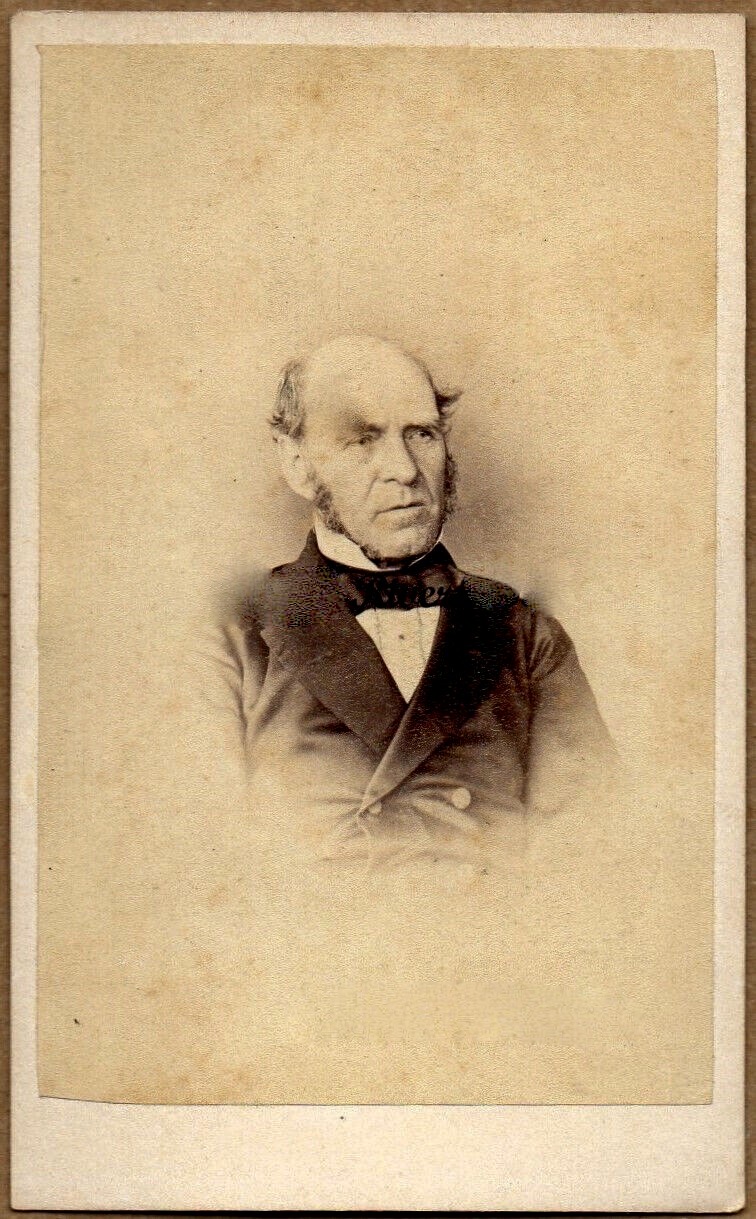
The line we seem to want to follow is that of John Stratton of Hackney whose will tells us he was the husband of Abigail Cotton, the brother of Daniel and John Scratton, and the father of a Daniel, a John and a Thomas. Thomas Scott Stratton is useful, for he became a vicar and officiated at his niece's marriage. Although he was the eldest son, Daniel seemingly chose not to inhabit Prittlewell Priory, which was occupied by Brother John until his death age 53 on 26 April 1861. Our Daniel (b 1787) can be seen as a landed proprietor and JP in Maidstone at that time. And here he is photographed in 1864


And here in 1858


And here, his wife, Susan née Ansell 1793-1874.


And here a summary of their offspring, and their offspring's offsprings, duly illustrated

DANIEL SCRATTON 1814-1884

Emigrated to Australia in the 1850s. Practiced as a lawyer in Melbourne, seemingly with limited success. Latterly suffered from dementia and died at Camberwell 9 July 1884, apparently unmarried. The grey sheep of the family?


GEORGE SCRATTON 1817-1896

Clergyman. Curate at Wolverhampton and Pembury and twenty years vicar of Stickford, Lincolnshire. Married Lydia Blackburn, 2 sons Edward Joshua Blackburn Stratton (1854-1916), eventual Lord of the Manor of Prittlewell and William Howell Stratton (9 July 1859-1910). Died at Stickford 7 May 1896. Prittlewell Priory was still the Scratton fief but soon to go under the hammer.


Rev George aged 62


George before grey set in (1863)


JOHN SCRATTON 1819-1910

Solicitor. Married Ellen Scratton. Six children of whom the surviving four are pictured here. John (16 December 1856-24 February 1928),  Ellen (b 3 July 1859; d 1953), Arthur (b 1858; d 13 March 1934) 'gentleman' and wealthy, m May Cameron, Alfred (16 April 1863-5 February 1912) civil engineer, Buenos Aires railways.

John stitched the two branches of the family back together. He married his cousin Ellen Scratton (b 1818; d 5 April 1906) daughter of John Scratton of Prittlewell.


John in 1864


Handsome couple, ain't they. And the children ...


Alfred aged 17

Ellen


John, Arthur, Ellen and Alfred


John, Ellen, Arthur (1863)


Ellen 1866 with whom?


SUSAN SCRATTON
1824-1913

Married Dr Duncan Menzies. Son John Duncan Menzies (pictured here) (1861-1895). Surviving daughter Emily Menzies (d 1930 unmarried). 


Susan Menzies (1864)


Duncan Menzies

J D Menzies

J D Menzies


Emily Menzies


EMMA SCRATTON 1832-1900

Married John William Mostyn MD, army surgeon. He died three years later on service in Madras.


Emma

Emma in Monte Carlo


JOSEPH SCRATTON 1833-1895

'Gentleman'. Married Louisa Maria Ambrose who died of it, then Matilda Barrett. And finally, it seems, an Anne Christine. Removed to France and died in Puteaux 23 July 1895.


WILLIAM SCRATTON 1839-1919

Vicar of Badby-cum-Newnham, Northants. Married vicar's daughter Margaret Gregory. Son Daniel (30 September 1875-1936) became a Commander in the Royal Navy and moved to Australia. He, 'of Harkstead, Gilgarre' died in South Yarra 29 January 1936. His sister, Mary (b 29 July 1879) died unmarried in 1954. Harkstead UK was where the family came from.


Rev William 1861

Rev William in 1879

Margaret in 1874

 
Daniel and Mary


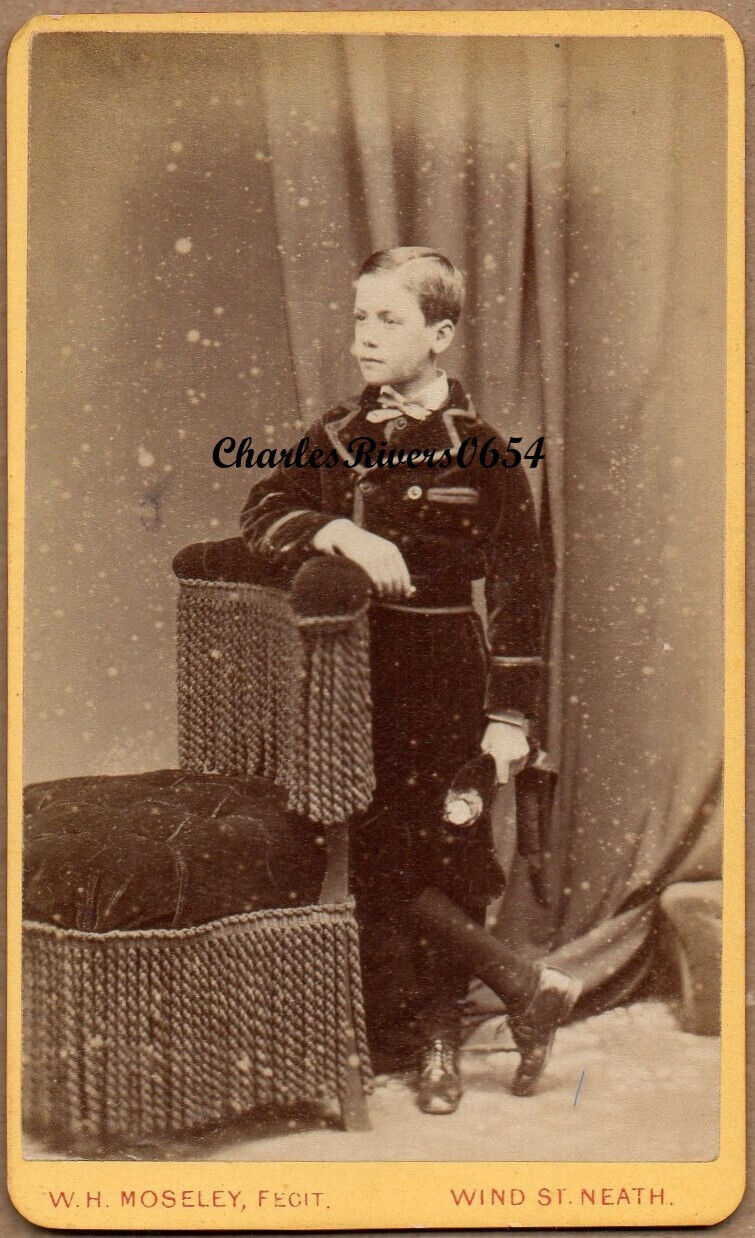
Daniel (7) 'at the garden door' with the cook , nurse and housemaid

Daniel (a favourite!) aged 3 rising 4


Daniel and Mary with nanny Annie Sutton

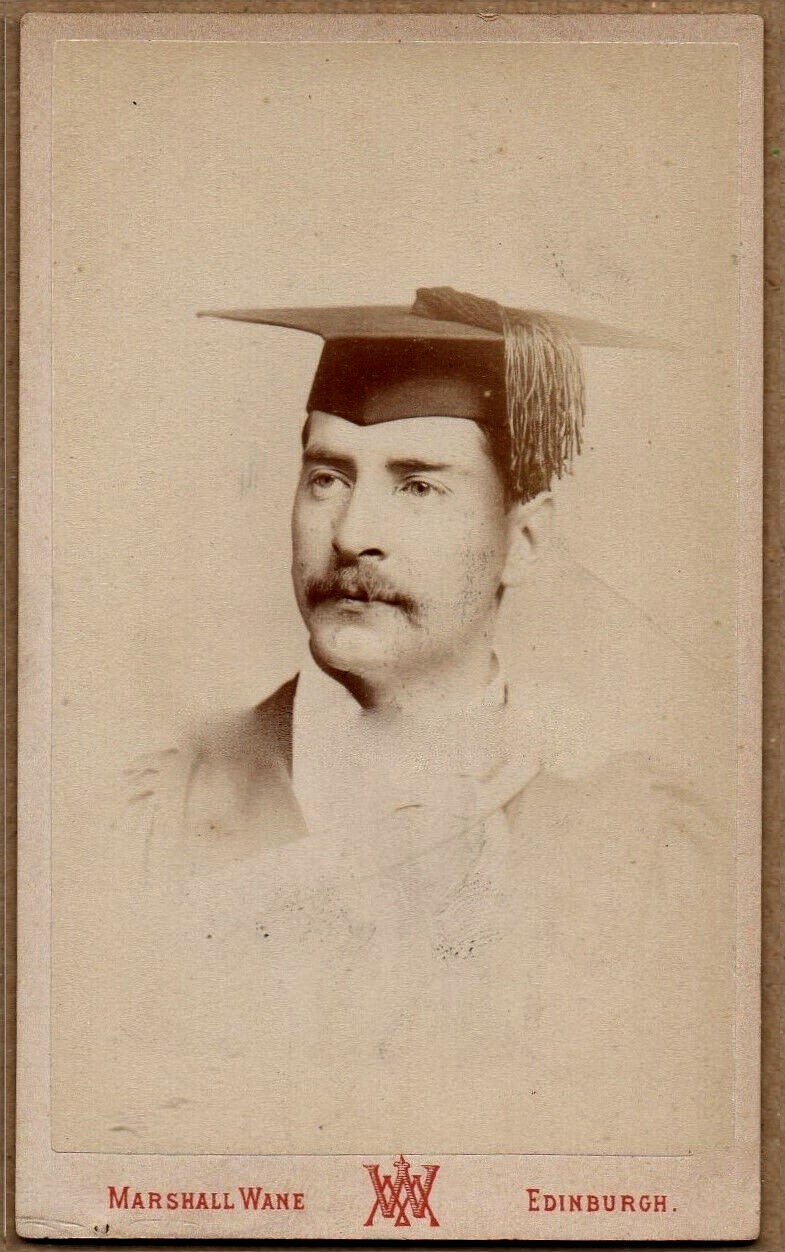
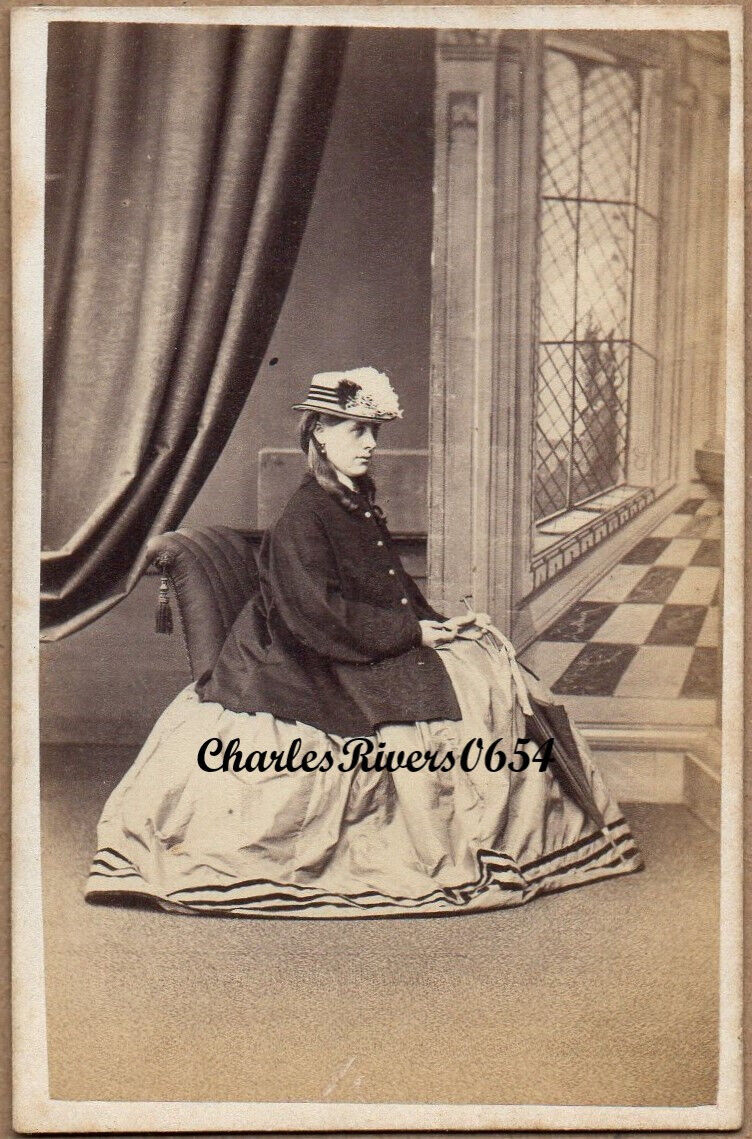
There are more. Which 'Miss Scratton' is this?  "Miss' is traditionally the eldest daughter. But whose.


And, then, whose album was this? Bingo. Same dealer, same writing .. a bunch of Gregorys. So Mrs William's family?


Alice Catherine Gregory (1848-1912)


F T Gregory

Grace Elizabeth Gregory (1846-1929)


Mary Matilda Gregory (1853-1919, Mrs Wm Cuthbert Lewis)

Wm Cuthbert Lewis

Grace Elizabeth Gregory

William Gregory

children of Francis Thomas Gregory, the vicar of of St Mary's Platt, Wrotham, and curate of Loose, and thus siblings of Margaret. Oh ... more of the Gregorys ... Alice, Grace, Mary, FJ jr and mother Sarah ...


Mrs Nicholas de Jersey Lovell (Hester Garret Gregory)

and husband 'of Easton in Gordano' and and children ...


Violet and Muriel Annie Lovell


Grace Lovell

Lord knows what else was in that album ...

But I think that is the backbone of it ...


I hope it finds a home ...

PS Mr Rivers is sending me a list of the 200 (!) pictures in the album!  There goes my weekend!


ADDENDUM: Amongst the other photos in the Gregory-Scratton volume I found three which seem to be, perhaps, friends of the family. Here is Humphrey Edward OWEN as a thirteen year-old scholar (1862) and as an Oxford (Magdalen) graduate. 


and here is his sister, Rosetta Frances OWEN


I thought I had best investigate them, in case they were family ... and found a huge story. They were two of the family of the Rev Edward Owen, who owned a slave plantation in Jamaica between 1829-34. He married South African-born Maria Elzembe Smith and fathered a number of children ... 

I had begun to research their story when I found that someone else had had a go before me. So I copy that entry (edited) adding my corrections and additions:

Edward Owen: Anglican clergyman and absentee owner in Jamaica. Edward Owen, born circa 1808, son of Edward Owen of Jamaica. His mother was probably Ann Burt Owen, possibly née Wright. Married Maria Elzenbe Smith. Awarded compensation for three estates in Jamaica as executor of Edward Owen, but was also probably a beneficiary of the will.

Nothing found on his early life but Edward was a student at Worcester College, Oxford 1825-1833: ‘Owen, Edward, 1s Edward, of ‘Mancuo’ [sic: this has not ben further traced] Jamaica, arm. (D. Med.), WORCESTER COLL., matric. 9 Nov., 1825, aged 17; B.A. 1830, M.A. 1833, curate of Gawsworth, Cheshire, died 31 July, 1848.’ He was ordained deacon 22/06/1834 at St George, Hanover Square, appointed as a curate 30/06/1834 at Lullingstone, Kent and ordained priest 26/04/1835 at Bromley, Kent.

Maria Owen, the youngest daughter of Edward Owen of Jamaica, married Edward Duke Moore.  

The Rev Edward Owen married Maria Elzenbe Smith in 1832 in the Parish of Saint Mary-le-bone: ‘Edward Owen of this Parish a Bachelor and Maria Elzenbe Smith of this Parish a Spinster a Minor were married in this Church by Licence by and with the Consent of Edward Smith Esquire the natural and lawful father of the said Minor this Twenty First Day of May in the Year One thousand and thirty-two.’ Both bride and groom signed the register clearly and the witnesses were A. Tweedie, Edw Duke Moore, E. Owen, L Hanley and A. Smith. 

In 1841 Edward and Maria are in Waterloo Crescent, Dover, Kent. Edward is 30 (rounded down), a Clerk, born out of county, Maria is 25, born out of county, and there are four children, Jacintha, 6, born in county, Anna Maria, 3, born out of county, Humphrey, 2, born in county, and George, 7 months, born out of county. There are four female servants

Edward died 31/07/1848. 

By 1851 the family is scattered. Humphrey Edwd, 11, born Kent, Dover, is in a large school in Newgate Street, London. George, 10, born Sussex, Shoreham, is a pupil at the Clergy Orphans School in the parish of St Marylebone, London. There is no sign of either Jacintha or Anna Maria in the 1851 census but there is a death registered in the June quarter of 1850 in the district of Camberwell for a Jacintha Georgina Owen. No age is given in the indexes at this point but there is a burial to match this death: Jacintha Georgina Owen, Commercial Place, 10 May 1850, aged 15 years, in Camberwell St George. The age is right and it is possible that Jacintha was also at a school. There is no obvious death for Anna Maria. The fact that George is in a Clergy Orphans’ school suggests that their mother, Maria, has also died. [EDITOR: she hadn't she is in Hove, 68, clergyman'swidow, born Cape of Good Hope, with daughter Rosetta 33 and granddaughter Woltera Strickland]. In the 1861 census, Humphrey and George, at 7 Hamilton Place, Highbury, are living together but Humphrey is described as ‘son of Head’ and since Edward is deceased it looks as if their mother is still alive, though again there is no obvious sign of her in 1861. Both Humphrey and George are Clerks in the Bank of England. Humphrey became a student at Oxford: 'Owen, Humphrey Edward, 1s Edward, of Dover, Kent, cler. MAGDALEN HALL, matric. 31 March, 1864, aged 24; B. Mus. 1866, B.A. & M.A. 1872, vicar of Leck, Lancashire, 1870-3, chaplain at Capri 1866-7, rector of South Moreton, Berks, 1877-78, chaplain at Toulon 1881-2, at Grasse 1882-3'.

Humphrey Edward Owen married Augusta Mary Ann Frances Laurence in 1862.  In 1871 Humphrey is in Leck, Lancashire, in 1891 he is in Horle, East Sussex and in 1901 in Farnborough, Hampshire. Humphrey’s death is registered in the December quarter of 1905 in Farnham, Surrey. No will/probate found. 

 EDITOR'S ADDITIONS:

Maria died in Hove in early 1895 aged 82

Rosetta Frances OWEN was born 22 March 1845 and died unmarried 18 August 1926 in Bayswater

Woltera Margaret OWEN (b Dover 1842; d 1897), another daughter of Edward and Maria, married Charles STRICKLAND (b Bengal 10 May 1834)  RN surgeon,  in 1863. Annie Maria was a witness. The couple can be seen in C1881 and C1891. Their daughter Woltera Auldjo Daintry (Mrs Michael O'BRIEN) and her daughter Kathline are with them. 

I checked a few others among the folk featured as well. Just in case. Margaret seems to have collected photos of the other local clergymen.

This is the Devon man, Rev Francis Henry CURGENVEN (1837-1901), vicar of Byfield, with his wife Katharine Georgina née Stephens (1843-1939) and their five surviving children. In decreasing order: Beatrice (1873-1950), Edward (1875-1947), Gerald (1876-1959) Agnes (1877-1954) and Stephen (1880-1901). A Winifred and a Gertrude were lost early.


The children

Then there is Norfolk-born Henry Hammont LUBBOCK (5 March 1835-8 July 1892), former Cambridge rowing blue and bachelor (!) rector of Hanworth. 


This is the Rev Henry FURLEY (1842-1917) 'of Heydour' then curate at Daventry, then rector of Kingsnorth, Ashford, Kent. Son of George Furley of Canterbury. Married 1873 clergyman's daughter Helen Mary Watts (d 23 December 1897) of Fulletby by whom he had six children. Remarried 12 February 1901 Lizzie Furley. A cousin?


I'm sure there are more. Yes. Charles tells me that the Rev Edward Bowyer SPARKE (1805-1879) is coming up. Rector of Feltwell, Norfolk. Goodness, one wife, the odd child, eight servants, and a house in Chester Square, Belgravia ...  See he ended up a canon at Ely Cathedral. I'll put his picture here when it comes.


Ah, here's a lady who belongs. Two photos of Mrs Mary [Ann] Beck, née Rainier formerly Adams (b 15 December 1819; d 3 February 1874), wife of Louis Alexander Beck in her second marriage. I spotted a Sarah Mayhew Rainier (1811-1866) somewhere in this morass .. of course! The Rev F T Gregory's wife! So this is her younger sister. In 1871 she is visiting Lodway House and she died at the Vicarage of St Mary Platt ...  

Mary Rainier Beck

 Time for a pause.

Friday, May 5, 2023

Kurt and Wendy ... and Emily!


It has been a horsey couple of weeks.  

First there was "Wendy" -- officially "Wendy's Shadow" -- a daughter of our dear, late Agnes de Gerolstein. Wendy was bred by our friends, the Newhouses, in the tropical north of Auckland, and she has just reached the stage of going into serious training. Suzy Newhouse sent us these photos from her early practice chez Jo Stevens. Driver: Dylan Ferguson. 


Bonnie lassie!

Closer to home, 18-month-old "Kurt" -- officially "Kurt of Gerolstein" -- has been for his first spell of training chez Kyle Cameron. We popped up to see him in (gentle) action ...

before he came home for a winter of contented grass-guzzling and growing. He brought his blond friend Chester (right) with him ...


And Emily. Emily has had a good spell with "Howie" Howard at Motukarara since her tragic eviction from the field for the New Zealand Oaks. She had a nice trial at Ashburton (too far for me to travel, alas) and then got a rash! Of course, it had to be treated, so a second trial, prior to racing, had to be cancelled. Horses run stuffed full of fridge gas and things, but anti-biotic ointment is not allowed. But Howie decided to go ahead without said trial, and she was nominated for a low-class trot at Addington last night.

It is still difficult for us to go racing with Emily. The friendly ghost of our dear Murray Edmonds is ever on our shoulders. But I know he'd be pleased with the manner in which his very good friend Howie has looked after our little filly. We visited her in her box half an hour before the event. Calm as a millpond, the wee thing ... what you got in your purse, Wendy? Treats?


I wasn't really excited. Just prepared to see her run nicely from a putrid second-line draw (and the first line full of habitual gallopers!), so I was slightly taken aback on reaching the grandstand to find that she was ... favourite on the tote! And getting shorter. Bugger. I hate being favourite. Especially when I don't expect it. But hey, last time she won she was unexpected favourite ..

Well, here is the race. She negotiated the start, avoided the gallopers, tucked into third and when they started to do a go slow, Jimmy (Curtin) whipped her round to the lead and ...

https://www.youtube.com/watch?v=RUdkv0oXDWk


Here are some of the pictures that the great Ay Jay Berry of Race Images took of her as Jimmy gently guided her to the winning post .. flap those reins!  Murray would have laughed, he who was always a devotee of the charioteer's style of whip action!


Great drive, Jimmy. Great training feat, Howie. Great coolness, when all is galloping around you, Emily. The Muzz team. Hope Murray E was watching from above and saying ... YES! 


The commentator opined that she was in for a good winter. I hope so. I think so. Although many of my favourite tracks effectively close down over winter. Are we going to be condemned to floodlit racing at Addington? Hard, when its an hour's drive each way, and morning starts at 6am. Winter racing should be daytime. But hey -- as witness the Oaks fiasco -- you can't write to City Hall. 


Anyway, win two from 14 starts. Plus 5 placings (2nd/3rd). Imperial Count seems to be a whang-o stallion ...


So that's Wendy, Kurt and Emily. And the whole three of us together ...  a very very happy family!


Facta:

EMILY is owned by Kurt, Wendy, John & Jan Hoare and Frank Denson

KURT is owned unsurprisingly by Kurt, Wendy and Jan Williams

WENDY is owned by the Newhouse family


PS My souvenir of the night! That Ayjay does take brilliant photos ..


And if you can't be collecting the gold ... how about handing it out!

BROTHER LOVE wins the Gänzl and Williams Trot at Rangiora ...


Wednesday, May 3, 2023

"Poor Georgina Burns" ...


Poor, indeed ... a fine vocalist brought low ... read on


BURNS, Georgina (b 282 Pentonville Rd, London 31 July 1859; d Home for Incurables, London 24 May 1932)


‘Poor Georgina Burns’. One of the outstanding English opera prima donnas of the later part of the Victorian era, fourteen years of undiluted triumph from one corner of the British isles to the farthermost other, and when you Google her, in this day and age, you get ‘poor Georgina Burns’. Yes, she fell from the heights of stardom to decades of illness and privation, but the reason that her bad days are remembered rather than her glories is a casual, gossipy mention of her name in The Dubliners by Mr James Joyce. As ‘poor Georgina Burns’.


Georgina was the third and last daughter of George Burns, printer, and his wife [Eliza] Winifred née Clarke. ‘The granddaughter of the Rev J Burns’. She recounted, in her peak days, that she was largely self-taught as a vocalist, but J Parry Cole, who had given lessons to both her elder sisters, claimed credit for her musical education as well. In the same interview, she related that she had visited sister Cora, on tour with Carl Rosa, in 1877, and Cora persuaded her on to the theatre’s stage to ‘play prima donnas’. Georgina sang ‘Home Sweet Home’ to Cora’s accompaniment, and of course Mr Rosa was secreted in the next room, hired her … and off we go. Well, it’s a nice story, and it could even be true, for Georgina made her operatic debut, with Rosa, 11 February 1878, at the Adelphi Theatre, as Ann Page in The Merry Wives of Windsor. She was voted delightful (‘charming simplicity and a sympathetic though not very strong voice’) and never looked back. During the season she was also seen as Ann Chute in The Lily of Killarney and, when the company went on the road, she added Marguerite de Valois in The Huguenots and Cherubino in Le Nozze di Figaro to her repertoire, soon followed by the title-role of Maritana (‘remarkably fine performance’) and Amina in La Sonnambula alongside Packard and Celli (‘It would be difficult to bestow too high praise on the singing and acting of the young prima donna’). When Guiraud’s Piccolino was given its first English performance, Georgina sang the Countess Elena.

The roles proliferated as the young singer progressed: in the London season of 1879 she played The Messenger of Peace in Rienzi, Paquita in Carmen, Marguerite in Huguenots, Maritana, The Bohemian Girl, Piccolino, The Lily of Killarney and Theresa in The Golden Cross (‘bright and graceful ... singing as pleasantly as usual’).


Cora Stuart

In the spring, she appeared in concert in London, making her St James’s Hall debut at a charity concert at which she sang ‘Softly Sighs’ and won particular praise for a Robert Franz song ‘Lo, he has come through the rain and the darkness’. She gave two other Franz songs at the Crystal Palace, ‘Deh vieni’ and her Ann Page aria (‘No, no, I will not break my plight’) with the New Philharmonic Society, appeared at Madame Puzzi’s concert and for Jenny Viard Louis and Ambrose Austin, before it was time to return to Carl Rosa and the operatic stage.

In this season, she played the two roles which she would repeat over and over during her career – Maritana and the flirtatious Filina of Mignon with its showpiece aria ‘Je suis Titania’. ‘A memorable interpretation’ acclaimed Edinburgh. Goetz’s The Taming of the Shrew was also produced and played at Her Majesty’s Theatre during the London part of the year, with Georgina as Bianca. In between the operatic seasons of 1880, Georgina again fulfilled concert dates, appearing at Liverpool with Halle, the Free Trade Hall, Manchester, at the Dublin Concerts, and with the Liverpool Philharmonic Society, in a rare oratorio appearance, with Trebelli, Maas and Santley in Samson. 


The new opera season began, as usual, at Dublin, and Georgina was seen as Maritana and in Mignon, but as the tour moved on the new roles came rolling up. This year it was Lucia di Lammermoor and Martha, and a promotion to the title-role of Carmen, in 1881-2 it was Virginie in Le Cadi, Camilla in Zampa, Marguerite in Faust, and Venus in Tannhäuser and she also depped for Alwina Valleria in Moro.


The young singer was four years into her career, with an impressive list of credits and of dazzling reviews, and the critics were already noticing the development of her voice. The younger Clara Perry was now taking the lighter roles of the repertoire, and Georgina was rated up with such as Alwina Valleria as a full-blown prima donna. At 23 years of age.  She was also now ‘Madame Georgina Burns’, the wife of baritone Frederick ka Leslie Crotty, a member of the Rosa company since her arrival and before.


Madame Burns accumulated the new roles with Carl Rosa: Elvira in The Rose of Castille, Anna in La Dame Blanche, Gilda in Rigoletto and then, on 26 March 1883, she created the star role in a new English Opera, Goring Thomas’s Notre Dame piece, Esmeralda. Esmeralda was a decided hit, and Madame Burns was voted as being even better than she had been in Mignon as the gipsy to her husband’s Quasimodo. Esmeralda would stay long and prominent in the Rosa repertoire.


She appeared as Laura in The Beggar Student, took up Valleria’s role in Nadeshda, teamed with Marie Roze and Julia Gaylord as the Countess in The Marriage of Figaro, sang Donna Elvira to the Anna of Blanche Cole and the Zerlina of Gaylord and the Don Giovanni of James Sauvage, she gave more Lucias (‘beyond the realm of criticism’) and Sonnambulas … and of course more repeats as Maritana and Filina ..


Then came a little stirring in Mr and Mrs Crotty’s relationship with Mr Rosa. With the new opera of Nordisa scheduled (star: Madame Burns), the Crottys announced that they were seceding from the company to start one of their own. Did they mean it, or was it a tactic? Two extra numbers were put into the prima donna role of Minna in Nordisa, the Crottys stayed, and Georgina created her second new English opera heroine, and introduced it to London at Drury Lane 4 May 1887. Nordisa was not as successful as Esmeralda had been, but it was not a failure and the Crottys were far from a failure in it.


They had announced, when doing their volte face, that they would start their own company on the road, under the direction of brother-in-law Tom Robertson, and the date was fixed for December. But December came and went, and it was another Rosa season. Isabella in Robert the Devil opposite Fanny Moody, Leonora in Il Trovatore with Crotty as Luna, The Star of the North … and in May 1889, Carl Rosa died. But the company he had created carried on, and the Crottys carried on with it. In Dublin, later in the year, Lurline was revived for Georgina, in 1890 she gave La Traviata, took over the leading role of The Lily of Killarney, then came The Talisman (Edith Plantaganet) and in 1891 she sang Valentine in a butchered version of Les Huguenots, Angela in The Black Domino, and the title-role in Aida … She had now renounced some of her old roles to singers such as Amanda Fabris, Zélie de Lussan and Alice Esty ... Valentine and Aida were now her style,


And then, finally, the Crottys committed the folly of their lives. They set up that opera company of their own. The ‘Georgina Burns Light Opera Company’ (later the Burns-Crotty company), playing a re-re-butchered version of Rossini’s Cinderella. Only.  And cast with performers of a different level and type to those of the Carl Rosa company. The first tour began 14 August 1892, and the repertoire was finally enlarged to include The Daughter of the Regiment, Faust, The Bohemian Girl, Maritana and Cavalleria Rusticana. The company came to a grinding halt at the end of 1893. Georgina and her husband had lost all the money they had earned in their long years with the Carl Rosa.


They struggled on, through concert dates – Tom Barrett in Manchester was a loyal employer – and, in September 1895, they made what seems to have been their last stage appearance in Rob Roy and Guy Mannering at the Glasgow Princess’s. Soon after, Georgina took an engagement with Liverpool’s Alexandra Vaudeville Company (25 November 1895). She gave her ‘Jewel Song’ and finally subsided. ‘Nervous prostration’ said the bulletins. 


In spite of regular hints in the press as to her ‘recovery’ and ‘return’, she never would. She subsided into what seems to have been a thorough nervous breakdown. Crotty subsided into the bottle, and died in 1903 at the age of fifty. Georgina seems to have been in and out of hospital for the last 40 years of her life, but she survived her husband by some 30 years. ‘Poor Georgina Burns’, indeed. If the couple had been satisfied to stay with the Rosa company, the end of this story might have been very different. ‘Never put money into theatrical productions’ as the caveat goes. The Burns-Crotty company cost its principals both health and money … a sad tale.


Sister Cora had a sad and widowed later life as well, but, as a beneficiary of the King George V Pensions, was not wholly bereft. Sister Mary, whose son, Stanley Dark, also partook of the theatrical profession (see his autobiography Not Such a Bad Life), rather than the family’s traditional cricket bat manufacturing, seems to have come out more or less all right.


Tuesday, May 2, 2023

Anna Belocca: the missing mezzo .. no more?


Found this nice photo today, so thought Anna deserved a blog ...


BELOCCA, Anna De [BEL(L)OKH] (b St Petersburg 4 January ?1854; d Paris 27 January 1919)


The mezzo-soprano known as Anna de Belocca was hailed, by some, as a ‘great’ of the operatic world, during the 1870s. Quite how much of the hailing was genuine, and how much the result of influence, beauty and charm, we cannot know; suffice it that, after an early career of much interest, she settled into a place as rather a secondary star before suddenly vanishing from the world of music.


‘Mdlle de Belocca’ appeared in Paris in early 1873. The story – which may well have been true – was that she was the daughter of a gentleman named de Bèllokh, ‘savant distingué, [qui] est aujourd'hui Conseiller d'État près la cour de Russie’. Those words were thereafter (in whichever language) used to describe her parent in the many biographical notes of the lady which appeared around the world. Sometimes he was Count [de] Bel(l)okh as well. The only independent snippet which I can find which mentions him, refers to him as a ‘conseiller de l’instruction publique’ which, I presume, is something like an advisor on education. Which seems reasonable, if he were a ‘savant’, but not perhaps as grand as generally hinted.


After the usual ‘don’t let your daughter on the stage’ bit, she was apparently put to study at the St Petersburg conservatoire, under Henriette Nissen-Saloman, and placed at some stage into the sphere or hands of Moritz Strakosch. One fanciful bit of journalism has her confided by father to Strakosch’s care, to run her whole career, from the beginning. Strakosch was, of course, the impresario-musician who claimed Adelina Patti (his sister-in-law) as his original pupil, but who was also responsible in his time for the risible débâcles of such black holes as Louise Nicholson (Nikita) and Mary Brown (Stella Faustina). 


Anyhow, from Russia, Anna went to Paris, where, under the patronage of the well-and-later-royally-connected Madame la Baronne de Caters (née Lablache) she continued her studies under Nicolas Lablache. Madame de Caters, who was a prized vocalist in the best Parisian churches, introduced her protégée quietly at the Église de Saint-Pierre de Chaillot, l’Église Saint-Eugène and the Chapelle de Versailles, before she was brought out publicly, at the Holy Week concerts at the Odéon. The programme included Saint-Saëns’s ‘Cantique des Cantiques’, César Franck’s Redemption, and an ‘Ave Maria’ ‘chanté par madame de Katers et madame Belocca, une comtesse russe, engagée à l'Opéra de Moscou à raison de vingt-cinq mille francs par mois pour six mois’. Tiens, really? Strakosch and his ‘merde de taureau’ have clearly arrived. Quite what Anna sang is not clear, but one writer mentioned that ‘she was applauded in a phrase of ten bars’. But the Paris society and music press had spotted the pretty new singer: ‘La voix de Mlle Belocca est un contralto du plus pur métal, ne descendant pas caverneux à la cave, ne montant point essoufflé au grenier’. In other words, mezzo-soprano.

Strakosch was, in spite of his publicity gaffes, to prove his worth. The Italian Opera of Paris was due to re-open, and the manager was to be -- Strakosch. So, 15 October 1873, he launched Anna at the Salle Ventadour as Rosina in Il Barbiere di Siviglia. Delle Sedie was Figaro, Zuchelli was Bartolo, and Brignoli, Almaviva. She was young, she was pretty, she was unembarrassed (‘self possession astonishing’), she acted delightfully, and her voice was completely suited, as was her person, to the role. To the delight of the cognoscenti, she sang the music in its original mezzo-soprano key, skipped easily through the frills of ‘Una voce’ and was a ‘success from first to last … indiscutable’. Her modest selection of the Russian song ‘Solové’, from Alexander Seroff’s opera Rogneda, for the lesson scene was varied by ‘Il segreto’ and later by pieces of Mignon, Grandval’s Piccolino and by Mme Willy Rothschild’s setting of ‘Si vous n’avez rien à me dire’. 


delle Sedie

While the music press quibbled over what was to come next, Anna waited till the new year before, on 6 January 1874, coming out in a second role: La Cenerentola. The notices were good, but something of a let down after the reaction to her Rosina, and when, 3 March, she teamed with Marie Belval in Semiramide, there was a division of opinion. Some praised her to the skies (‘already the most engaging of all living Arsaces’), some found her too inexperienced and young to play the role, but all agreed ‘nature has gifted her with a voice so pure and sympathetic …’ and with an ‘absence of all violence or obvious effort in her singing’. Cenerentola would not become a regular in Anna’s repertoire, Semiramide, a little more.


This year, come Holy Week, she sang the Rossini Petite Messe Solennelle, not in a church but on the stage of the Ventadour, 3 May she took a Benefit in Barbiere and the 3rd act of Vaccai’s Romeo e Giulietta with Bianca Donadio, which act the two ladies repeated for charity (3 June) as the season tolled to its end. 

‘The only real success of the season is Madlle Belocca, a Russian lady with personal attractions (a supreme necessity in these days) and a most magnificent contralto voice’ reported a Paris correspondent to Britain. And Britain reacted with plenty of column space for the new star who was soon coming their way. Only, in a manner that would characterise her career, she didn’t come. Not yet, anyhow. She went home to Russia, returning to France in September. But not to the Ventadour. This year, there was another manager at the Italiens, so Mlle de Belocca gave her Masses at the Salle Herz, and then whisked off to the Théâtre de la Monnaie, Brussels to give them her Rosina (with the brindisi and Mme Rothschild’s song), then to The Hague and to Lille, and in January 1875 to Marseille, Nice and Monte Carlo, later to Bordeaux and Pau, all under the management of … M Strakosch.

It wasn’t until 24 April 1875 that she made it to London’s Italian opera. She opened in Il Barbiere with Brignoli, again, as her Almaviva and ‘her success was unquestionable’. A month later it was Le Nozze di Figaro with Titiens as the Countess and the Belgian soprano Pernini as Susanna. London was used to Zélie Trebelli’s interpretation of Cherubino, but, though Anna played it differently, she scored again. During the season, she sang in several concerts – at Brighton, with Christine Nilsson, at Buckingham Palace giving ‘Si la stanchezza’ with Nicolini – and, in September, appeared at the Norwich Festival, where she took part in the Stabat Mater (with Lemmens Sherrington, Lloyd, Guy and Foli) and gave ‘Di tanti palpiti’, Glinka’s Lullaby, Cherubini’s ‘Ave Maria’, ‘Connais-tu le pays’, ‘Ah! quel giorno’ and ‘Voi che sapete’ in the concerts. She was decidedly well liked, but the Festival experience would not be one that she would repeat.


In the latter part of 1875 and the early months of 1876, she toured. I see her at Stuttgart (‘Die sterne ernsterer Grösse’), at Colmar, Paris, Nantes, singing in Mignon at Lille, and guesting at the theatres at Basle and Strasbourg, before she boarded the ship Germanic, in the company of her protector and a certain Russian Madame Saltarelli, and headed, as a Strakosch ‘pupil’ might, for America, for a New York season under Strakosch and his brother, Max.


The venture was not entirely successful. They opened at the Academy of Music 17 April 1876 with Il Barbiere di Siviglia, and Anna scored largely. The press were delighted: ‘a grand success’, ‘Youth, beauty and voice combined to make a grand operatic impersonation’,  ‘a consummate actress and an accomplished singer’, ‘We have rarely seen better acting on the lyric stage’, and, after listing the great Rosinas New York had previously seen -- Bosio, Sontag, Alboni, Lagrange, Patti, Gassier, Parepa – concluded in her favour: ‘She acted and sang as if the part were written for her’. Well, it certainly was, more than for the six soprano ladies on the list! The New York press, however, was not to be schemozzled by Strakosch’s claims of ‘great’. She was delightful, she was perfect in the role but from there to ‘greatness’… Large articles on the new prima donna appeared in the press, it was announced that she would next appear in Mignon, but she didn’t. The blame went largely upon the managers: they had surrounded their star with an underpar cast, including a ‘nearly voiceless’ Ferranti as Figaro and Anna was carrying the whole affair on her back. The season collapsed, while Strakosch supplied columns about sick tenors and a re-start … by which time impresario and star were already on their way to the West Coast, with tenor Tom Karl and the useful Tagliapietra in tow.


They opened at San Francisco’s Baldwin Theatre 7 June 1876 for a series of concerts in which Anna displayed a large, ever-changing repertoire of pieces (‘in seven languages’), including both her standards, such as ‘Una voce’, ‘Di Tanti palpiti’, or ‘Connais-tu le pays’, as well as a wider selection: Glinka’s Cradle Song, Wallace’s ‘Good night and pleasant dreams’, ‘Si vous n’avez rien à me dire’, ‘La Mandolinata’, ‘Voi che sapete’, ‘Kathleen Mavourneen’, Faure’s ‘Hallelujah d’Amour’, ‘Adelaide’, the Butterfly song from La Contessa d’Amalfi, the goatherd’s song from Dinorah, Malibran’s Rataplan, Gounod’s ‘Maid of Athens’, ‘A Mile from Edinboro Town’, a Spanish song by Orlanova, ‘Der Wanderer’, the Salutaris and trio from the Petite Messe Solennelle, Godard’s ‘Dites-moi’, a Ricci Valse, and duets with each of the men. 


San Francisco proved extremely receptive, the press noticed her ‘increasing popularity’, and Strakosch scheduled performances of both Il Barbiere and La Favorita, for which the aid of the now local Karl Formes was co-opted. And then it was back eastwards for more opera and more concerts (‘Belocca captured Baltimore’). Strakosch had freshened his company with soprano Maria Palmieri and tenor Brignoli, with whom La Favorita, Il Barbiere and Semiramide were given in Philadelphia and New York, before they headed for Boston and Europe.


The press reported that Anna was headed for Madrid, but she escapes my gaze through most of 1877, save for a sighting in Yonkers in April and a few Parisian concerts, until she turns up in Ireland with the Mapleson company from Her Majesty’s Theatre, alongside Caroline Salla, Mila Rodani, Marie Roze, Alwina Valleria and Émilie Deméric Lablache. She appeared first as Nancy in Marta and then as Rosina, to the usual response -- ‘in a manner we have never seen surpassed for intelligence ...’, ‘her voice was marvellously pure and sympathetic … the ringing clearness of its very highest note proved of what it is capable’, ‘a character to be remembered’. She sang Urbano in Les Huguenots, Siebel in Faust, Cherubino and Zerlina in Don Giovanni as the company headed on to London where, beyond those roles, she played the part of Casilda in Ruy Blas. 

After another brief trip to Madrid, she returned for the next London season, but not to Mapleson. In the prospectus for Her Majesty’s she had been listed only for a couple of roles, so it was perhaps no surprise when she turned up, instead, at the rival establishment, at Covent Garden, 14 June 1878, alongside Mlle Cepeda and Gayarre in Les Huguenots (‘young and prepossessing artist … charm of voice and unaffected elegance of style’), following up as Siebel and in Flotow’s Alma l’Incantrice. Marietta Alboni had made a personal success in this unremarkable piece in Paris, and she came to London to repeat her role. Anna was cast as Zingaretta. Thus the two choicest real-register Rosinas of the era ended up, if not for long, playing opposite each other.


Back in Europe, she toured in concert, appeared at the Russian concerts of Nicolas Rubinstein in Paris, in La Favorita at Reims (‘Succès complète’), and in concert at Orléans, Tours, Angers and points beyond, returning to Covent Garden for the 1879 season. Covent Garden had now discovered Sofia Scalchi, who was cast in such roles as Arsace, Siebel and Urbano, while Rosina was taken by … Adelina Patti. Anna was little seen (‘on some few occasions Mlle Belocca has sung’), as Nancy to the Marta of Zare Thalberg or in the comic role of Lady Allcash in Fra Diavolo. She sang in the associated concerts at the Floral Hall, the Alexandra Palace, the Crystal Palace but it was pale stuff for a girl who had been hailed a ‘great’ a few seasons earlier.


She spent the 1879-80 period in America, touring with a Strakosch company of limited appeal, and at the end of year with a more substantial Mapleson troupe headed by Campanini and Etelka Gerster. Now, she played Carmen, Pierotto in Linda di Chamounix, Maddalena in Rigoletto, Leonora in La Favorita, a surprising Ortrud in Lohengrin and, in the tradition of Trebelli, the 3rd geni in Zauberflöte. When the Mapleson troupe returned to London for the season, she remained with them and, 7 May 1881, appeared as Rosina, with del Puente and Ravelli, at Her Majesty’s Theatre. She repeated her Frédéric to the Mignon of Nilsson, and took the role of Martha/Pantalis in Mefistofele, before finally returning to France – ‘De retour d'une brillante et laborieuse saison en Amérique et en Angleterre, Mlle de Bellocca vient d'arriver à Paris, se préparant à partir pour Cauterets…’


Over the next few seasons she appeared in concert in Paris and the provinces, especially at Nice and Monte Carlo, with periodic visits to Russia, but, effectively, the major part of her career was over. My last glimpse of her on the operatic stage is in 1885, playing Martha in Faust at Monte Carlo. After 1887 she is gone from the world of music. In her early thirties.


Most biographies of Anna Bellokh end here. In a dead end. But mine doesn’t. 1887 was a crucial year for Anna. Moritz Strakosch died. 


Their son, Jacques Maurice de Belocca, was born on 12 April 1877, in Yonkers. I only tracked his existence down because – years later -- he started calling himself Mons Strakosch de Belocca. So the ‘Madame Strakosch and child’ travelling from America to Europe is not the legal Madame Strakosch – Amalia Patti -- and her daughters, but our Anna and little Jacques Maurice. Anyway, he and his mother can be seen at Paris’s rue Galvani 8 in the early years of the 20th century. Anna made the news one last time, (16 May 1910) when her car was run into at a Parisian crossroad and she was wounded to her face to the extent of 3,000 francs damages. A sum, seemingly, less than she had donated, not many years previously, to a charity for wounded Russian soldiers.


Paris remained ‘home’ for Maurice jr, so I would imagine it did so for his mother, too. And I imagine that she was dead by 1929, when he started sporting his double-barrelled surname. Ah!  I see a reference that she died in Paris in 1919. I wonder where that was discovered. Amalia Strakosch had died in Paris in 1915.


Maurice jr himself died in the American Hospital in Neuilly-sur-Seine, at the age of 70, 5 July 1947. He was unmarried.


Well, BLOGGER me! The story of a blowj*b


I am very fond of my blog. It has served me over many years as a travel diary, a reviewer's page, a place for tales of our cats and horses, and a home for the many many pages of musical and theatrical research and history I have turned out down the years.

Yesterday it went crazy. I received a notice from the Blogger police (who knew they existed?)

Your post titled "A 64th Birthday Blowjob" was flagged to us for review. This post was put behind a warning for readers because it contains sensitive content; the post is visible at http://kurtofgerolstein.blogspot.com/2010/02/blog-post.html. Your blog readers must acknowledge the warning before being able to read the post/blog.
We apply warning messages to posts that contain sensitive content. If you are interested in having the status reviewed, please update the content to adhere to Blogger's Community Guidelines. Once the content is updated, you may republish it at https://www.blogger.com/go/appeal-post?blogId=8935297705846111801&postId=8603715533049457142. This will trigger a review of the post.

Me? Sensitive content?

So I looked. The post in question is thirteen years old. And during those thirteen years ... goodness, me ... one thousand three hundred and fifty people have viewed it!  How?  Why? It's just a photo of me blowing out the candles on my birthday cake!  What's sensitive about that. Judge for yourself.


MONDAY, FEBRUARY 15, 2010

A 64th Birthday Blowjob

.


I haven't taken much notice of birthdays for quite a few years (except when at sea) but for my entry into my last year as a middle-aged man it seemed a nice idea to get over that particular hurdle in company. So Wendy and I were joined by sister Jan, by Natalie and Russell Latimer, and by Erin Fox, for a merry evening with TWO cakes.. and one candle. Representing the one year left before the British Government will owe me a pension...

Now, what's sensitive about that? And why on earth is someone exhuming a thirteen year-old post?

Pretty obvious. Search engine. Somebody has hopefully tapped in "blowjob" and got, not the bit of come-on material they were hoping for, but me and my birthday cake.  Coitus interruptus 1349 times. And the latest visitor has got so frustrated at not finding his bit of w*nkbait that he has 'reported' me to the headmaster. 

The headmaster (who is probably a machine), without looking at the post, has slammed a caveat on it. Which will probably make it all the more attractive to seekers of onanistic encouragement. You know, pornhub is a much better bet than Kurt of Gerolstein for that stuff! 

Heigh ho!  What a mad, sad world we live in. Murder, rape and all sorts of cruelty, perversion and Jacinta Arden flow merrily over the Internet, but a birthday cake ...

So sorry for the little boy who ran to teacher with his aborted orgasm ...

What a hoot of a start to the day!


Cheers Blogger!  I hit the review button, and within minutes they came back saying the restriction has been removed.  Maybe it IS a man and not a machine!

Monday, May 1, 2023

Rodgers and Hammerstein: Digimixed!


RODGERS & HAMMERSTEIN REVISITED


This morning I had an interesting package on my desk top. Complete recordings of THE KING AND I (1994) and SOUTH PACIFIC (1996) from Jay Records, in a lushly remixed, digital form.


These, I thought, I will enjoy. Jay recordings are a guarantee of accuracy, completeness, fine orchestras and conducting ... and sometimes interesting, even eccentric, casting. But hey! If we want to hear classic musicals sung exactly as they were by the original casts, why should we ever listen to anything but the original recordings. And, that way, we'd miss out on some fine, fine, performances.


I grew up, in the 50s, in New Zealand. We didn't have many records (we made our own music) and what we did have were Strauss tone poems, Wagner and Verdi, Chaliapin etc. But father was an eclectic. He directed G&S comic operas extremely well. And when the musical play hit its post-war boom the G&S sets on our radiogram were supplemented by the occasional example of the genre.


There were Deborah Kerr and Yul Brynner on one cover, Mitzi Gaynor gazing into the eyes of Rossano Brazzi ... but oh! those lying covers! Without knowing it, I became fond of ... Marni Nixon and Giorgio Tozzi! And ever since, it is they by whom I judge all others.


They are often damned hard to beat. Hollywood may have had dubberitis at this time, but the results were pretty fine.

So, have they been equalled since? And how do these 20th-21st century recordings compare?


THE KING AND I


 In spite of being written -- well, produced, anyway .. with one charming comic actress and one non-singing actor as its central characters -- The King and I came across as an effective musical play on stage, owing to the acting skills of its stars. On record, without the backbone scenes in which I and the King held the piece together, it can be a bit problematic. We have Miss Lawrence's jolly ditties, a bit of Sprechgesang from the King and the rest are very delightful incidentals. So even an utterly complete recording, such as this, which does include important bits of dialogue which hold up the story, doesn't quite represent the show. But nevertheless the 'incidentals' are glorious ... the world cannot do without 'Something Wonderful'!


In my Musical Theatre on Record, twenty years ago, I reviewed the recordings of The King and I, up to that time. None got 100%. I wrote, 'Oh that it were possible to take [June] Bronhill and [Inia] Te Wiata from one recording, Muriel Smith from a second, and Lee Venora and Frank Poretta from a third ... maybe it will happen yet '


Well, I gather there have been more recordings since, but this one, judged not in comparison but on its own merits, gets the nearest of those I have heard! 90% from me. 


Valerie Masterson is the nearest thing I know in Britain today to the great Bronhill. She is delicious when she trips, Julie Andrews-style, through the Lawrence numbers ... best when lightest, when we climb up a bit in volume we get the odd unfortunate breath in the middle of phrases -- but I know few actress-singers today with such sheen of (light) voice, and a clear and welcoming sense of speech. 


There is no way anyone is going to equal Inia te Wiata's record version of the King. I didn't know Christopher Lee could sing (apparently he trained as a singer), but here he sounds less than comfortable as a vocalist. He comes into his own in the final act, and in the acting moments he is simply grand.


The supporting singers are absolutely first rate. So much so that these confirmed me in my belief that this is the nearest to a 100% King and I I have yet to hear. 


Sally Burgess is Lady Thiang. I like my Thiangs contralto -- Regina Resnik or Agnes Zwierko -- but I know Rodgers wrote it for a high mezzo. Here it is, thus, sung to perfection. I am so happy. Because it is, and has always been, by far my favourite moment of this score.


The Lun Tha (Jason Howard) is superb. Really beautiful performance. Ringing tenor robusto. Stays just on the right side of the sound barrier. Lovely dynamics. What could you ask for more? He has a tad more power than his Tuptim (Tinuke Olafimihan) who is charming ... although I cannot quite forgive her for her sometimes ugly phrasing ('I love another (gasp) man') ...  


'The Small House of Uncle Thomas' is, as it should be, the magnificent highlight (and heart) of the whole thing. Beautifully played by the orchestra, heart-renderingly narrated by Tuptim.


Yes, no June, no Inia, no Muriel ... but a great orchestra under John Owen Edwards (listen to that overture!), and better overall casting and performances than on any recording I know ... 


A winner.


SOUTH PACIFIC


I have always liked South Pacific the best of the core Rodgers and Hammerstein musicals. But that, really, largely because of the magnificent book. 


So, you have the problem, again, with a recording of the score of keeping the show's backbone. But, once again, the dramaturg at Jay has done a skilful job in keeping just enough dialogue to keep the story well to the fore. And the 'singers' prove to be effective actors.


But, I don't know quite why, somehow this one seems to have been put together with a slightly less masterful hand than The King and I.  But personal quibblets for later. More important are the many splendid points of this set.


The heart of any South Pacific, staged and/or recorded is its Emile. And herein lies one of its difficulties. The original Emile, Ezio Pinza, made of the song 'Once Nearly Was Mine' 'probably the most memorable basso piece in all recorded light musical theatre'. Others have scarcely dared to compete. And when they have, the result has been negative. We have had clapped out tenors from Carreras to Belcourt record the role, but even Tozzi seems pale in contrast. Pinza is alone. WAS alone, I should say. I'm not going to compare two great men, but Justino Diaz, on this recording is marvellous, and in earlier days, his 'Once Nearly Was Mine' would have been put out as a single and shot up the hit parades. Fan-tas-tic!  I would have had his 'Some Enchanted Evening' as the B-side, except that is
suffers from UTN (unnecessary top note-itis). How much more effective he is in the reprise when he takes the final UTNs in a warm falsetto.  Anyway, Mr Diaz is an Emile of anthology. A dazzling performance.


My second love-letter goes to Pat Suzuki as Bloody Mary. THIS is how I like the role played and sung. In her interpretation, the wizened, little Polynesian/Asian woman sings of 'Bali H'ai' to the young Cable as a seductive, be-witchy come-on-to-my-island... not as a plant-your-feet-and-howl aria. Miss Suzuki is, to my way of feeling, the perfect Mary.


Sean McDermott is a fine Joe Cable, giving his 'Younger than Springtime' smoothly and firmly, UTNs and all. I felt, although he masters it all very well, it would have been more gently comfortable down a tone or two.


Which leaves Nellie Forbush. Definitively created by Mary Martin.  20 years ago, I described Paige O'Hara as a 'pouting little sunbeam' on the McGlinn recording of Show Boat. Since then, the sunbeam has become a solar storm.  Pleasant when gentle, when she climbs to the upper stratum the sound of the voice reminds me of my neighbour's unoiled chainsaw, or a vicious bacon-slicer. Finally, I had to hit skip-to-next-track when it got unbearable. A shame. And do they really speak like that in Little Rock? Lorelei Lee didn't. It's harsh and hard on the ear. Maybe on stage a performance this powerful works well: but you don't have to squeeze out fortissimo sounds for the microphone. I know some folk like this brass-balled style. All I can say is, I don't.


Other complaint. The chorus. Far too numerous. AND one of them is out of tune. South Pacific doesn't need the Mormon Tabernacle Choir AND the Rita Williams Singers combined to back up its story, even though half of them may be West End Wendys. 


Final complaint. Every department in a Jay record is always minutely cared for. Except one. Where is the singing master? Where is the man who will stop the soloists from indulging their dreadful phrasing! Even the wonderful Mr Diaz sings 'once you have found her, never let her (big breath) goooooo'. And in this day and age there is no excuse for singing out of tune. As for UTNs ... surely they went out with Mario Lanza. 


So, to my surprise, although there is much to like, there is just a little more for me to not like here than there is on The King and I recording. But the performances of Mr Diaz and Miss Suzuki make it a must-listen. 75% for this one. After all, where else will you go for a decent, thorough South Pacific?


So, all in all, a decidedly useful addition to the recorded archive of musical shows of last century, with a handful of jewelled performances: Mr Diaz, Misses Masterson and Suzuki ... that'll do this old codger with sixty year-old memories..