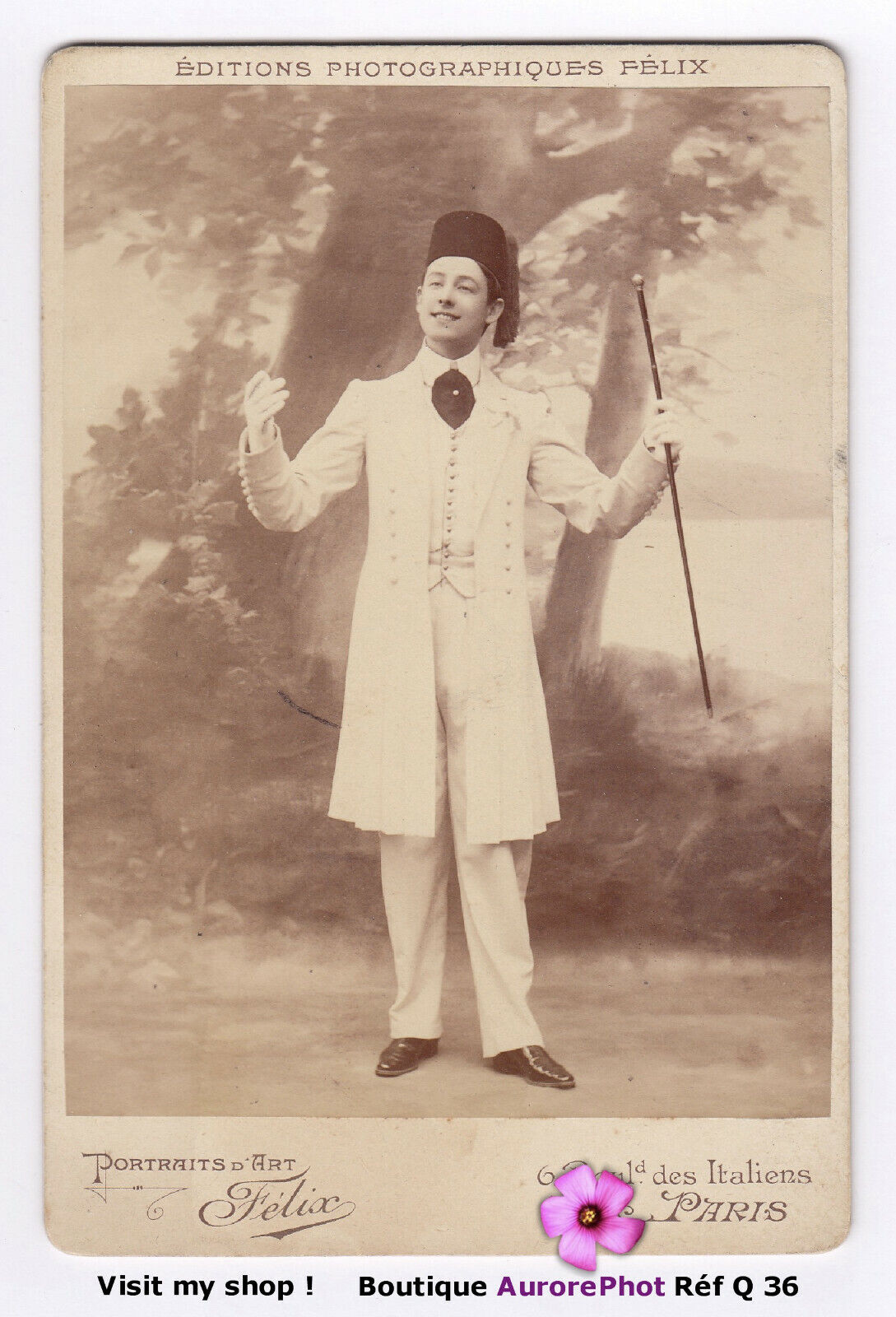
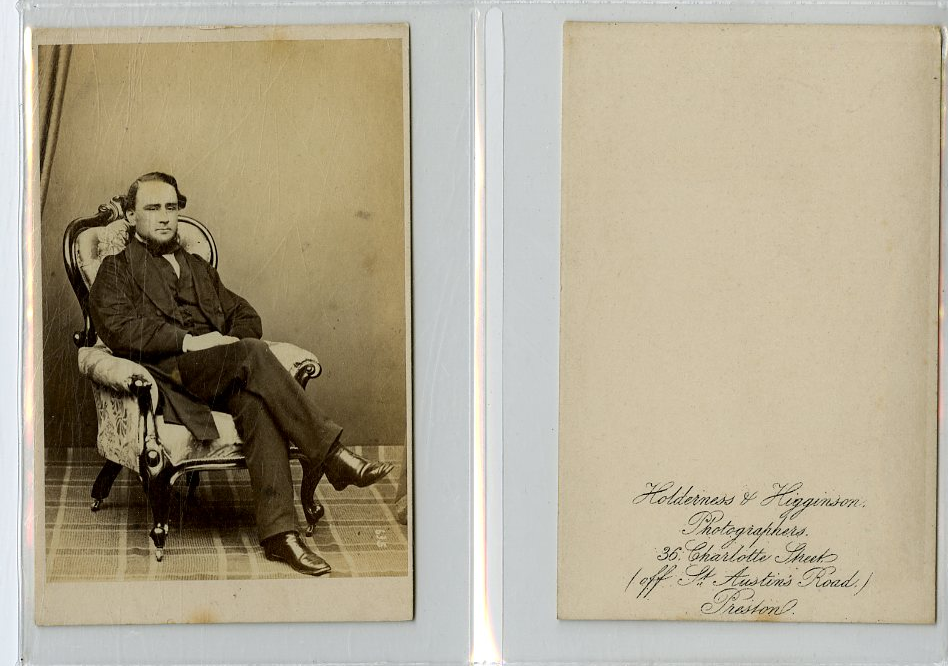
I have a habit, as I wander the web, of gathering up un- or ill-identified C19th theatre photos ... and then trying to put precise captions to them.
The box of bits sometimes grows a bit, and has to be emptied ... and today (since I don't have the energy for much else) seems like a good day.
This is my prize find. I searched everywhere for a photo of the American soprano Laura Harris, to use in my book
Victorian Vocalists, in which she is one of the 100 featured artists,
back in 2017. No luck. But now ...
'HARRIS, Laura (b New York, c 1846; d 13 Emmanuel Avenue, Acton 19 July 1917)
The early 1860s saw the emergence, in America, of a group home-grown prime donne who – following in the footsteps of such as Cora de Wilhorst, Lucy Escott and Virginia Whiting Lorini -- would make themselves celebrated on an international basis.
Apart from the American-bred, but not -born, Adelina Patti, the name which has survived down the years, to the virtual exclusion of all others, is that of Clara Louise Kellogg, but Miss Kellogg was certainly not alone among American women in establishing herself as a leading soprano on the European opera circuits, in these years. Indeed, there was one lady, in particular, four (?) years Kellogg’s junior, who ultimately achieved considerably more on the stages of the old Continent than her countrywoman did. And that was the now forgotten Laura Harris.'
There follow eleven pages of minute details of her career and life which, now that Victorian Vocalists is out in paperback, anyone who wishes can read at reduced price! But no photo. Which, herewith ...
While we're on soprani, here's one thoroughly well-known, and many times photographed one. The famed Euphrosyne Parepa. I popped this in the box because it is such a pretty picture. Euphrosyne as a young vocalist before she fell prey to prima-donna-waistline. And another of her as Lucrezia Borgia ...
I was surprised to find another 'Miss Harris', but alas not a relation of Laura (whose parentage remains a mystery to me) but of 'Augustus Harris' who, of course, wasn't 'Harris' at all, but Glossop.
This is said to be Maria Elizabeth (1844-1904), daughter of ... I'm sure she had a career in the theatre ...
This one was not identified, but I wouldn't be the author of The Encyclopaedia of the Musical Theatre if I didn't recognise this scabrous wee scene ...
La Mascotte. Done a thousand times round the world in the 1880s. But this is the original Parisian cast. King Laurent (Hittemans) is having a worried scout to make sure his goosegirl, Bettina, isn't losing her virginity to the cute shepherd, Pippo. Because if she does, she stops being his 'good luck charm' ...
And one from the ballet. Le Corsaire with Louis Mérante and Mlle Granzoff .. some time in the late 1860s. Mlle Granzoff made her first Parisian appearance in 1866, apparently coming from Russia. She was well-liked, but seems to have flourished only a few years. I wonder why so little seems to be known about her.
This is nice. A sort of cigarette-card, seemingly done on the cheap, featuring the original cast of the wonderful opéra-bouffe Chilpéric. 1868.
"One of the most successful of extravagantly humorous full-length opéras-bouffes written and composed by the playwright/composer Hervé, Chilpéric went even further in its almost surreal burlesque humour than Meilhac and Halévy had done with their recent texts for Offenbach's La Belle Hélène, Barbe-bleue or La Grande-Duchesse de Gérolstein. Hervé went back to the medieval era, so successfully used by Offenbach and Tréfeu in Geneviève de Brabant, for his subject matter, and he alighted on the Merovingian King Chilpéric I of Neustria and Soissons, whose lastingest claim to fame (apart from this opéra-bouffe) seems to have been that he was the first monarch to construct a circus in Paris. Chilpéric’s life and career were decorated with murderous women. His second wife, Galswinthe, was murdered by Frédégonde, who became his third wife, and who subsequently came to clutches with Galswinthe's sister, Brunehaut. All these dangerous ladies turned up in Hervé's opéra-bouffe.
Frédégonde (Blanche d'Antigny, a late replacement for
Oeil crevé star Julia Baron) starts the evening as an innocent little shepherdess, but she is spotted during the course of a hunt by the randy king (Hervé) and whisked off to court to be royal laundress etcetera. No one else is very pleased, not Frédégonde's peasant swain, Landry, nor Chilpéric's brother Sigebert (Berret), nor especially his brother's Spanish wife Brunehaut (Caroline Jullien), who had lined up her sister Galswinthe (Mlle Berthal) as a wife for the King, intending then to assassinate the royal couple and claim the throne herself by kinship. Since this Spanish marriage brings advantages of state, however, it is still on, and when it becomes imminent Chilpéric has to get rid of the slightly used Frédégonde. But Frédégonde has shown remarkable powers of adaptation in her swift transformation from shepherdess to royal plaything, and she doesn't let herself be evicted quietly. She screams, howls, and sings embarrassing top Cs all round the throne room. And now the murdering starts. Brunehaut has seduced Landry and persuaded him to kill Frédégonde, Frédégonde has attracted the court chamberlain, Le Grand Legendaire, and has asked him nicely to strangle Galswinthe on her wedding night, whilst Chilpéric has become deeply suspicious of Brunehaut's machinations and ordered the court doctor (Milher) to slip her something poisonous. Everything comes to a peak in the nuptial chamber on the royal wedding night, when the King has slipped out for a bit to defend his city against an irritatingly untimely attack by a disloyal brother. The three would-be murderers attack, the three women fight back, and in the dark it all gets very confused before someone presses a button which sends the whole lot of them -- and the bed -- straight down to the dungeons. Chilpéric wins his little battle, pops back home and sorts everyone out in time for a jolly finale with no deaths and only a little bit of stripping and whipping.
Hervé's lively score was as full of fun as his libretto, with Frédégonde being particularly well provided with an introductory waltz (`Voyez cette figure'), the pyrotechnic musical tantrums on her dismissal from court, and a lament in burlesque of the grand operatic (`Nuit fortunée'), whilst Chilpéric scored with his entrance number, the nonsensical Chanson du jambon, sung perched unhappily on the back of a real, live horse like the ones they use at the Opéra, and with his second-act butterfly song (`Petit papillon, bleu volage'). Galswinthe's boléro (`À la Sierra Morena') added a touch of the Spanish, whilst a basso druid (Varlet) opened proceedings Norma-like, invoking `Prêtres D'Ésus'.

This photo was just so appealing that I had to investigate ...
Her name was 'Millie Turnour' and she was one of the outstanding lady gymnasts-aerialists of the 1870s and thereafter. And when I went to delve in her doings ... well, she had quite a life.
Millie's real name was apparently Carlotta Amelia Turner, and she was born, it seems, in Portugal where her parents plied the family trade of gymnastics and associated circus feats. Father was Englishman Thomas Godfrey Turner (1811-1855), mother was Hephzibah Amelia née Drummond (1822-1903). 'Millie' is quoted as being born 3 May 1855, her sister in December 1856 ... the Turners had been married in 1844, so there were elder siblings and, after mother Hepsy's remarriage to another athlete, Alfred Ireland aka Turnour (1859), younger ones. Eight in all, while still working the act. Tough, these acrobatic ladies.
Millie's adeptness for the family trade, her originality (she did her gyrations on the trapeze without holding the side ropes!) made her a feature at a young age
I see her in 1868 performing at Tony Pastor's -- 'the female Leotard' 'the Spanish beauty and Queen of the Air' and in 1872 she was billed with Noyes' Circus. Another member of the company was former child somersault rider Alexander Wood[a]son Cook (b Fayette City 30 March 1852; d unknown) and in 1872 (26 March) the young couple were married at Shreveport. 'Wooda' and Millie continued their performing -- in America and Europe -- while Millie gave birth to a succession of babies over the next decade. And then something curious happened in Cuba. Apparently the pair were performing with Orrin Brothers Circus ..

and a report came through that Wooda had died of the fever. Other Havana folk confirmed it. But Millie wrote saying 'nonsense', he was alive and well. I wonder why he didn't write himself. But something wasn't 'well'. Millie gave birth to a daughter around this time -- back in Pennsylvania -- and no more Wooda! The family historians posit chastely that he died in 1881. But he didn't. In 1883 he can be seen playing at the Great Australian Circus at the Big Indian Wigwam on 35th and Broadway. In 1889 he applied for a passport from Berlin. And, yes, it is he. 'Born Fayette 30 March 1852..'. Curious. Ah! Here's a report in the US press. 1885. 'Divorced some three years ago'. 'Three children assigned to the wife'. Three? And here's a ship's manifest from 1875, Wooda Cook acrobat, wife Mabel, children Mabel and James ... that's two. Then Carlotte ... so is this saying that the sons of 8 January 1879 and 18 March 1880 and the 1881 daughter weren't his?
Well, whatever was going on, in 1884 Millie married another acrobat, the pint-sized Achille Onofrio. The following year Onofrio struck the 9 year-old Lottie with a shovel when she failed to perform to his satisfaction on the tightrope. He was convicted of first-class murder, commuted to an eventual nine years in jail. And Millie went out and got herself another acrobat: John Daggert Ashby, and mothered two further children. There was a fourth husband to come. A rather younger one. Harry Boise Treadwell was born 19 August ... 1871. And Millie was performing with Ringling Brothers Circus. On her wedding banns she said she had been married twice before. So was Onofrio or Ashby the 'de facto'?
Harry Boise died in 1930. Millie survived him, and died in Valley Stream, Long Island 27 January 1939.
A full life. A busy one. Unconventional, to say the least. But, hey, the world of the circus was and is a law unto itself. And why not? Unless it turns to killing a nine year-old girl with blows of a shovel.
Oh, Mr Onofrio apparently spent some of his time in gaol painting. There is an effort on the www. It is pretty unimpressive, but has zeroes on its price because of the attached story. Peuuugh!
Wooda Cook seems to be playing in variety as a 'Chinese acrobat' as late as 1908.
Yes, it is another world.