Sunday, July 14, 2024

A modern operetta Book Review.


I don't do this, often, any more. In the 1980s, I was the 'Mr Musical Theatre/Operetta' of the planet. I wrote two of the three definitive works on the subject. They still are, actually, definitive nearly half a century later. But 21st century writers on the subject -- and they seem to grow like lichen on a rock nowadays -- are of a different breed. Gerry Bordman, Richard Norton, Florian Bruyas, John Franceschina, the Hungarian scholars, Otto Schnedereit, Andrew Lamb ... we recorded facts. The new generation prefer to 'analyse', 'discuss', 'theorise' and, I'm afraid, too often, invent. And to use our facts (when it suits) to 'support' some theory or drive some cause. So, those of us who are left just sit back and let them get on with it. It's a whole different world. Most of the time, I still prefer our world ... but, hey, people are making careers out of the new way. And, occasionally, one pops up with something solid and really investigative to offer. And, alas, occasionally, someone of the  retrograde undergrad type, churns out another slice of the same old untruthful trash that passed for 'history' decades and decades ago. Well, this volume includes examples of both those extremes.

I know, personally, one of the fourteen contributors. I hav'n't read the biographical notes on the others. Purposely. I wonder from where the editor(s) found some of them. No. I don't want to know!  

This is what I wrote, after eight hours of reading, on a sunny Monday at the Autralian seaside ...


"I'm not sure I'm quite the apt person to be reading and reviewing this tome. The cover is pretty, but the title is distinctly off-putting. It seems it's of the fashionable 'seminar' type. University-style stuff from multiple hands. Everything that I and my works are, and were, not. However, I got considerable -- if selective -- enjoyment and new information from a French volume on similar lines, culled from a series of chatshows by Mons J-C Yon, so hopefully this one will do the same job.


Here goes. Hmmm. The 'Part' titles don't look promising. 'Class', 'Gender', 'Identity', 'Sexual', 'Politics' ... all the boring buzz-words of the 21st century academic ...  but I see some interesting and buzz-word-free titles ...  don't pre-judge, Kurt.


Omigod! Musical examples. And figures. No. Don't pre-judge, Kurt. Read.


Introduction. So full of 'references'. These compendia seem to be just like wikipedia articles. Made out of footnotes quoting other folks' writings. Why don't the writers just listen to and read the original texts and scores, rather than glueing together bits of what has been said by other people (rightly or, too often, wrongly) elsewhere? 


And, oh dear, here we have undue emphasis on that most intermittently fashionable of opéras-bouffes (not 'opérettes'), L'Étoile. I think I'll just leave the intro, and skip down to the articles.


The first one of these sounds decidedly interesting. And relevant. 'The Operetta Seasons Considerably Decreased our Losses' is a phrase which could refer to almost any opera house/company in Britain, and probably elsewhere, in the present age. Well, change 'operetta' into 'musical theatre' ... as I do, for nobody has ever satisfactorily explained to me the difference.


Wow! Well, whatever the rest are like, Article no 1 (it's actually numbered 2), by Matteo Paoletti, justifies, for me, the publishing and reading of the whole collection. The information gathered and contained within this piece, on the musical in Italy, is an eye-opener, even to this very old student. You have to struggle past the occasional long sentence and big word ... but hey! it is well, well worth it. And did I even know that Florodora had been produced in Italy?


I, of course, could live without the 3-4pp of 'I pinched this from here' listings which follow the text. I simply skipped them. Sig Paoletti, your work can stand on its own merits without such addenda. I await (if you hurry, for I'm nearly 80) your complete history of the Italian operetta/musical theatre. You can do it! Ten gold stars.


PS my late wife toured Italy in the 1960s with Cin-ci-lá, Il paese dei Campanelli et al. and the recordings were delightful.


Article 3. 

OK. Lustige Witwe. Been there so many times before. Even played Danilo. And my very friend, Andrew Lamb, wrote a splendidly definitive piece on it, which I see is not referenced here.

Ah! I see. The article is not about Witwe (thank goodness), it's really about the vaudeville Das Puppenmädel. E tutti quanti. And Jerome Kern. I'm sure it's an interesting study, comparing Fall's original score for his piece with what Frohman, Kern and 'American taste' did to it. Yes, it's the sort of detailed monograph which definitely has its place in a tome such as this. I can't partake of the examples because I don't have a working right hand, but go for it, you who can. 


The appendix is interesting. I seem to remember I included a similar one in my recently republished The Musical (State University of New York). I must see if they are comparable. But this author, though he references the grand Gerry Bordman ... and a couple of works less reputable ... doesn't appear to have read me! So we may differ.


Article 4

Hungary. Yesssss! The Hungarian Operett/musical is the most joyous and most under-investigated area of the genre in the world. I know Russia and East Germany and Armenia are more à la mode in this day and age, but it is Hungary all the way for me. (Admission: I am of Hungarian stock). 

Alas, this piece only deals with the years 1922-1926, but, being an article and not a volume, that's fair enough. Ummm. Starts with a quote from Dick Traubner and says 'exogenous plurality' on page one.

And, oh dear. Errors. Hahn becomes Hanh, Stolz becomes Stolcz, Chanson gitane loses its 'gipsy', Passionnément loses an 'n', Student Prince loses an 'e'. I have always spelled Buttykay sic, am I wrong?

The article appears to be, in verity, an in-depth study of the influence of Ben Blumenthal on the Budapest theatre. An entirely interesting topic. But I sha'n't be reading on, in a piece with so many appallingly egregious errors. Taylor & Francis, get a decent copyeditor!


Article 5

The next section is on 'politics and national identity'. Yerrrrm. Soviet operetta in Czechoslovakia. Well, again, fair enough. And new. There seem to have been 23 (listed here) of them, over the years. I see a few of which I recognise the titles, though I cannot claim to have heard more than the odd number from such as Free Wind. I fear these pieces, even the most 'successful', are of interest mostly to folk who have an interest in the censorship issues which surrounded them, rather than in their musico-theatrical details. Which is perfectly valid. And it is nice to have the breakdown on the Dunayevsky pieces. All knowledge is worthwhile. But iconoclastic I thinks, ever and yon, of Peter Sellers (was it?) and 'The Russian Girl's Hymn to her Tractor'.


I think I have been dragged, less succesfully, into this area before! Alas, my Songs for Swinging Sellers went south (to Balham?) years ago.


https://kurtofgerolstein.blogspot.com/2020/12/serenade-of-soviet-girl-to-her-tractor.html


Article 6

Is about three German-language Operetten which use Poland in their text. All three were successful, so we are familiar with and appreciate them, especially, Der letzte Walzer. Polenblut didn't get a look in.


Article 7.

This is not for me. I don't need to read more about the most over-played of 'Hungarian' and Hungarian pieces. Tell me something about Verö and his contemporaries. Tell me something I DON'T know. Szultán or the wonderful János vitéz.


Phew. That's the end of the politics. Now we're into class and 'gender'.


Article 8

Britain. 1890-1900. Yay! The Geisha, A Greek Slave, Florodora, A Chinese Honeymoon ... a singular period in Brit Mus Th. Here, I am wholly at home! And yes! As the author of the standard work on the subject (2 vols), I even get a tiny mention in the footnotes. Well, this one stretches 'discussion' of the plot and texts of a small handful (not any of the above ones) of successful musicals over incommensurate lengths. No, I didn't learn anything new. And I feel this was a less than needful 

exercise.


From my bathroom wall


 Article 9.

Travesty. Well, it had to come. But it is not the vast subject in its entirety. Just from Chabrier to Hahn. Er ... not from Vanloo and Leterrier to Guitry?

Naturally. As before. This is an article not a volume. Similarities between the 'boy' roles of Lazuli and Mozart? I would have said they are very, very slight. L'Étoile is a very saucy opéra bouffe and its 'hero' not to be taken seriously for a second. Mozart is a 'play with songs for Yvonne (Printemps)'. Not an opéra-bouffe, not an opéra-comique, not an opérette. And of a wholly different level of textual achievement. More Rosenkavalier than Étoile.


OK. Let's see if the author here comes to the same conclusion. Oh, my goodness! Lazuli and Figaro? Don Giovanni? Gounod? Sorry, I'm lost here. This is far too complex and even far-fetched for me. As L'Étoile, in spite of its ruderies, was for Paris.


 Article 10. 

Der Zarewitsch. Sigh. Inevitable. I actually find this work the least attractive of this set of shows. Decades ago I wrote 'Perhaps the most thoroughly gloomy of the line of more or less gloomily romantic tales which were elaborated to make libretti for Franz Lehár in the later part of his writing career, Der Zarewitsch, whilst purporting to be based on a real incident in the life of the Russian Tsarevitch Alexis, followed the already cliched formula of Lehár's librettists through its blighted love affair between tenor (extremely large rôle) and soprano (less large rôle) up to the fashionable unhappy ending'.


Clichéd is the word. Same basic idea as Victor/Victoria and its sources. Shades of L'Ile du Tulipatan, Fatinitza and hosts and hosts of others.


Fatinitza: a she playing a he playing a she

I see John Rigby (whom, amongst all the writers in this volumes, is the only one I know personally) has really used the piece as a springboard for a piece on Weimar homosexuality in general. I take issue with him on a few statements: notably that old chestnut that Patience has any homosexual content. Bunthorne and Grosvenor do everything they do for the love of the Ladies. But this is sound scholarship, clearly expressed, and I see my 1980s reference to poor gloomy Alioscha as 'apparently homosexual' gets a nod. Well, he is, isn't he? Not judging, merely stating. I guess there were as many homosexuals in 1927 as they are a century later.


Well, its my blog ...


 OK that's the end of the third section. Now we have 'Genre Transformations'. Wonder what that means


Article 11

Ohho! We start with Gilbert (and Sullivan). Once again, I'm on home ground. Oh! Surprise. We are looking at the music rather than the texts. That's interesting and reasonable. The sources of Gilbert's burlesque libretti and lyrics have been (as with the Bab Ballads) pretty well annotated since the year z. Not least by contemporary critics. And we can't forget that WSG set pantomime and burlesque lyrics to popular minstrelsy in his time.


Page 174. Don't disappoint me Mr Bower. 


Ummm. The history of burlesque has never been properly documented, in spite of Adams and Clinton-Baddely. I don't know Schoch or Booth. I, myself, twice began a vast volume on the subject, one or two decades ago, but it sits uncompleted somewhere in this computer's brain. I should pass it on .. but to whom? To do it, properly, needs years of devotion, and I hav'n't enough left.


Page 179. Well, blow me down. Here, I am certainly finding things I didn't know! Are these 'quotations' real and intentional or is it a case of 'Hello Dolly'/'Sunflower'? Read on. 


Did Sullivan really stoop to dear old 'Wreath of Roses' in Pirates? It was so well known, it would surely have been recognisable. Henry Russell ... well, it's a nice thought that the music was underlining the English essentials of The Mikado (today's yellowface howlers wouldn't like that!). The Pirate King's song? The one that Broccolini said was written in a hurry for him in New York ...? Well, Russell's songs (see Andrew Lamb's biography) were an integral part of British musical life ... so who knows?


The original Pirate King

I don't know whether I'm convinced or not. But this was fun. The copious notes and bibliography of 'sources' (worthy and less than worthy) seem to indicate that heaps of people have had a go at this topic. This article will do me, and I don't think I need any more musical dissections of my beloved Sullivan's works.


Article 12.

Well! Here, I'm on even homer-ground. I took part in the Lanchberry 'version' of Witwe at the London Palladium in the 'seventies. No, I didn't dance. I was a pit singer. The Lehár estate had decreed that the music could not be played without vocal content. In my opinion, they should have zapped the whole idea. To me, familiar with (as recounted above) the Operette, it was a horrid experience. And the dame's age showed embarrasingly clearly from the pit.


Operas in the 19th century didn't need to be remade as ballets. More often than not, as in Robert le diable, they included up to a full act of ballet. Some of which became the feature of show.


I think, under the circumstances, I may be excused from reading the carefully compiled details herein preserved. But they are, now, at least, preserved.


Article 13

Sexual Predation? Textual Correction? I wish these articles had titles that were easier to understand for we poor folk with only a couple of University degrees.


Ah. Is this actually an article trying to censor what modern pressure-groups want to lead us to believe is 'problematic' material? If it is, I sha'n't get past page 1. There is absolutely nothing 'problematic' about The Geisha. The soubrette dresses herself briefly in a kimono. There are several oriental characters. So? Are these yellow-chasers trying to ban Ba-ta-clan too?


The great Nätzler as Wun-Hi

Well, let's see.

Oh no! This is laughable! Watering down the sentiments of stage 'libertines' for the poor little 21st century. What about the 21st century 'libertines' poured nightly on TV and film devotees. 'Hundreds and hundred of girls'.


Eliza Vestris as a travesty 'libertine'.

I leave this piteous topic with a wish that the lumpy Korngoldised version of Eine Nacht in Venedig be forever entombed. 


Article 14.  

The last one. Good. This is a collection to be dipped into. Not to be read in one straight draught, as I have done today.

Jerome Kern in a book on operetta? Hmmm. The Princess Theatre shows? Oh lawd, I thought we'd killed that dumb appellation and the fake 'significance' attached to it, years ago. 'Integrated' rubbish. 'Unique' nonsense. This article could have been written half a century ago when the most egregious falsehoods about the American musical theatre were still believed. This last item has no place in a serious volume ...

We were Guy Bolton's agents ...

I see that the notes credit 'most authors of historical surveys of the Broadway musical' with supporting these fabrications. I notice that I -- thank goodness -- am not included.  


Well, we started with the very Best article and ended with the very Worst. And on the way we passed by some interesting items. 


I'm going back to No1. Now THAT was worth getting out of bed for!  Things went rather precipitately downhill later on. I think I need a stiff drink ... Cheers to you, Sig Paoletti! 


 PS. I discover, after delivering my review, that this book is the Nachlasse of a 'conference' held in Leeds, UK, some time ago. I might have guessed. Several of my very knowledgeable friends attended what I am informed was 'three days of tosh'. Apparently there were loads more 'papers' delivered which are not included here. I wonder who selected this bunch! Is it a 'pay to be published' job? Or a 'me and my mates' job?  I also wonder ... who paid for the whole exercise, not to mention the publication of this collection ... or is that why it's retailing at a preposterous £108. You could buy the whole of my fact-filled three-volume Encyclopedia for that, some years back. Guaranteed waffle free.


Saturday, July 13, 2024

Today, I went for a walk ..


Mock not. This is not an easy thing for me to do. But, last night, I looked out from my twilight balcony, and the old adage came to mind ..


Red sky at night, shepherd's delight ... 

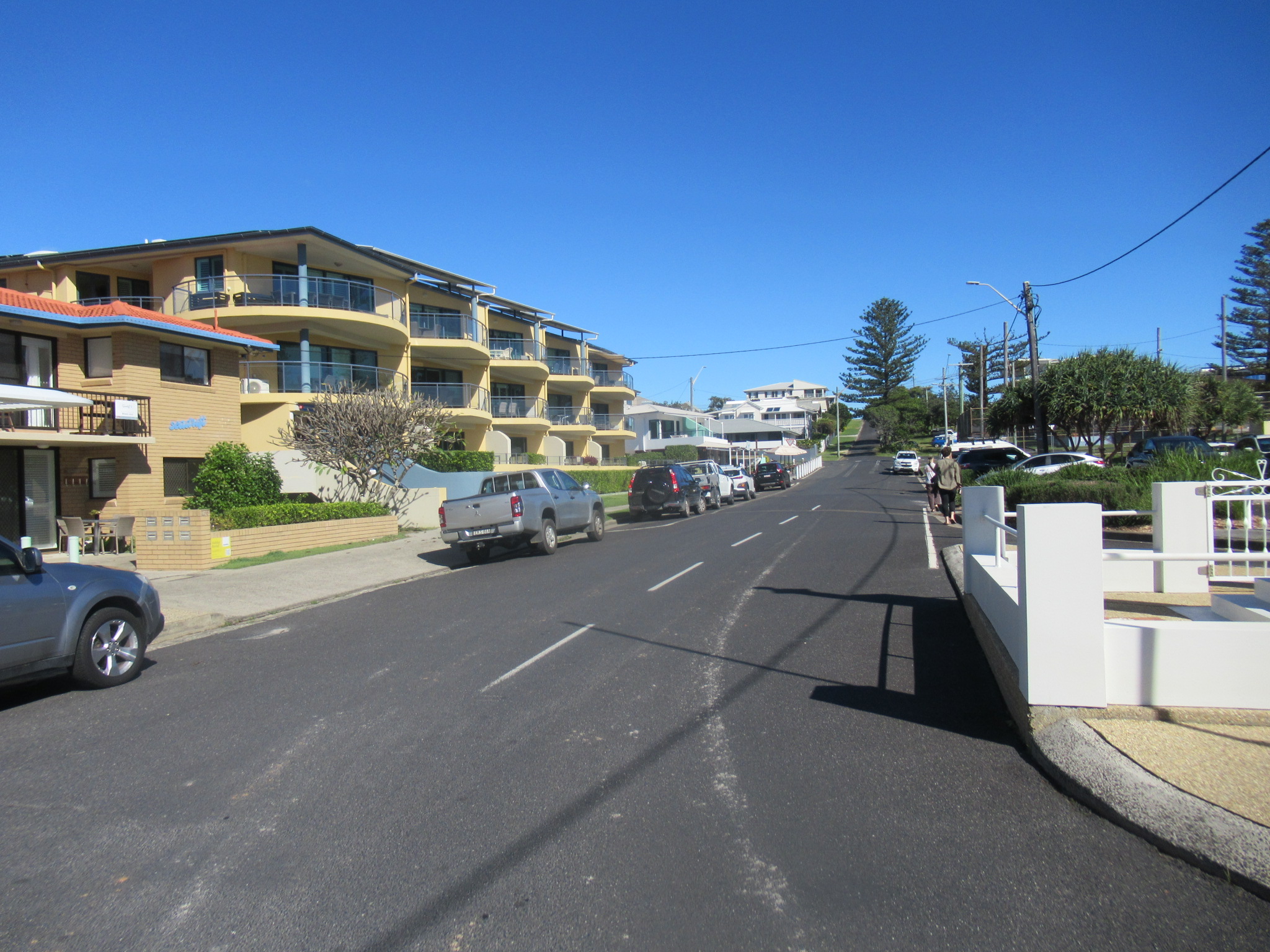
At the far end of Ocean Street (thus called because the Ocean is few metres out to the left), there is a Rotary-donated bench. Paulie photographed me sitting on it in the first year of Winter Palace Wonderland. Then again five years later. Yes, I could walk pretty well in those days ... we don't mention the waistline!


In 2024, I wondered, could I make it that far? I have been here two months and have every week found an excuse -- too hot, too cold, too tired, too far, too hobbly, got a chill -- not even to try. But today ...

I had Paulie's arm to hang on to, so didn't need to take the encombrant walking stick. And I was promised home-cooked pasta with Woody's tomatoes, Yamba market garlic and courgettes and chorizo at the end of the hike ... so .. off we set. 

When you go ever-so-slowly, you do take in the glories of the sea and scenery.

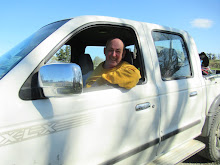
From my back door, you pass along Ocean Street and Convent Beach. Yes, there was a convent there a century ago, before the million-dollar buildings moved in ... that hairy bit of steep green terrain behind FEX-91P was on the market for $4m a few years back. A perilously precipitate flat in the building behind it was $3m plus. The terrain has clearly not found a buyer! I don't know about the flat: it was built for maximum fabulous sea view, and mountain goats!


So Convent Beach remains much the same. And if I can no longer clamber down to it (though I may try) I can look lovingly out over it ..


We made it to the bench. I sat down briefly, but forewent the photo. The contrast with those of former years was a little too depressing. I photographed the view instead.


And Paulie snapped the most delightful little visitor!


Mission accomplished, we were about to turn back (the next bit of road was always a bit ... errrm) when I noticed something new and different. The council has installed a wonderful bit of metal walkway to allow folk to continue the promenade along to the next beach, Pippi Beach. It would have been ungrateful not to have tried it. Magnificent! Five gold stars (yet again) to out Council. Knocks Waimakariri (NZ) into the depths!


Pippi was calling, but I and my game leg knew my limits, and we turned back ... 

The pasta was calling. And, bambino! was it superb ....

Oh, I should I guess define the 'Winter Palace'. It is in a building of 28 holiday apartments of a very superior but unassuming nature. That's it, the yellowish one (soon to be repainted in a more Mediterranean shade) in the shadows (phew!) at the centre at the back. Corner of Ocean and Ritz. No, it's called Ritz not because I live there, but because it was once the site of the burned-out Ritz Hotel.


I bought a 1-bed flat on the ground floor before prices skyrocketed in our town. That's it on the the front corner. Under tree number four. Yes, I know the higher-up ones have more view, but I and my leg -- as you will understand -- don't do 'higher up', even though there are lifts. And the honeymoon couple on the top floor in the Ritz fire perished.

It proved a blissful buy, and since -- in those days -- my books were selling, my horses were winning and we were threatened with a inflatory Labour government in New Zealand, I had the bright idea of buying another as an 'investment'. So the Winter Palace now consists of two nicely-sized flats and a wee studio. Pretty much the same configuration as Gerolstein. And, as at Gerolstein, I have my bolthole in the quietest part; from time to time, Wendy and Paulie-mit-Musik (and occasionally a well-behaved family member!) use the sea-facing apartment ... and when we ar'n't here, they are let out, to try -- not hugely successfully, right now -- to pay the expenses. 


Middle one, on the -- of course -- ground floor!


Oh, Yamba ... I am so grateful to have found you. Yes, I who have lived in Mayfair, London, in Monte Carlo, in St Paul de Vence et al, during my nearly 80 years ... 

How lucky was I to end up in my hoppled years in Yamba and Gerolstein ...

Gerolstein, Sefton, NZ


Friday, July 12, 2024

"Love Could I only tell thee" .....


Well, there is little left, as far as recordings are concerned, to recall my brief career as a vocalist. Yes, there are all sorts of teenage broadcasts, somewhere in the archives of NZ Radio ... but you try to get copies. Even with 'influence', I can't. Though, oddly, in the 1960s, I don't recall signing anything giving what was the NZBC the rights to have and to hold my recordings.

Anyway, tant pis. They must have been adequate, for the press approved. And I got a job with NZ Opera. Who then tried to turn me (8 stone plus) into a baritone. Beginning of the end. London Opera Centre completed the destruction. Mary Hill, Ninian Walden and Abbey Opera tried a rescue job (Banquo in Macbeth) and Ove Sinding Larssen almost got me back on track ... but it was a losing battle, and for why?

Well, I gave up all operatic ambition, zoomed from Monte Carlo to the high seas, having fun ..

Fast forward.

Me as a casting director, agent and author. Much more suitable occupations. But, occasionally, my vocal talents proved useful. My client, Diana Martin and I did a few demo tapes for folk. I remember we did the original Peg presentation. Tracy Collier and Graham Hoadly joined in. Then, when I was launched on writing British Musical Theatre, we put down the music from a couple of old favourite musicals ... The Geisha and A Greek Slave ...  Chappell the music publisher (for whom we'd done the odd demo) let us use their very basic studio (one microphone) .. and it was All Enjoyable Music Making  ...

But it was just Friends Around the Piano. And Chappell recorded it all, because let's face it, nobody there knew what these shows sounded like.

Well, all the participants (except me) were in London shows, so the recording schedule was a bit chaotic. And I was the 'understudy' for bass, baritone and .. gulp ... even the tenor!  From Gareth Jones to Paul Bentley!  

All of which is leading up to the number from The Geisha (interpolation) with which Ian Mcmillan and I filled up the session after everyone else was gone. I tried, my God, I tried to be a Hayden Coffin baritone! One take Tommy ..

https://www.youtube.com/watch?v=V7cfkbasuBo

Anyway, this spate of nostalgia has been  brought on by finding this on ebay today. Good luck, Captain ?Dawson!!!!! I hope you didn't breathe in the last phrase ... and please Zeus you weren't a speedy tenor! (See youtube where the wonderful S Burrows murders the song!).


Thursday, July 11, 2024

The singing scenic artist of the York circuit.


Old rule, when you've struck gold (see yesterday's post) it may well be a lode ...  always revisit the scene of the strike the next day!

So I hied me back to MargyandMax's wonderful e-shop and boing!

Now, this nearly 200 year old document hasn't got a huge amount of internal evidence as to its origins in its lines. No date. No sign as to whom it was written. And a dirty big blot over the sender's initial.

It seems to merely be a letter -- sent from the Commercial Rd, east end of London -- to a theatre manager, looking for a shop. And the writer claims be a bass singer. An actor of 'heavies' and rustics. And a painter. Scenery not houses. 


Must have been loads of those. Of varying degrees of talent in one department or the other. Would you hire an artist with handwriting like that?

But. I looked a little closer. That name. Not 'Newman'. 'Newnum'. And a small rusty bell tinkled in my aged brain. Cawse, it cried. Cawse! And it was right.

Right. The writer of our letter was Thomas Edward NEWNUM (b Brighton 1808; d Micklegate, York 26 October 1867) and all his 'claims' were absolutely true and justified.

His letter reads to me like that of a fairly young and untried man. However, although I don't know who Mr Gray was, Mr W West was a well-known performer at Bath, Drury Lane, the Surrey, the Haymarket at al, and his wife the sometime leading lady at the Lane. So where had young Newnum encountered him in such a way as to give his name as a reference? At the Brighton Theatre? But the lad is in London...

It is my guess that this letter possibly dates from 1828, and is destined for the manager of the local theatre in Brighton. For that is where the 21 year-old Thomas turns up at the beginning of 1829 .. 


There was clearly some theatrical connection, for Thomas was said to have been 'formerly call boy' at the Theatre, his brother Michael (d 19 October 1825) had been 'of the Brighton Glee Club' and his father appears to have been in charge of the redecorating of the house ...

He was still at Brighton in 1830, but in 1831 I spy him playing Basilio in The Barber of Seville, and painting scenery for pantomime at London's East End Pavilion Theatre. Ah! Was this when he lived in the Commercial Road? By 1833, we can read appreciative comments on his 'new and classical drop scene' and see him designing at Newcastle. It was in 1834, however, that he got thoroughly under way. He was engaged in his triple function on the York circuit -- Hull, Leeds, York -- where he made his debut as Hawthorne in Love in a Village. Mr Edmunds played Meadows and his wife was Rosetta. Mrs Edmunds was the former Mary Cawse of the principal London Theatres. Whose story is here:

https://kurtofgerolstein.blogspot.com/2023/01/the-misses-cawse-unlike-as-two-beans-in.html

and who rang my bell.


Thomas was acclaimed 'a very fine bass singer', in theatre and in  concerts, played roles from Sir Andrew Aguecheek, Don Diego in The Padlock and Pietro in Masaniello to Father Paul in The Duenna or Caliban in The Tempest or Silenus in Midas, but it was as a scenic artist that he was roundly acclaimed as the best of the time and place. Diorama ('one thousand feet' 'ten scenes from Byron'), cosmorama, act drops, scenery dramatic, operatic and pantomimic ... his work became a feature of the circuit.


And then, in 1838, he announced his retirement from the stage. He and his wife and children had settled in York, at no1 Micklegate, and he took up the post of drawing master at St Peter's Prioprietary School. He gave private lessons, became a churchwarden at St Martin cum Gregory, choirmaster at Whitby, drawing master at Holgate Seminary and, occasionally, delivered Horn's 'The Sun is on the Mountain' or 'On by the spur of valour goaded' at a Music Meeting, a Dinner or festive occasion.


Thomas married, 29 November 1830, in his Brighton days, local girl Mary Burton (d 1879) and they produced eight children. I have Edward Thomas (d 1843), Mary Ann (Mrs John Burdett Allison), Michael Edwin who went off to Calcutta, William John (d 1840), Fanny Eliza (Mrs George Stamp, Mrs Froggatt, d 1904), Barbara Ellen (Mrs Wm Lees, d 1905), Charles Henry (d 1908), George William (d 1853).

So there we are. Our letter is definitely pre-1834, and probably a few years earlier, and thank you MargyandMax for saving this wee piece of theatre history.


Interesting theatrical bits (2). YIKES!!!!! Serious stuff!


This developed into a miraculous voyage of discovery .. read on!

I'm going to start this entry, for 'interesting bits', and, instead of loading my desktop with the fruits of my daily trawl and toil, I shall put them in here, until I judge the post is getting unwieldy, and then go public. So here goes with today's bits.

No 1. TOCH AND TARD 


OK. A comedy act. A way out 'eccentric' comedy act. Of any consequence. Oh, very definitely. They were a much admired acrobatic act 'd'une rare originalité' for twenty years in the French music halls, in the north of England and occasionally further afield.

They were undoubtedly French -- although they sometimes billed themselves, fashionably, as 'barristes excentriques américans' and as being of the London halls -- and I would guess from the southern part of France, or even north Africa. For that is where I spot them, in 1899, for the first time, playing their 'horizontal bar, knockabout, burlesque wrestling and burlesque hand balancing' act. 

Oh, I should add that 'Toch' was apparently a real name (Mons J H Toch) which has a southern ring to it. 'Tard'? Who knows. I thought it was a play on 'tot et tard' (sooner and later), but I guess he could have been Tardieu or the likes.

So, 1899 Casino Music Hall, Algiers. Next sighting Palais d'hiver, Pau, then Casino des Arts Lyons and at Cannes. 1901 seems to have been their first appearance in Paris, at the Cirque d'hiver. Circus Plège, Nancy, Casino, Brest, Palais de Cristal, Marseille, Casino d'éte, Oran ('le clou de la soirée ce fut certainement le début des très remarquables acrobates qui s’appellent les Toch et Tard, deux barristes tout à fait extraordinaires dans leur travail tout de force ef d’élégance et dont la parodie des luttes fait une des joies de la soirée'), the Jardin de Vichy, Bordeaux, the Eden Concert, Nimes .. and back to Paris on the bill at the Ambassadeurs with Mayol with their impersonation 'aussi savoureuse que cocasse d'un combat d'athlètes' . 'Savoureuse?'.

In 1904 I see them for the first time in Britain, at Burnley's Empire Music Hall, then at Manchester, Leeds, York ... in 1910 in Vienna and Linz ... and, seemingly with the same act and I presume the same men under the same titles, for a long stint at L'Olympia in 1916-7. My last sighting is at Asnières in 1919.


Maybe some day I will discover who they were ... or someone else will!


No2. The vendor of this photo has had some trouble deciphering the lady's signature. I also.


But I do know about The Tramps. It was a music-hall sketch produced in 1896 (10 December) at the West London Theatre. The author was one Birmingham-born William McCullough (ka Brien McCullough) a small-time actor, impersonator and theatre manager (1850-1911) who penned a number of such pieces (Light o' Day, Forgive and Forget, The Anti-Gambler) which he played round this halls with 'his company'. That company featured as leading lady one Nellie Nelson, who I suspect was his wife née Sarah Ann Moore (1857-1932).

It was a simple, old fashioned piece put together to feature McCullough as Jerry, an itinerant umbrella-mender who, under the influence of a scheming villain, accepts to murder the legal heir to a Lord, but then saves the child. Jerry and the boy Reggie are the tramps. Of course virtue triumphs, and the illegal heir is poisoned, after Jerry and Reggie have spent the sketch running the gamut.


I find it difficult to believe that anyone but the McCulloughs ever played the piece, or that it was ever given by amateurs, so I have no idea when Lillian could have played Reggie in Luton. Maybe the story will come to light one day.


No 3. JACK AND THE BEANSTALK pantomime at the Prince of Wales, Birmingham, 1910. 

And what a ritzy cast!  Ada Reeve and Ethel Haydon from the Gaiety Theatre et al. George Robey (Ethel's husband) as dame, Barry Lupino and good old Tom Shale ...


No4 A wondrous selection of letters from which I found this one the outstanding jewel!


8 December 1832. The great bass and impresario Giuseppe de Begnis has taken a little opera company to the provinces and to Scotland, playing Il Barbiere di Siviglia, Il Fanatico per la Musica and Don Giovanni. Three staple piece of his repertoire which each featured a large comic role buffo role for the star.  Le Nozze di Figaro and Agnese were also carried.
His travelling companions ('a group of transcendental talent') were Joséphine De Méric, prima donna, Donzelli tenor, Giubeli bass, plus Deville, Arigotti, Galli and the boss's not exactly trandescent pupil Miss Waters, plus an 'orchestra' of six. And a necessary 'Miss Phillips of Drury Lane' to play Donna Elvira. Manchester, Liverpool, Leeds, Newcastle, the 'most superb operatic force ever brought to Edinburgh ...' were visited between September and December.
The operation was a highly significant, taking a unit opera company to places where such a thing was unheard of.
Madame De Méric clearly didn't have a very precisely kept engagment book. She was apparently expected back at Drury Lane, under Captain Polhill, before her time with de Begnis was over! All was, however, seemingly neatly arranged. De Begnis was back at the Italian opera, and Mme de Méric was suing the Italian Opera for unpaid salary, signing for another season with the new management and giving her Donna Anna to the Leporello of Henry Phillips (in English, for the first time) at Drury Lane by February.

In the same web-shop I found this. A manuscript list of F C Burnand's early works made by ... F C Burnand!


Well, many years ago I completed a (musical) work list for Sir F B.  Let's hope I didn't foul up!

1854 Villikins and his Dinah (pasticcio)

1856 Lord Lovel (pasticcio)

1857 Alonzo the Brave, or Faust and the Fair Imogene (pasticcio)

1860 Dido (pasticcio arr Hayward) St James's Theatre 23 March

1860 Light and Shade (various) drawing-room entertainment Hanover Square Rooms 21 December

1861 The King of the Merrows, or the Prince and the Piper (pasticcio) Olympic Theatre 26 December


Well, I don't think that the farce played at Worthing or in his tutor's pupil room at Eton counts! Pity he didn't give dates for the ADC productions.

We agree that Black-Eyed Susan and Ixion (qv) were his greatest successes. But fascinating to know that he got 25% of the profits ... an enormous £2,000, and that his next best burlesque was Paris at the Strand. What a grand piece of ephemera!

And yet another from the incredible shop of margyandmax


The other great burlesque writer of the era, William Brough. Biography and worklist in my Encyclopaedia of the Musical Theatre. 7 April 1860, the Lyceum was playing his burlesqiue The Forty Thieves.  The addressee of the note seems to be the popular Frederick Guest Tomlins, 'secretary to the Shakespeare Society', author and lecturer on The Nature and State of the English Drama, editor of Douglas Jerrold's Newspaper, managing director of the 'Athenaeum Institute for Authors', 'Clerk of the Painter-Stainers Company, and various other things theatrical, jounalistic and charitable. 'The well-known organist and critic'. 'That acute Shakespearian critic' . Born Lambeth 1804. Died Queenhithe 21 September 1867. Good heavens, he's in the DNB!

This one needs more work. No date, just 'Theatre Royal, Glasgow', and for addressee: 'Dear Guvnor'. Shall be with you on Monday next. Have a rehearsal of Paul Pry .. but I  sha'n't be there as can only leave here Sunday at half past eight in the evening. Play another piece before Paul Pry, making mine the second... 


Mr Brook were you ever in Glasgow? I never was in such a filthy hole. Sheffield is a paradise to it. Tell Baby I shall bring her home a new dress same as ?Pops,  for there is nothing else I can bring them. I can't even get snuff for Paul (Pry?) under two shillings the same as we see in London for ninepence  ... Sims Reeves comes next week and wants seven rooms for himself and wife and kids? times six ...

And its signed ... what?  And I suppose the date is Wednesday 26 May ... or November ...

Well, I can try ... and ... YES ????!!!!! I was just about to give up when I came upon this. The Cider Cellars, Maiden Lane ... performer and  treasurer H G Brooks. 'Miss Baby Jordan's Singular Revelations of Fast Life'  ... Kelly from the Coal Hole in his Wrightsonian realisation of Paul Pry with tableaux vivants and singing ... August 1861 ...   Hmmm. 'Baby Jordan'? Olivia Jordan? Widow of the fled Richard Brinsley Sheridan jr ...?