Friday, June 30, 2023

Words (and Music), from New York


From a wintry New Zealand fireside, listening to new American CD....


When I was a wee, small chap, my taste in music ran to the vast, the dramatic, the voluminous, and the Wagnerian (from Richard to Robert's chorale). Then I grew up a bit, began to sing myself, and, as puberty threatened (age 11), started to realise that the words of a song were not there solely on which to practice one's vowels and consonants. They meant something.


Many of the lyrics of that era were, in both 'art song' and in popular music, pretty soggy stuff, or irritatingly Christian, but then one came upon a piece of wonderment such as 'Der Erlkönig' ... and understood that the words and the story of a song were utterly crucial to its wellbeing. Sometimes ever more than the music.


I remember how my father recounted to me the dreadful story of the Erl King and, then, at my insistence, the other tales which had served the great Lieder composers for texts ... and on we went from there .. 'Mein Vater, mein Vater ...'


Leap forward 60 or more years.  During which, during my time and life in music I have never underestimated songwords, on the stage, the platform, anywhere. Even, Lord love us, in opera. The brilliant witticisms of the French revues, of Willemetz, Barde et al, of their English sort-of-equivalents, from which Noel Coward today remains the remembered-one ('Dance, Little Lady'), such gems as 'Miss Otis Regrets' from across the pond ..  No voluminosity needed. Crisp tales, sung to, often, a solo piano accompaniment, thanks to which one could hear and appreciate the words ...


There was a backward step in the 1930s, with the arrival of the microphone ... but I guess we're stuck with the ghastly thing now...


Songwords got a bit banal in the 1950s (but who can forget those masterpieces 'Tell Laura I love her' and 'El Paso'?), before plunging, in the 1960s, into baby-baby and yeh-yeh ...  whil, at the same time, too many stage shows tumbled into pitiful pasticcii of yay-time old songs.


There were, however, still, in my time, shows which followed the songs with piano (and listenable lyrics) way. My favourite was Songbook. A laugh in every bar! 'Messages are .. for Western Union'. But, more and more, in spite of the revivification of the small theatre in London, we still await a new flood of musical plays and shows of the Gate or New Lindsay Theatre kind et al. Is it coming? No helicopter nor chandeliers, but, instead words ... no hundred piece band, but the friendly tones of the ivories.


Bon. Enough general chat. But it is relevant. For this disc -- played as an evening's performance from the COVID years -- is made up of the original word-work of one man. A delightful panoply of musicians, but a single writer. New York's Michael Colby. I have been acquainted with Mr Colby since he was Master Colby of the Algonquin Hotel. And I was delightedly surprised to hear, years ago, his delicious early musical Charlotte Sweet


If you want to read what I thought of that darlin' show, here is my old review, which is the reason I am hastening to this collection of songs.

https://kurtofgerolstein.blogspot.com/2016/05/bubbles-in-my-bonnet-or-when-musicals.html


Switch ON!


Listen!


Switch Off!


OK. A pleasant afternoon. I not going to write about the numbers individually. Because you have to listen to the words on a disc which is professedly angled towards its lyrics. So I didn't type with one half of my brain while I listened with the other. 


So, what do we have? The usual 'revue'/'concert' mixture? Naturally. It's a tried and proven mixture. The witty and lively, the thoughtful, even the melodramatic. With the items barely linked one to another.


Since this is a New York concert there are songs with a New York -- no, a Very New York -- flavour. And a New York -- no a Very New York -- accent. Some so very New York that this New Zealander had a bit of trouble deciphering the always clearly enunciated and recorded words in some songs. Of course, my hearing is not declining! (Is it?) I just don't speak Bronx.


Since this is a New York album we also have what I consider the most anguishing type of New York song: the elderly or passée actress (never an actor) pouring out her glorious swansong ... please, guys, we're sick, sick, sick to death of this theme. For the sake of the American songbook - Can It? 


This collection -- many of which songs are excerpted from Michael's shows -- is far and away at its best when it is at its jauntiest and liveliest, and its least conventional. And that is most of the time.


Listen for yourself, and you will see what I mean.


Sarah Rice

Marianna Tatum


The performance is not what this 'show' is all about, but it is delightful to hear such singers of my generation in the theatre, as Sarah Rice (I am fascinated by a musicalised Léocadia!) and Marianne Tatum, showing us that their voices (unlike mine!) have scarce been withered by time. Some others do less well, especially when they effortfully try to howl out a vibratoless top note. But audiences, I'm sure, will love these latter 'veterans' for trying. And then there is the splendid Klea Blackhurst from -- surely -- this generation...


Michael himself delivers his anthem 'Growing Up At the Algonquin', as a finale. I didn't know he could sing. If he could, his voice has suffered much, much more than mine. But character? .. yes! This track will be a classic when all the rest are gone. It is a part of on-the-spot New York history.


So, put the disc on, open a bottle, LaZboy, transport yourself to NYC, and just listen. There's fun for everyone. Like me, you will have a jolly time, with only the occasional errrrm (what would life be without the odd errrm?) but for Zeus's sake don't stop before track 20. It is one of the glories of the age.


Well done, Master Colby.

Saturday, June 3, 2023

Wilbye Cooper: another top Victorian tenor


COOPER, J[ohn] Wilbye [COOPER, John] (b Pershore, Worcestershire 24 May 1824; d 20 Castellain Road, Maida Hill 19 March 1885).


Prominent for some fifteen years, amongst the most popular and frequently-heard English concert and oratorio tenors, Wilbye Cooper spent his career in the giant shadow of Sims Reeves, and, in spite of his achievements, his death at the age of sixty earned him merely a couple of sentences in the press as ‘a popular concert singer fifteen years ago’.

Brown and Stratton include him in their British Musical Biography, without any birth details remarking only: ‘sang at Leeds Festival (1858) and Worcester Festival (1863). In the concert room he was a favourite for a good many years’.


Cooper was born in Worcestershire: he always said that it was in the village of Pershore, yet he was christened a few months later in Worcester itself, and it was there that his parents, William Cooper, an iron foundry pattern maker, and his Herefordshire-born wife, Lucy née Pitt, were wed (3 August 1820), and where they would bring up their family.

That family can be seen in the 1841 census, living in Tallow Hill, in Worcester’s St Martin’s: William, Lucy, daughter Mary and the three singing Cooper sons, John (later ‘Wilbye’, 15), Matthew 12 and William (sometime ‘Viotti Cooper’, 7).

All three sons became church vocalists, Matthew in the choir of Exeter Cathedral, William as a lay clerk at Rochester Cathedral, and John first at Armagh Cathedral and subsequently at Ely, before tardily beginning a career as a public vocalist whilst holding a position with the choir at Temple Church in London.


Sightings of Mr John Cooper – in his pre-Wilbye days – are rare. However, he evidently married at a young age, for his first son, Albert John, was born in Worcester in 1844. From the evidence of the 1851 census, his wife, Mary Ann, was professedly eight years his elder and came from Tipperary. A second son, Thomas, was born in Armagh.

It is in Armagh that I find my first mention of the young Mr Cooper as a vocalist. The Armagh Guardian of 12 August 1845 advertises ‘Mr J Cooper from England, vicar choral of Armagh Cathedral, begs to inform the nobility and gentry of Armagh and surrounding counties that he tunes, repairs and modernises pianofortes…. seraphines and accordions tuned and repaired… Vicar’s Hill, Armagh’.

The birth of Thomas places his family in Armagh in 1846, and the census of 1851 finds him, as a ‘teacher of singing’, living at 30 Windsor Terrace, Finsbury, with his wife and two sons, but by Christmas 1852, when he makes his first appearance, to my eyes, as a concert soloist he is ‘a member of the choir at Ely Cathedral’.

That first appearance was in a performance of The Messiah at Northampton (28 December 1852) alongside Sophia Messent and Louisa Bassano and the press commented: ‘he possesses a voice remarkable for its soft expression, pure quality of tone and truthfulness of intonation; if a little more power could be acquired he bids fair to become one of our best tenors in oratorio music for he displayed both sound musicianlike ability and an exceedingly pure method of vocalisation’.

However, ‘Mr J W Cooper’, as he had now become, apparently did not go on from there to an instant concert career. For the meanwhile, he evidently gave preference to his church work, and it is more than two years later before I spot him out in public again. This time, it is in London, on the occasion of a concert given at the Sussex Hall by the soprano Esther Jacobs (4 April 1855) and now, at last, he is going by the name of Mr Wilbye Cooper.

By the end of 1855, Wilbye Cooper was on his way. He was engaged to sing The Messiah (19 November) with the London Sacred Harmonic Society, alongside Georgina Stabbach, Charlotte Dolby and Tom Lawler, and the metropolitan press noted ‘an agreeable tenor voice, the high notes weak, the lower notes good, but scarcely power enough for Exeter Hall’ or again ‘a new tenor, and not without promise, though the lower parts of his voice are weak and ineffective’. Two days later, he made a debut at St Martin’s Hall, singing The Mount of Olives and Acis and Galatea alongside Lucy Escott, Bessie Palmer, Montem Smith and William Winn (‘A young singer of great promise. He is gifted with a clear, flexible tenor voice and sings with feeling and considerable power’), and in December he shared a bill with Clara Novello for the opening concert at the Beaumont Institution, and joined the Weisses, Fanny Huddart and Julia Bleaden to sing Elijah at Leicester. On new year’s day 1856, he took part in a performance of Méhul’s Joseph, rearranged by W G Cusins, and played before the Queen at Windsor Castle. Sims Reeves was Joseph, Clara Novello sang Benjamin and Cooper was Napthali.

When, on 11 January 1856, he was featured with Mrs Sunderland in a concert at Hull, he was billed as ‘the new English tenor, of the Philharmonic and Exeter Hall concerts, also of her Majesty’s private concerts Windsor Castle’. The Philharmonic? But he was also ‘of the Temple Church’.

During 1856, Cooper was seen much more frequently – The Messiah at Myddelton Hall, The Creation at Exeter Hall and at the Panoptikon, the St Martin’s Hall Concerts for the People, and in a long series of glee and madrigal concerts given by a group calling themselves The Vocal Union, and including Marion Moss, William and Mary Winn, John Foster, Montem Smith and Lewis Thomas.

In reviewing The Creation, the press still found fault ‘[his] voice is by no means deficient in power and sweetness, yet his rendering of the music ... was inanimate and without expression. His singing of ‘In native worth’, however, provoked an encore.’   

It would, for some time, be the principal criticism of Cooper’s singing that he lacked spirit. He was regularly given credit for ‘a remarkably clear and sweet tenor’, his ‘light tenor tastefully employed’, and for impeccable musicianship, but he had yet to learn to infuse sufficient spirit into his performance.

Through 1857 and 1858, Cooper became a more and more familiar figure on the concert platform. The Vocal Union continued its performances, the St Martin’s Hall concerts continued, he made the first of what would be a very long list of appearances, down the years, at the Crystal Palace (‘Il mio tesoro’, ‘List, dearest, list’, ‘I saw not her face’, ‘Goodnight beloved’, Macbeth music, Euryanthe quartet, Herman in Son and Stranger), and he joined Clari Fraser to supply to songs in George Linley’s entertainment, Mary Queen of Scots. He appeared on the programmes given by Miss Poole at the Hanover Square Rooms, and by Langton Williams at Store Street, and made a sizeable concert party tour with Charlotte and Amy Dolby and a group of the Vocal Union around Britain. In Glasgow, they performed the Stabat Mater and The Messiah, and in Liverpool, they gave a preview of J L Hatton’s manuscript Robin Hood. 


He appeared in the People’s Concerts, at St James’s Hall (Athalie) and with the Philharmonic Society in Liverpool (Stabat Mater, Lauda Sion, Israel in Egypt), establishing with the last-named society what would be a long-running association, and visited Leeds for the People’s Concerts (Judas Maccabeus) -- ‘His distinct enunciation and perfect execution of very florid portions elicited warm approval. ‘Sound an alarm’ was equally meritorious in execution – the upper As being given from the chest’.

He gave Ipswich and Birmingham The Creation, made a first appearance in Dublin, and appeared in London in concert and oratorio (Judas Maccabeus) at St James’s Hall or at the Surrey Gardens.

At the end of the season, he was engaged for the Newcastle Festival (1-2 September), and the following week the Leeds Festival, where he sang alongside Sims Reeves in the St Matthew Passion and other oratorios. When Bennett’s The May Queen was premiered, it was Reeves who created the role of the Forester, but when the successful cantata was, subsequently, given its London premiere at St Martin’s Hall, Reeves cried off at the very last moment, and Wilbye Cooper took his place in both The May Queen and Lauda Sion. Many was the British tenor who, in these years, was summoned to stand in for the habitually ailing Reeves: none, however, would do it so often, nor with such success, as Wilbye Cooper.

However, things did start stickily. In January 1859, when Reeves scratched from the Monday pops, Cooper found himself screamed down by an angry audience deprived of its Big-Name Star, and finally had to quit the stage without singing. The following week, the management took care to advertise well in advance that Cooper and not Reeves would sing, things went better, and Cooper became a popular regular at the pops (‘[he sang] ‘Come Live with me and be my love’ in an artistic and masterly manner’). Come The Creation at St Martin’s Hall, one more week on, Reeves actually put in an appearance, before surrendering half his part to Cooper, but on 9 February the star was again a non-starter for a May Queen with the Vocal Association. Cooper again took over, and the press now began to regard him as an artist in his own right rather than as a replacement. ‘Mr Cooper has a fine tenor voice, is an excellent musician, and possesses both intelligence and feeling. He has one defect of which he may easily get rid: his manner is too subdued and constrained. With more boldness, freedom and laisser-aller he would be a singer of the first class’. On 15 February The May Queen was given at St Martin’s Hall. Reeves turned up, and sang the tenor music in the Choral Symphony, but the part of the Forester was allotted to Cooper. When the Vocal Association repeated the piece, Cooper was cast.

He sang the Choral Symphony and the role of Fingal in Howard Glover’s cantata Comala at the New Philharmonic Concerts, gave several performances of the same composer’s Tam o’ Shanter, performed Elijah, the Lobgesang, Beethoven’s Mass in C and Die erste Walpurgisnacht with Hullah at St Martin’s Hall, sang the role of Florestan in a concert performance of Fidelio at the Crystal Palace; shared the tenor duties in Edinburgh’s Handel Festival with George Perren, and took them on alone for Bristol’ equivalent, and, ever and again, took over the tenor music of The Seasons with the Sacred Harmonic Society when Mr Reeves was, yet again, indisposed. When the same oratorio was given for charity at Exeter Hall in May, Cooper was engaged.

He gave regular performances of The May Queen around the country, but when the Philharmonic Society scheduled the piece (30 May 1859), Reeves was engaged. Mr Cooper, however, was also included on the programme singing ‘Distressful nature’ from The Seasons. It is not difficult to imagine why.

In August, he and Reeves were engaged for the Bradford Festival as solo tenors. ‘Mr Wilbye Cooper sang his small share with very great ability’ whilst Reeves took the lion’s part.

However, Sims Reeves could not be everywhere, and Mr Wilbye Cooper – who seemed as if he, indeed, were everywhere -- was now thoroughly established as a leading tenor of great worth. When he led out a concert party with Louisa Vinning, Fanny Huddart and Allan Irving, Manchester acclaimed ‘a true tenor voice – pure though not powerful – and he sings like a musician and with great refinement. There are few singers before the public who could have sung Mendelssohn’s charming song ‘By Celia’s Arbour’ with a nearer approach to the composers intention..’, when he gave Elijah at St Martin’s Hall the London press found him ‘constantly making progress, acquiring boldness, force and energy, while his voice is improving both in power and quality’.

Amongst a vast array of Messiahs, Elijahs, Creations, Stabat Maters and May Queens, in London and the provinces, over the year that followed, Cooper also took part in some new and less familiar works. At the Crystal Palace he sang again in Son and Stranger and played Vogelsang in L’Impresario (12 August 1860), at St Martin’s Hall he appeared in Alexander’s Feast, in the British premiere of Johannes Hager’s St John the Baptist (16 May 1860), at Halle’s concerts in Manchester he sang Pylades in Iphigenia in Tauris, and he performed Benedict’s Undine with Clara Novello during her final concert tour, and selections from Macfarren’s Robin Hood with Mme Lemmens-Sherrington on another concert tour. In the 1860 Norwich Festival, he took part in the first performance of Molique’s Abraham, but once again the largest part of the tenor music fell to Reeves.

He also introduced a number of songs for concert-giving composers – Charles Salaman’s ‘The Modest Suitor’, Alfred Carder’s ‘There be none of beauty’s daughters’ – in a concert repertoire where, from the Surrey Gardens to the Floral Hall, such pieces as ‘The Mountain Maid’ and ‘Goodbye sweetheart’ jostled with ‘La donna è mobile’ and ‘Parigi, o cara’ for repetition.

1861 was no less a busy year. He gave Undine at St James’s Hall (‘sang with a vigour and energy for which we were hardly prepared and indeed sang throughout in a most finished manner’), and created the role of Rizzio in Henry Leslie’s Holyrood (1 February 1861) (‘he displayed his refined artistic feeling to great advantage in Rizzio’s Italian canzonet ‘Colla stagione novella’), he sang in H A Lambeth’s By the Water of Babylon at the Glasgow Choral Union, repeated his part in Abraham at Exeter Hall (17 April 1861), sang Max when Halle gave a concert Der Freischütz (22 November 1861) and, if he seemed, for the most, barred at the Sacred Harmonic Society by the presence of Reeves, he took the leading tenor roles in oratorio with George Martin’s National Choral Society, on occasion with Titiens as principal soprano. In the middle of the year, he took time out for a visit to Italy, but he does not seem to have performed during his stay.


In 1862, another Mr Cooper – Mr Viotti Cooper – joined the ranks of London concert tenors. This was, in fact, brother William, and the essay was not a success, inspiring the witticism that ‘one brother was Wilbye and the other was Would-be’. William put in occasional appearances in mostly minor venues for a handful of seasons before putting Viotti to rest.

Wilbye, however, went from strength to strength, fulfilling vast lists of engagements in London and all the major provincial centres. He sang Francis Howell’s The Captivity in Birmingham, Abraham in Liverpool (this time without Reeves), joined Titiens in the Installation Ode at Cambridge University, and sang the Tancredi duet with Sainton-Dolby at one concert, ‘The long waves come and go’ at another. However, in spite of his thoroughly earned reputation, Cooper was still not above deputising for Sims Reeves. But this time, when he gave ‘Adelaide’ and ‘The very angels weep’ at the Monday pops, or the Lobgesang and Stabat Mater with the Sacred Harmonic Society (with whom he later appeared in his own right), in loco stellae, there was no booing. So little vanity did this tenor have, in fact, that when the Royal Academy of Music produced The May Queen and their tenor fell ill, Wilbye Cooper stepped in, not this time for Sims Reeves, but for student Wallace Wells.


Cooper was, nearly forty, at the peak of his skill and his career, and his ‘clear voice and musicianly skill’ were widely in demand. Amidst the usual run of London and provincial oratorios and concerts, during 1863 he visited Scotland regularly (Engedi, Stabat Mater, Israel in Egypt), he sang at the Monday pops and Mellon’s proms and even a Bardic Festival, he took a concert party tour with a team headed by Marietta Alboni (‘Voglio dir’, ‘Al dolce canto’, ‘The shades of evening close around’, ‘The long waves come and go’), created Arthur Matthison and Virginia Gabriel’s cantata Dreamland, or Light Through Darkness (27 March 1863), which he featured on the 8 April following at a concert of his own at St James Hall, he gave several performances of G B Allen’s Harvest Home, and he introduced Benedict’s Richard Coeur de Lion (6 November 1863). At the end of the year, he was the tenor in Halle’s Manchester performances of oratorio, with Jenny Lind as soprano, and also in the Sacred Harmonic Society’s performance of Costa’s Eli (‘unquestionably the best performance [of the work]’ that has been heard anywhere since the Birmingham Festival of 1855’) in which he was judged   ‘eminently serviceable and, even in the great war song of the Philistine giant,  exerted himself with such good effect that though his physical powers are scarcely equal to certain passages, he obtained the approval and applause of the audience’. On Christmas Eve he sang The Messiah at Her Majesty’s Theatre with Titiens, Annie Lascelles and Santley.


In 1864, amongst the now usual run of engagements, Cooper produced another new piece by Virginia Gabriel, playing Rupert Lyle to the Graziella of Parepa on the occasion of his concert at St James’s Hall (22 April 1864), and later the same month took the tenor role in the first London performance of Benedict’s The Bride of Song (23 May). He also sang in a performance of Loder’s The Island of Calypso, put up by Alfred Gilbert. The following season, however, he went even further and made an actual appearance on the stage. The occasion was the production of Comus (17 April 1865) at the Theatre Royal, Drury Lane, and Cooper, Miss Poole, Augusta Thomson and Henri Drayton were hired to sing the principal music. Cooper sang his music splendidly (‘wins laurels in a new sphere of action’) but ‘[he] looks very conscious and uncomfortable in his bacchanale’s dress and beard’. Comus was a success, and was brought back for a second run later in the year.

Through 1866 and 1867, the singer the Pall Mall Gazette dubbed ‘The English Gardoni’ continued as ever, giving Hiller’s Loreley with Rudersdorff, introducing C J Hargitt’s The Harvest Queen (4 June 1866) and Regaldi’s The Universal Hymn (31 May 1867) and giving an umpteenth May Queen, amid the usual busy run of concerts (including the new Boosey Ballad concerts) and standard oratorios and cantatas. In early 1868, however, Mr Wilbye Cooper found himself at the centre of an incident which led to his ending up in a court of law.


During a Messiah at Liverpool, the resident organist W T Best decided that he would restore the original organ part to the accompaniment of ‘I Know that my Redeemer Liveth’. Hermine Rudersdorff was not impressed. She apparently qualified the effect as ‘beastly’ and Mr Best wasn’t exactly polite back to her. Mme Rudersdorff called upon Mr Cooper to back her up, and he agreed: it was ‘perfectly beastly’. Mr Best lashed out with a fist and ‘rattled Mr Cooper’s teeth’. It cost him a trip to court, fifty pounds damages and an apology. Whether the event had anything to do with it, I know not, but, during 1868, Wilbye Cooper was very much less in evidence than heretofore. The following year, things seemed to be turning back to normal, but it was not to be. The Glasgow press assured ‘his voice retains all its purity’, the Birmingham paper dubbed him ‘one of the few English tenors who combines with natural gifts musical culture sufficiently sound and thorough to justify their artistic pretensions and qualify them for attempting music of the higher order’, but Mr Cooper was moving into a lower gear. 


It would later be written that he ended his career in 1870. He didn’t, but during 1870 and 1871 he was barely seen performing in public. In 1872, he returned a little, and he would appear on occasion, thereafter, almost right through the 1870s. Performing was replaced by teaching, and by organising musical parties for city dinners and mayoral occasions. He also gave intermittent concerts and penned a number of ballads of the kind he had himself purveyed so well (‘Out with the tide’, ‘What makes the tears flow’, ‘Angel whisperings’ ‘Katty O’Ryan’, ‘Dreams’, ‘I’ve a secret’, ‘Thine and Mine’, ‘The sea maiden’, ‘Upon a bank of daisies’) as well as performing the duties of adjudicator for the Royal Academy of Music.

In 1874, he wrote an essay on The Music of Language (aka The Voice, the Music of Language and the Soul of Song)which was published by Cramer & Co.


At some stage during his life, Wilbye Cooper lost his wife, Mary Ann. They are not together in the 1861 census, and in 1871 he is with his parents and she is with their son, Alfred. So, quite how and when ‘lost’, I cannot be sure.

However, in 1878, Cooper remarried. His bride was Clara Eugénie M Valentin from Boulogne, France. She would outlive him, dying in 1904.

Cooper himself died at the age of sixty, in 1885. Although the papers made it sound as if he had been fifteen years forgotten, it was in fact not that long since he had last raised his voice in concert. But they were right in one way, Wilbye Cooper had become quite quickly forgotten.


His name, however, had a little longer in a very small spotlight. Brother William-Viotti named one of his sons Wilbye, Wilbye Pitt Cooper (b Rochester 1862) to be precise. Wilbye the second trained as a musician with Frederick Bridge, and went on to become a music hall performer and the manager of the Gaiety Theatre of Varieties, Chatham, before his early death (11 December 1907).

Wednesday, May 31, 2023

Mr Swift: an international tenor of the Victorian era


SWIFT, Joseph (b St Helen’s, Lancashire c 1827; d 3 Pall Mall, London 10 July 1869)


During the Victorian era, very few tenors from the English-speaking world made themselves a reputation in the operatic theatres of Europe. In the later part of the nineteenth century, Americans Charles Adams and William Candidus found success in Germany, but in the earlier years of Victoria’s reign only a handful of Anglophones made any sort of an impression in the world of Italian opera. There was the ‘preposterous’ Sims Reeves, of course, who cast his giant shadow over a whole era of English tenoriousness, and then … Without a doubt, and even though he made not the same name for himself either at home or away, the second place must be allowed to Joseph Swift.
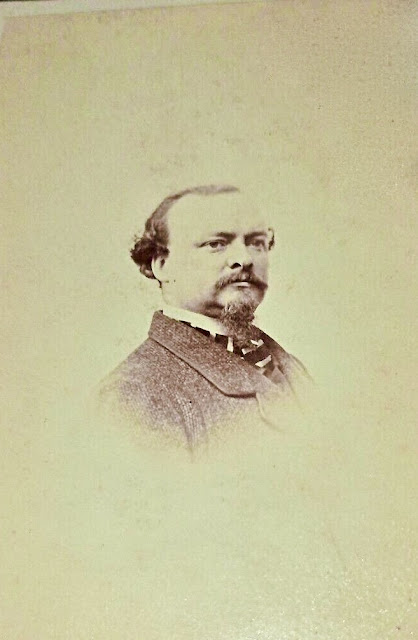


So, who was Joseph Swift? ‘Mr Swift’, as he was inevitably, shortly, known in Britain, even though the Italians dubbed him ‘Giuseppe’ and the Portuguese ‘Jose’. It has been a little hard to find out, for while Sims Reeves won the repeated honour of stretch-biogs in the press, year after year, the personal background of Britain’s number two operatic tenor doesn’t ever seem to have been written about. At one concert, the press proudly acclaimed him an Irishman, which set me off on a whole false trail, for Joseph Swift wasn’t an Irishman. He was a laddie from Lancashire.


The reason that I know that, is that I have unearthed him in the two British censi of his adult life: in 1851 as a student of music in London’s Manchester Street ‘born Lancashire, aged 24’, and in 1861 in South Square, Gray’s Inn, ‘musician, 32, born St Helen’s’.  On the principle that you wouldn’t say you were born in St Helen’s if you weren’t, I have dug around amongst the Swift families of Windle and Prescott and the hamlet of Handshaw (publican: Edward Swift) in the 1841 census listings, exhuming a teenaged Joseph who was a moulder, another a coal miner, another nephew (?) to a brewer, but none seemed to fit. 


In January 1861, Joseph missed a Manrico at the Opera House on the grounds of ‘a most severe domestic affliction’. Sounds like a wife, but he’s supposed to have been a bachelor. A parent? That didn’t lead me to an answer either, so for a long time the background of Mr Swift remained cloudy, and he didn’t impinge on my consciousness until 1849, when he is a student at the Royal Academy of Music. 


But I half-got him in the end. Joseph Swift was the son of one Richard Swift, and he wasn’t a bachelor. Just a handful of years before his death (23 October 1865) he married farmer’s daughter, Miss Elizabeth Blackhurst, back home in St Helen’s. And he seems to have been a wee bit older than he claimed… if he is the Joseph son of labourer Richard and his wife Jane born at Sutton, Prescott, St Helens in 1824. Siblings John, Ralph, Ellen, William … and, oh, another Joseph in 1832! They must have lost the first one…. So I’m not a lot nearer.


Like other young and promising tenors, Mr Swift of the RAM had the spotlight fairly quickly turned upon him, with some hopeful folk looking out for a ‘new Sims Reeves’ (the old one had plenty of mileage left however!) and others reacting equally exaggeratedly against the, at best, premature chatter. Mr Swift was, in any case, fairly clearly the most promising young man of his crop, the Academy’s other prize pupils of the time being Mary Rose, Laura Baxter, Helen Taylor and the much spotlit Catherine Browne. He, equally clearly, had a way to go. When he sang at one Academy concert, The Times reported ‘his intonation was so sharp it was painful’. And the arch pontificator of the early Victorian musical world, the rather ridiculous French Flowers, MB Oxon (‘The British School of Vocalisation’), launched at him in 1850, as part of a tirade against (other) singing teachers, a specific tirade. ‘As a specimen of an artificial voice let me instance Mr Swift who sang ‘Il mio tesoro’ at Miss Bassano’s concert. His natural voice (which is excellent) is baritone and yet he is taught to consider it a tenor by his master, notwithstanding that he has not a tenor sound in the whole range of his natural voice. In consequence of his pushing out high sounds, his voice on one occasion gave way…’

Most reactions were more measured -- ‘has a voice of good quality and exhibited intelligence’, ‘a tenor of remarkably good and even quality; he has the means, we hope he will make use of them..’ – but at this early stage of his career Mr Swift was evidently subject to vocal bloops.


During his time as a student, Swift began to make occasional appearances in professional concerts. The Louisa Bassano one, where Flowers referred to him as ‘a’ Mr Swift, seems to have been the first, but I also spot him at Miss Chandler’s do at Store Street Music Hall, at Charlotte Dolby’s at-home soirees in Hinde Street (‘Dalla sua pace’) and at the Réunion des arts, before he was brought before the wider public at the Exeter Hall London Thursday Concerts (11 December 1851) billed, in traditional style, as ‘the new tenor’. The young Louisa Pyne stole the limelight singing Rode’s Air and Variations, but Swift, praised for his ‘fine voice’, did well enough with Mendelssohn’s ‘By Celia’s Arbour’ that he was retained for the series. He also began a perfect avalanche of concert engagements: at Exeter Hall for the English Music concerts (‘The gentleman made a very respectable debut and sang ‘By Celia’s Arbour’ with great applause’), at Sussex Hall alongside Misses Pyne and Dolby and Henry Whitworth, at Crosby Hall, at St Martin’s Hall (Alexander’s Feast, Oberon and Orfeo selections &c), at John Ella’s Winter Musical Evenings and at the Exeter Hall Wednesday concerts (‘If with all your hearts’). He appeared at the entertainments given by pianist Charlotte Pearson, by Hannah Binfield, by Leslie Sloper (‘The Garland’, Gounod’s ‘Venice’), by George and Joseph Case, and at the London Tavern for Julia Bleaden, on which occasion all the praise being heaped on the young tenor got too much for one scribe who exploded: ‘There has been much talk recently about the new tenor, Mr Swift. Some have placed him but a round or two in the ladder below Mr Sims Reeves. Nonsense! There is just as much difference as between chalk and cheese… he was tame to tameness’.

If he was ‘tame’ (unshowy), Mr Swift was also ubiquitous, and as the season wound to its first height he turned out for a bevy of concerts: alongside Reeves, Manvers and another young tenor, William Fedor, at Drury Lane, at Exeter Hall for Allcroft, the City of London Institute, at the Hanover Square for the Misses McAlpine, the Ferraris, Charles Salaman, Brinley Richards (‘The Garland’ ‘sung with the utmost taste … an improving tenor’) and, when Edward Land launched his English Glee and Madrigal Union, it was Swift whom he chose as the group’s tenor, in team with Louisa Pyne, Charlotte Dolby and Frank Bodda.

In June, the new tenor was seen out almost daily: for Louisa Bassano/Wilhelm Kuhe (4 June), Otto Dresl (5 June), Allcroft at Exeter Hall (6 June), Lindsay Sloper/Miss Dolby (7 June), Charlott and Eliza Birch (9 June), and on 11 June three engagements: Emma Busby’s, Mlle Coulon’s and the Royal Society of Female Musicians concerts. He was included in the fashionable programme of Madame Anichini (‘The Garland’, ‘I Marinari’ with Ciabatta, I Puritani duet with Anichini etc), shared with Elisa Taccani the vocals at Mme Pleyel’s piano concert, visited Liverpool’s Philharmonic Hall in concert and, later, to sing Elijah with Grace Alleyne, Charlotte Eyles and Carl Formes. In London, he took part in a performance of The Creation for the Choral Fund.


 London, however, was not to suffer from a surfeit of Mr Swift. Antonio Porto, the manager of Lisbon’s Teatro de Saõ Carlos (who had, it appears, a habit of popping over on the ferry, to Portsmouth, to scout the British scene for talent), had moved to hire both Mr Swift and Mr Fedor, ‘at the beginning of their careers’, for his theatre. Mr Fedor was already booked to go to Marseille, Mr Swift was available, and he went. He went in good company, for Porto had also booked the French soprano Anaide Castellan as his prima donna. Mr Swift was to be primo tenore assoluto: alongside the other primo tenore assoluto, Antonio Prudenza. Mr Swift was ‘de meio caracter’. In effect, they were to share the tenor roles of the season.

Jose Swift made his first appearance on the stage playing the role of Elvino to the La Sonnambula of Mlle Castellan and the Rodolfo of Francesco Maria Dell’Aste, and he won the plaudits of the Lisbon public (‘excellentmente recebido pelo publico’) and papers, for his ‘tenor contraltino, meliflua, muito afinada, bastante extensa…’. His style did not win total unanimity. One critic lauded his ‘vox melodiosa e delicada usandi do falsete com multa propriedade e affinacao e cana com sentimento’ but another complained that Portuguese audiences didn’t like falsetto singing and that Sr Swift should desist. I suspect that, in the terminology of the time, by ‘falsetto’ he meant head voice.

The news of the young tenor’s success made its way overseas, and Dwight in Boston reported the ‘furore’ caused by the young man who had ‘only been seen in London as a concert singer, with a very sympathetic tenor voice’.

Prudenza played in I due Foscari, Alessandro Maccaferri (‘primo tenore generico’) did Nabucco, and Swift came out again in I Puritani on 15 November, alongside Mlle Castellan, dell’Aste, and Ottavio Bartolini. He followed up as Tonio in La Fille du régiment with Ersilia Agostini and Bartolini, and in January as Gennaro to the Lucrezia Borgia of Mme Rossi-Caccia. In March 1853 he was Percy to the Anna Bolena of the same prima donna, and in April, Tebaldo with Rossi-Caccia and Agostini in I Capuleti e i Montecchi, In May he sang Polyeucte in I Martiri.

Jose (or sometimes Giuseppe) Swift was a decided success as an operatic tenor, and he was ‘re-engaged at an increased salary’ to return to Lisbon for 1853-4 and again for 1854-5. Castellan, too, returned and the pair sang La Sonnambula, La gazza ladra, and Don Pasquale togetherWhen Otello was produced, Corrado Miraglia sang the title-role to Castellan’s Desdemona, and Swift was Rodrigo. He was also teamed as primo tenore with Amalia Angles-Fortuni in I Masnadieri and I Martiri and, with both prima donnas, as Raoul in Les Huguenots. The following season he sang the Vicomte de Sirval in Linda di Chamounix and Macduff, alongside Castellan and Bartolini, as well as repeating I Puritani, Anna Bolena, La Fille du régiment, Don Pasquale and La gazza ladra.

At the end of his three seasons at Lisbon, Swift moved on – apparently to other European theatres. His European career has come to me in fragments, often without dates or sources attached, but a reference to ‘Swift, tenore di bellissima voce , reduce or ora da Varsavia, per il corrente carnevale , al Teatro di Mantova ..’ rings a bell. He was at Warsaw 1st August-30 November 1856.


At the beginning of 1856, however, he was back in Britain. Later, it would be said that it was now that he ‘made his debut in opera at Drury Lane’ after ‘five or six years of study in Italy’. Well, as we know, he hadn’t been studying anywhere, he’d been very visibly working. And, although he’d been at one time announced to sing opera at Drury Lane, I find no evidence that he did. He was far too busy at Lisbon.

His return to London wasn’t in opera, but in some distinctly fashionable concerts. Jenny Lind and her wheeler-dealing husband set up a series of British concert appearances in London and the British provinces for the opening months of the year, and, after Alexander Reichardt had performed as the star’s support tenor for a couple of concerts, Joseph Swift took up that place for the bulk of the series. The Times spoke of the ‘beauty of his voice and the geniality of his expression’ and another critic wrote ‘This gentleman’s voice is a gift of which he should be conceited and endeavour to turn to the very best account’. However, when he shared the music of one performance of The Messiah with Charles Lockey, the inevitable comparison surfaced: ‘a very inferior reader of the magnificent recitatives in the second part when compared with Mr Sims Reeves who sang them on Monday and Wednesday nights’.

Swift moved on from his position as cavalier servant to Mme Lind to team with another prima donna, Josefina Gassier, and her husband. They sang in London concerts, and also took to the provinces where they gave performances of La Sonnambula, Don Pasquale and Il Barbiere di Siviglia, performances which seem, to me, to be Joseph Swift’s first appearances on the British operatic stage.

Through May and June, Swift was seen in concert in London (‘La mia Letitzia’, Davide PenitenteStabat Mater at St Martin’s Hall), and again he was billed for a London opera season, this time a three-week affair at the Surrey Theatre. However, Sig Lorini seems to have sung most nights (with his wife) and I do not see Swift on the bills.

At the end of the season, he returned to Europe, cancelling a January concert tour with Mme Rudersdorff, but I do not pick up his trail again (give or take August to November at Warsaw) until January 1857 when he is announced to sing Rigoletto with prima donna Morandini at Mantua.

And, sure enough, in June a report from the Continent makes the British music press: ‘Our English tenor Swift, of whose beautiful voice artistic talent and gentlemanly manners we have great reason to be proud, after dividing the honours at the late carnival in Mantua with Barbieri Nini is taking a vacation to continue his studies under the first masters (in Milan)… he is engaged as first tenor at [the Teatro Municipale] Alessandria in Piemonte for the autumn season..’

He appeared there with Argentina Angelini in Gli ultimi giorni di Suli and La Traviata with Rosa de Rudaand in December, the same correspondent describing Swift’s ‘continuing and increasing success’ reporting that ‘at the completion of his autumn engagement at Piemonte’s Teatro Municipale di Alessandria’, he had been taken up by Signor Merelli, Europe’s most many-tentacled operatic agent and fixer who had arranged for him to go to the Gran Teatro at Bergamo, but then shifted him to the Teatro Nazionale in Turin, when the bid was higher. Mr Swift was evidently rolling, but he was (like most tenors) still not pulling everyone’s vote. ‘If his singing was (sic) a little more refined and if he took greater pains to modulate his voice which seems to me to be as ungovernable as when he first appeared in public, I should be inclined to think he might become a good singer, but at present I cannot agree with Pirata and others who write about his lovely simpatico voice, his fine figure, his noble carriage and other innumerable qualities which as yet I cannot say that I have discovered. Of the operas in which he has sung – Traviata, Lucia and Attila – the last I think is most suited to his vigorous and energetic style…’. 

I have found him singing only Attila of those operas at Turin, but I have spotted him singing La Sonnambula there, alongside Pamela Scotti and Francesco (not Federico) Monari, and also Poliuto, in the early part of 1858. From Turin, he moved on to play alongside Giulia Beltramini-Marcora and Luigia Abbadia at Rovereto (May, La Traviata, Poliuto, ‘dalla voce insinuante’)the Mauroner of Trieste (TraviataPoliuto) and Udine, and on 11 September 1858 he made a first appearance at the Scala of Milan, cast again as Rodrigo in Otello, alongside Bettini (Otello) and Maria Lafon (Desdemona).

Still in 1858 (carnevale), he sang at the Apollo in Venice, in Don Pasquale with Albina Maray, Ernani and Poliuto with Borsi-Deleurie, and in Benedetto Zabban’s Il Conte di Stennedof alongside that most English of Italian buffos, Giuseppe Ciampi.

From there, he moved on to the Teatro di Societa at Bergamo, where I spot him in December in Rigoletto, and then – apparently no longer under the management of Merelli – to sing with his La Scala partners at the Hofoper at Vienna. Not a place where one was accustomed to hear an English tenor. Geremia Bettini, Carrion and Musiani were also engaged, but Swift sang Elisero to Carrion’s Amenofis in Mosè and Rodrigo to the Otelloof Bettini.


It seems that the Pergola Theatre at Florence followed, but before at the end of 1860, Joseph Swift returned to England, hired by Edward Tyrell Smith for his dual-headed Italian and English opera season at Her Majesty’s Theatre. It was billed as ‘his first appearance at this theatre’, and the other principal tenors engaged were Giuglini and Sims Reeves.

Mr Swift’s first appearance came rather more quickly than anticipated. Two days after the opening of the season, the already ailing Giuglini was unable to appear, and Mr Swift went on as Manrico to the Leonora of Therese Titiens. ‘A tenor voice of remarkable freshness and purity’ approved the press. Swift was also called upon to deputise for Giuglini in Lucrezia Borgia, and then more lengthily for Reeves in the title-role of the decidedly successful new Robin Hood.

On 26 December, Joseph Swift came out in his own new role, singing Raphael to the Queen Topaze of Euphrosyne Parepa in Smith’s production of Massé’s successful Parisian opera. Queen Topaze had been somewhat fiddled with (Swift, for example, sang George Linley’s ‘Light as falling snow’) and did not prove a success. The other success of the season was Vincent Wallace’s The Amber Witch in which Reeves created the lead tenor role, but Mr Swift was allowed his due, alongside the star, and appeared with Parepa in The Bohemian Girl and Il Trovatore, and in the title-role of Fra Diavolo. At the end of the Her Majesty’s season, when Smith transferred his new success, The Amber Witch, to Drury Lane for extra performances, Mr Swift took over Reeves’s original part of Rudiger.

During the operatic season, he made a number of outside concert appearances, the most unusual of which was undoubtedly an appearance, alongside his Her Majesty’s co-stars, Parepa and Charles Santley, on the programme for the opening night of London’s new and wilfully upmarket Oxford Music Hall.

In the autumn, Swift went on tour with the Her Majesty’s company. Giuglini again had the pick of the tenor roles, but Swift sang Pollio (‘the best Pollio heard upon the Dublin stage’ appreciated the Irish press) and Almaviva in Il Barbiere di Siviglia and Giuglini’s roles when required.

He followed up with a similar programme in Giulia Grisi’s ‘Farewell Tour’ of Britain, singing Norma, La Sonnambula and the rest of the Grisi repertoire when co-tenor Galvani didn’t appear.

Norma, in fact, was now becoming Mr Swift’s mascot role on the British stage. ‘A well built, good-looking Pollio with a pleasant voice’, Willert Beale remembered in his memoirs: ‘He played (Pollio) with remarkable conscientiousness and his voice resounded with that manly intonation which we have before noticed…’ nodded the Manchester press ‘few visitors to Manchester have found more favour’.

The Grisi tour ended 2 December, and Mr Swift continued on the rounds of the concert platforms. At Christmas, he returned to Manchester to sing The Messiah with Mme Rudersdorff, Fanny Huddart and Formes (‘realised fully al that we had expected of him’), and in the early part of 1862 he performed at London concerts given by Edward Land (‘Love sounds the alarm’ ‘with force and energy’), the Marchisio sisters (‘Breeze could I thy pinions borrow’ Mendelssohn and quintet with them), Howard Glover, at the Crystal Palace (‘Love sounds the alarm’, Amber Witch duet with Parepa) and with the Vocal Association where he took part in the first concert selection from Benedict’s The Lily of Killarney. He appeared briefly in opera with Jenny Baur’s company, and sang in The Messiah and Elijah with the National Choral Society at Exeter Hall, alongside Florence Lancia, Dolby and Santley (‘Both Mme Lancia and Mr Swift would probably find it advantageous to devote especial attention to the oratorio school of singing for which they are in every sense well fitted’).


Carl Formes


He was on hand again for the Italian opera season, where he again sang Lucrezia Borgia and Il Trovatore in place of Giuglini (‘Mr Swift whose fine voice and musical intelligence were always admired has made remarkable progress and may be complimented on having supplied, with as much ability and so entirely to the satisfaction of the patrons of Her Majesty’s Theatre, the place of an artist of such high standing’). In the last part of the season he replaced Armandi in Norma ‘and was a decided improvement’. The Musical World permitted itself to wonder why the Pyne and Harrison company had preferred to hire George Perren as their second leading tenor when a vocalist with the stage ease of Mr Swift was around. 


In the autumn, he went on the road with Edward Land’s concert party, with Marie Cruvelli, Madame Gassier and the bass Josef Hermanns, to fine receptions and reviews (‘a powerful tenor voice and sang with great animation’) in which the word ‘energetic’ appeared regularly. So, alas, did the word ‘Reeves’: ‘next to Mr Sims Reeve (facile princeps) he is one of our most accomplished tenors’, but since Swift necessarily performed some of the same music as his contemporary it was inevitable. When the party sang at John Russell’s concert at the Hanover Square Rooms, the Musical World acclaimed ‘one of our most genuine English tenors with a voice alone which should make his fortune’, and another critic came up with the delightful encapsulation of Reeves’s megastardom over his performance of ‘The Savoyard’ and ‘The Stolen Kiss’: ‘in which Mr Swift by no means unworthily emulated his preposterous contemporary’.


Swift spent Christmas singing English opera in Ireland with Annie Tonnellier and Emma Heywood, and it seems to have been there that he introduced Balfe’s new song ‘Si tu savais’ which would become his concert battlehorse over the years to follow.  


On 29 May he made his first appearance with the Sacred Harmonic Society, singing The Creation, and the Daily News proffered ‘The Sacred Harmonic Society could not find a more satisfactory substitute for Mr Sims Reeves than Mr Swift. He is not a showy demonstrative singer and may perhaps be deemed rather tame. But this we think would be a mistake. His manner is quiet and his style is pure and simple. He has a full mellow voice and possesses both taste and expression.’  So what happened to ‘energetic’?

Swift sang his way through the concert season, delivering ‘Si tu savais’ with regularity, and in the autumn he took a prominent part in Alfred Mellon’s Covent Garden Proms (‘The Savoyard’, ‘The Stolen Kiss’, ‘Si tu savais’, Balfe’s rifle song ‘The Banner of St George’) before joining the company at the Theatre Royal, Drury Lane. He appeared there as Auster, Spirit of the Storm in the stage version of Manfred, and in the new year as the singing a Lord in As You Like It, but in between times he returned to Her Majesty’s Theatre to replace Sims Reeves in the title-role of Faust for the final performances of the initial English-language run of the opera. He also stepped in, in his decidedly useful fashion, as temporary leading tenor for the touring Rosenthal company.

On 4 June 1864 he mounted what seems to have been his only personal concert, at the Theatre Royal, Drury Lane with a grand bill of mostly English singers (Reeves, Santley, Mme Lemmens-Sherrington, the Weisses &c).

Later in June he appeared, ‘of Her Majesty’s and Drury Lane Theatres’, at Astley’s playing Tom Tug in The Waterman for E T Smith’s Benefit, and in September he joined up once more with Mapleson’s Italian Opera company. He was, as ever, Pollio, to the Norma of Titiens, but also sang Manrico, Oberon to the Huon of Italo Gardoni, and Jacquino in Fidelio.

In November, William Harrison (now without Louisa Pyne) ventured a season of opera at Her Majesty’s and Swift took part, playing Edgardo in Lucia di Lammermoor, Ottavio in Don Giovanni, Faust opposite Anna Hiles, La Sonnambula alongside the debuting Susie Galton, and creating the part of Agamemnon in Levey’s operetta Punchinello. He took time out from Her Majesty’s to dash to Dublin to replace poor Giuglini for the last time, returning to London to take the title-role in Harrison’s production of Maillart’s Lara, alongside Louisa Pyne. Lara had limited appeal.

During the concert season of 1865, Mr Swift was less in evidence, and when he again went out with the Italian opera he seems to have played only Jacquino, before joining up with Mrs Pyne Galton as the tenor for the touring company which was to showcase daughter Susie in pieces of Faust, Il Trovatore and La Sonnambula and the operettas Punchinello, Fanchette, Castle Grim, The Rival Beauties et al. ‘His voice is always heard with rapture’ wrote a critic.

If his voice were in good shape, however, something else clearly was not. Apart from occasional appearances with the Galtons, Mr Swift was conspicuously absent from the theatre and concert bills of 1866 until August of the year when he was announced to take to the road as tenor with the Rosenthal opera company…

Did he go? Every review I see speaks of William Parkinson.

If he did, it was his swansong.

At an age of not yet forty, Joseph Swift had done with the world of music.


I have a death certificate in front of me. I bought it many years ago, when ‘Mr Swift’ did not, for me, even have a christian name, and the Internet did not exist. But I found a brief announcement of his death in the press of July 1869 and I hastened me to the black books at the London Registry Office. From them, I found the only possible match: a Mr Joseph Swift, who died, aged 42, at number 3 Pall Mall on what looks like 10 July 1866. Now I know that ‘Joseph’ is correct …  and the Musical World, I too late find, actually found an infime space to record tersely ‘On July 10th at his residence in the Opera Arcade...’ So, it is he. Even if the Opera Arcade and Pall Mall seem to be adjacent, rather than precisely the same thing. But on that death certificate, under profession, it says ‘confectioner’.

Is that what became of Joseph Swift in the last few years of his life? Did ill-health force him from the stage and the concert platform, and into another way of making a living. Or did he lose his voice? The youthful death would seem to point to an illness. The certificate says ‘chronic phthisis of...’ what may be ‘heart’ and ‘serious apoplexy’.


So, annoyingly, my information on the last bit of Joseph Swift’s life is almost as fuzzily uncertain as that about that on the first part.

What is not uncertain, though occasionally, maybe, a little Continentally incomplete, is the professional part in between to two fuzzy areas. Mr Swift deserves his place in the upper ranks of Britain’s Victorian tenors.


 Coda: I found this piece of music as 'sung by' our Joe. Alas, I can't find him performing it. However the fashionable army man, Francis Mountjoy Martyn was only a Major in the first half of the 1850s, until his promotion to higher ranks. Copac says it was published in 1852 or 1867. I think we have to go for 1852, yes?


Monday, May 29, 2023

An exceptionally curious Cartesian: Elaine Gryce.


Yesterday's success in outing Mr Rowlands encouraged me to have another half-day dip into D'Oyly Carteland. And ... well!  

I have met some strange stories in my years of wading through the characters of Victorian music and theatre. But that of the young woman who called herself 'Elaine Gryce' (why, I wonder ..) has got to be up there amongst the oddest. Miss Gryce was a very brief Cartesian -- depping for Kate Rolla in the title-role of Mirette -- she was later, also, accused of sporting very brief costumery -- but her history, and that of her family, could one but write it up fully, would not be brief at all, at all.

Miss 'Gryce' was in fact Annie Mary (sometimes Steele) VERITY. She was born 18 April 1867 one of the six daughters of a fellow by name Charles Henry (sometimes Steele) Verity and his second wife Henrietta Maria Murch. And Mr Verity, into whom I am not going to delve further, was apparently a scion of the family of the Duke of Rutland. I suppose it was all younger son of younger son (you can look up Burke), but anyhow the respectable part of his branch of the family was esconced in Bridgend. Not Charles though. He was disowned, kicked out, disinherited for his bad habits and dissolutenesss. I see him down in Weston-super-Mare (why?) in the 1871 census professing to be a 'broker', with his brood of lasses. A son (by wife one) had emigrated in the 60s to Australia. I don't know what became of him, but apparently wife (2) dumped him, and in 1875, when what I assume was his eldest daughter married, she said he was 'deceased'. Otherwhere, I hear he died in the workhouse. In 1893, when 'eighth' daughter, Emily Claudine, died she was 'granddaughter of' the Bridgend gent. 

Anyway, the family clearly got on without him. But I do wonder who paid for what followed. Three of the girls opted for the stage. Elizabeth Steele Verity ('Lisette Steele') and Emily Claudine were dancers. Annie is said to have gone to to Milan -- alone? as a teenager? -- and studied and sung in public. Yes. Well, we've heard that tale a million times. Very maybe.

In the 1891 census she is not in Milan, but in Jersey. Married. To a one-time law student (later 'actor'! as 'Tom Carling') named Willliam Astor DADSON,  allegedly from the Astor family (I suspect not THAT one) who ... oyyyy! Sorry, not going there! Except to say that they don't seem to have bred, and he died in a lunatic asylum in 1916 (26 October). Fast back.

In the 1891 census they are in Jersey: Annie is calling herself 'Adrienne A Dadson, operatic vocalist'.


And then she turns up, singing ... in America and Canada. How? Why? In 1892 she is playing in Les Cloches de Corneville opposite one Hamilton Tetley, sometime of the D'Oyly Carte. Then in an Operette troupe of dubious value with one Samuel Gryce as acting manager and mezzo Marie Gurney topbilled.  I see her in Canada, in 1893, with a manager yclept Ernest Hagger... then as 'the Canadian prima donna' on a variety bill at the Union Square featured in a version of La Jolie Persane. She/they left for home in early 1894, and I spot her, lavishly billed, alongside her sister in a charity fête at Leamington Spa. .


The Arion & Boston Company existed. A tiny, underpowered, ephemeral group ... but Leamington didn't know that. As for  Miss Greig's 'prodigy' ...

At one stage, The Era thought it well to devote a wee para to Elaine...


Hmmm. Well I can't speak for the 9 year-old at Covent Garden, nor the education (under which name?), nor even the Hogarth engagement. Yes, USA/Canada is correct though vastly exaggerated. 

I also don't know how she picked up the week's employment with Carte, before the splendid Florence St John replaced the miscast Miss Rolla ... but I guess it qualifies her as a 'Cartesian'!

Obviously, she did NOT play Carmen at Drury Lane. She was one of several who sang Frasquita in Carmen for Augustus Harris. 

She omits to mention here her appearance as Miss Pattie Buttre in Little Boy Blue ... probably her most successful assumption.

Yes, she toured as Lady Dodo in The Shop Girl ... I missed The Sign of the Cross .. but caught the odd panto ... the odd music-hall engagement .. a trip to America in 1897, then Cora Angélique in The Belle of New York (1901). My last sighting of her is in Brixham at a volunteer concert billed as 'of the Savoy Theatre', in 1902, singing 'Home sweet Home' and 'Sing Sweet Bird'.

But this is far from the end of Annie Verity. Because Annie, in what seems an almost unbelievable exercise, reinvented and cloned herself.

I have not found Annie in the 1901 census. Though we know she was touring. Nor, indeed in the 1911 census. But Lord knows what she was calling herself by that time.  However, in the 1920s a lady named 'Miss Verity-Steele' turns up, not in the theatre, but at the posher dog shows. Exhibiting and breeding of Pekingese dogs. 'Prices from 10gns to 100gns'. And as the authoress of The Book on Pekingese ('illustrated'). And look at this! 81 Lansdowne Road, Worthing in the 1939 census. Dorothy Slater (b 16 October 1888), Queenie V Steele (b 18 April 1876, authoress), Annie M Dadson (b 18 April 1867, retired authoress). Dorothy Slater was another dog fancier who revised/updated the famous book in later days. I feel 18 April gives it away. Mrs Steele and Mrs Dadson are one and the same person.


I notice, down the way in Shepton Mallett, a Sister Mary Hyacinth teaching music at a convent. The good sister is the former 'Lizzie Steele' sometime dancing girl and sister to Miss Gryce, as was.

By the time Annie-Queenie died, in 1947, she had reverted to being Mrs Astor-Dadson. Or even plain Dadson. The days of Gryce were decades gone. The light of other days was faded. Woof.Yap.