Friday, February 19, 2021

Ordinary people ... or, filling in a few hours ..


Friday is market day here where we live. Each Friday, at 8.15am, we head for the glorious market at Ohoka -- 25 minutes drive away -- and stock up the pantry for the next week ... cucumbers, kale, cos lettuce, carrots, baby potatoes and beef tomato (one does me for a week!), classy avocados, broccolini, berries, fish, salami ... even a home made cottage pie ... not to forget the best rose bushes ever for $25, and every kind of vege seedling you could wish for for just $2 a big punnet ..   Every week, we come home with the boot bulging ...

Of course, by the time we get home, put away out trophies, dive into some lunch ... with its obligatory post-prandial nap attached ... there's not much time left in the day to start on any serious work. And, anyway, at the moment I haven't got any serious work on. For a few weeks. So, I pull a weed, water an acre, and I play ... 'find the C19th folk'.

Today I pulled out three nice looking folk ...


My choices turned out to be, in one case, a well-documented and lofty personage, but I managed to avoid the clergy and the Indian army ...

So number One. Miss Bentley. 1887. But on the back it says Mrs Branagan, so that helped. Fine lookin' gal, ain't she! Black Irish? Jewish? Well, Irish it was ...

Sarah Joanna BENTLEY (b Liverpool 22 January 1869; d 10 Willow Avenue, Lytham October 1946) was apparently the daughter of William Bentley, a house painter from near Rochdale, and his wife Joanna or Anna née Leonard from Stockport. Both were of Irish families, both Catholics, and Sarah was duly christened in Latin ... 

She seems to have had brothers William Henry (1866) and Richard (1876), but -- unless she is the 12yo Sarah working as assistant to and living with an earthenware-seller in Toxteth Park in 1881 -- I don't see the family until 1891, when Sarah is working as a housemaid and waitress for a Dr Wearing in the Wavertree High Street. On 14 July 1893, she became the wife of William Richard Branagan (b 21 March 1867; d 3a Fairfield Crescent, Newsham Park 10 May 1953). Mr Branagan was from a family of workers on the Merseyside Docks, but from a young age he took a job as an assistant to a bookseller. He would remain in the book trade for his whole working life. And Sarah bore him seven children. 

There is no descendant of those seven children alive today. Four of them died as children, eldest son Ralph Reginald Bentley died in the Great War, aged 21 (12 October 1916), and daughter Ursula Marie  (1904-1960) remained a spinster. Only Blanche Eveliune (1901-1998), who wed James Frederick Lindell (1906-1941), had issue. Lindell, a seaman, was killed in a shipboard accident. Their daughter Barbara Marie died in 2016, unmarried. Perhaps that's where the photo came from.

It look me a while to discover  Sarah Joanna died. She and William can be seen in the 1939 census in Fairfield Crescent ... but I imagine she was the Sarah Branagan who died at 10 Willow Avenue, Lytham in October 1946, aged 77. She lies in the Yew Tree Catholic Cemetery, plot 4B 59, if there is a Liverpudlian who would like to visit her.

Number two. William Boyd DAWKINS (b 26 December 1837; d 15 January 1929). I hadn't heard of him, he just looked like a nice old gent. Well, he was a nice old knight: Sir William. Geologist and archeologist. And his impressive story has been told in the DNB and other reasonably reliable volumes. To which I refer you.

Number three. Carefully labelled 'Me aged 4', and Mrs Louisa Bailey née Janes.

Well, I have identified 'Me'. He is Arthur John Marson BAILEY (b Maidenhead 26 June 1913; d 45 Denham Crescent, Mitcham 15 June 1995). How do I know that? Dint of digging ...

Louisa JANES (b 15 Brydges Street, Drury Lane, c1848; d Uxbridge 15 July 1918) was a pure product of the public house system. Papa John [Webb] Janes was publican of licensed premises in Brydges Street, mama Harriett Marson (b 22 April 1821; d 7 February1877) was the daughter of a shell-fish monger. Their marriage had had a slight hiccough ..


but they eventually got the niceities of the situation together. Now, when I saw that address, a pub in Brydges St, opposite the stage door of the Theatre Royal, Drury Lane, I shivered. Because the great Lydia Thompson was also born in a pub in Brydges Street! I hastened to my old notes ... alas, Lydia was born at no12, Louisa at no15. Two pubs within a few doors!? Well, number 15 was the Sir John Falstaff (it is now 29 Catherine St). and to say it was a house of dubious fame is being polite. Yes, there is Mr Janes (as usual, misspelled 'James') in 1846, listed as publican ...  By 1851, John had given up the pub and was working as a brewer's traveller. The 'irregularity' of his marital position had evidently been cleared up, and the couple had been officially married in 1848. Around the same year that they had given birth to a daughter ... not named Louisa, but Clara (14 May 1849).  They would go on to have a bundle more children, but not a Louisa. Curious. Because there is the birth entry Louisa Janes, Strand district, second quarter of 1848 ... 
Well, it seems that while all the subsequent children stayed at home with mum and dad (who swapped beer for fisf, and became a fishmonger), Louisa was brought up, at least partly, by grandmother Marson. In the 1871 census she can be seen with the 80 year-old Ann Leah Marson in Uxbridge. Ann died in 1879, and Arthur Bailey executed her will: connection proven!

On 2 August 1874, Louisa married the said Arthur Bailey. Arthur worked in groceries, as his father had done: I don't know for how many years they had a grocer's shop and sub-post office in the High Street, Uxbridge: but it was decades. Arthur and Louisa had two sons. Arthur Thomas Bailey (1876; d 12 November 1952) and Charles Marson Bailey (1877-1916). Both sons married, but ... look at our photo. Dated 1917. Arthur married twice but not till 1918 (Margery Elizabeth French); so 'me' is not a child of his. Charles had left Uxbridge and the grocery, became a railway clerk in Maidenhead, married Edith Annie Staniford and ...in 1913, Edith (b 20 May 1880; d Maidenhead 15 February 1961) gave birth to the boy in our picture. 

To round off the story, Arthur III became a pharmacist, an analytical chemist et al. He married twice: Jessie W Frey (b 2 December 1919) and subsequently Winifred S Luckett. And there the story and the family seems to end.

Well! I was going to go and water the gardens .... but, guess what. The pump which was working perfectly well last night is now refusing to function!  So while I'm waiting for the Man Who Fixes Such Things to arrive ...

This little picture from the 1860s caught my eye 


It is clearly labelled, so didn't present too many problems ... Moses, Joseph Thomas and Harry, the three sons of Joseph, from Rochdale, and Emma Dickinson from Liverpool. Emma was née Thomas.

Moses, on the left, was the eldest. Born 1852, christened 8 December, seemingly for his uncle, Moses D of Old Swan and a 'victualler' (a pubkeeper), like father Joseph. Moses was educated at 'Mr Botham's Boarding school' in Walton on the Hill before following, ar first, in the family footsteps as a publican. He later took up farming. He married 'of Chirkdale Street' in 1874 Annie Grant, and they would have three daughters (Catherine, Annie, Emma). He died in 1918, and lies in Livepool's Tosteth Park Cemetery, alongside his father and a number of members of the family who died in childhood.

Joseph Thomas must be the one on our right. Looks a bit fey. But he, after also passing by Mr Botham's establishment, took over the publican's role from his father, who died in 1880, and his mother, who died in 1896, most notably for many years at the Black Horse in Walton-on-the-Hill's Rice Lane ...


The Black Horse still exists today .... I wonder if it is the same building ... 'modernised' tactfully?


Joseph married Jane Dawson Clarke (27 July 1884), they, similarly, had three daughters (Emma, Elsie, Barbara), Joseph retired from pubkeeping after his mother's death, settled in Melling, and died in Ormskirk in 1923.

Littlest brother, Harry/Henry (x 24 April 1856) also took a turn in the pub business. We see he and Joseph in the 1881 census being barmen for mother at the Black Horse. He married Jane Thomson (29 April 1881), and produced three sons (Harry Richmond, David Thomas, Osmond Spencer), before an early death, 13 September 1890.

Six girls and three boys ... there must be survivors from THIS family ... but the Pump Man has fixed the exploded pressure tank on the water supply, the heat of the day is fading ... and the flowers are gasping for a drink. 

Actually, so am I ...


Tuesday, February 16, 2021

"Heigh ho! If love were all ... ", the sad tale of a 'British Blonde'


Beautiful mild summer's day. Still on a high after reaching three-quarters of a century, in relatively good shape, a couple of days back. Intended to spend the day titivating the gardens and getting a gentle tan. But.  With my first coffee of the waking day I flicked on ebay. Pretty bad photo of Emma Grattan. Yes, I know who Emma Grattan was. She spent some time as one of Lydia Thompson's troupe. And I, of course, am the author of the definitive biography of Lydia.


In the course of writing that book I, naturally, investigated the histories of my heroine's supporting troupe. Several of those histories were published as an article in a learned Franco-German manual a few years back, but the rest are still on my computer.  And as my birthday reminded me ... tempus fugit. And Andrew Lamb's words, engraved in my earlobes, echoes .. 'and so you'll die, and all that work is lost'.

So I pulled up my piece on Emma. And here it is. 

***********************

GRATTAN, Emma [HUNT, Emma Margery] (b St George’s, Southwark 28 February 1835; d Hospital for Incurables, New York 8 August 1893)


The pretty dancing actress who elected to be known as ‘Emma Grattan’ could and should have had a gentle and safe career at home as a soubrette in the theatres of England. But, instead, she travelled half way round the world, in and out of the law courts, in and out of the newspapers and their scandal columns and of theatres of all types on three continents, including a stint as a British Blonde on Broadway, suffered tragedy and slander … Why? There’s only ever one answer. A man.


 Emma was born in Bermondsey, the daughter of one Joseph Hunt, surgeon, and his wife, Amelia (Hunt, not Arndt). That’s what her birth registration says. Joseph must have died soon after, for by the 1851 census, at no 4 Stangate, Amelia is Mrs Francis Baker, ‘chorus singer’, wife of a Lambeth carpenter and mother of a two-year-old half-brother for Emma. Emma is a 16 year-old dancer. 


I first spot ‘Emma Grattan’ on the theatre bills of the Royal Amphitheatre in Liverpool.  On 25 April 1854, the theatre opened for a new season with the comedian George Honey topping its bills, Miss Swanborough as leading lady, and neophyte Emma teaming with Honey in ‘several amusing farces’ (The Married Bachelor, Katherine in The English Fleet, Don Giovanni burlesque, later A Loan of a Lover, The Swiss Cottage). The company also included a juvenile man ‘of considerable promise’ who called himself Courtaigne or Courtaine or Courte, or other approximations of ‘Curtain’, which was his actual name (William Henry Young Curtain). Before the season was over, Emma was ‘Mrs Courtaine’ (Emma Margery Grossmith (!) Curtain) and her troubles could begin.


Harry was not bad boy. And definitely not a bad actor. Helped by an exceedingly handsome physique and a winning way. But Harry had a weakness. He was an aggressive drunk. And, as Emma would discover pretty soon, he was very often drunk …


The couple played a second season at Liverpool (Love Laughs at Locksmiths, Blue Beard, Osbaldistone and Diana in Rob Roy, Lydia Languish in The Rivals, Robert le diable burlesque, The Siege of MontgateThe Sleeping Beauty etc), produced a son, William Frank Curtain (b Bolton 5 September 1855), and Henry notched up a first conviction for drunken assault. 


In 1856, I spot them at Norwich, at Leicester and then at Bath and Bristol where Harry was Laertes, Emma played Nina Gordon in Uncle Tom’s Cabin, and they teamed in The Swiss Chalet and as Jack and the Giant in the panto Jack the Giant Killer. 1857 saw them touring with a Templeton/Wadham company labelled ‘Drury Lane’ for the summer (A Wonderful Woman, A Rough Diamond), until a Mr Butler of Bow Street brokered the pair an American deal. But not for the marginally civilised east coast: Mr Butler was representing Thomas Maguire of Maguire’s Opera House, San Francisco. Was the wild west with its roaring saloons the wisest place to send Harry and his little weakness? The answer was ‘no’.


The pair made their first appearance 23 November 1857 in the musical farce The Little Treasure and were much liked ‘really a pleasing actress’ ‘Miss E Grattan who came among us in the humble capacity of a vaudeville actress, possesses much native vivacity and a good voice, sings cleverly, and enacts her roles fully up to her modest pretensions in her art … They came among us, not as stars, but after being ‘featured’ three times passed into the stock’.


Harry would fulfil his promise and become something of a star in California, but that was not the only promise he would fulfil. Less than a month on, Emma had him up in court for ‘assault’. Drunken wife-beating? The next time it was for ‘threatening to kill her’. In July 1859, she instituted divorce proceedings. And again the following year. And in between times Harry had been dragged to the lock-up for more drunken fights or just plain public drunkenness. But he was a good boy, and popular with audiences when he was fit to go on, and Maguire renewed his contract again and again, in spite of his misdemeanours and disagreeable press comments. And when Harry-boy promised Emma that ‘he would be good’, she weakened and took him back. And they played Mr and Mrs White and danced together, and sang ‘Pit a pat goes my heart’ together, and the papers mused how nice it would be if their on-stage personations could be carried into real life.


1860 US census

And Emma played the Princess in The Invisible Prince, Conrad and Medora, Fluvia in The Naiad Queen, Lazarillo in Don Cesar de Bazan, Pluto and Proserpine, Lucidora in The Fair One with the Golden Locks, Puck in A Midsummer Night’s Dream, Helen in Faust and Marguerite, Susanna to her husband’s Figaro in The Two Figaros, Mercutio in Romeo and Juliet, now billed not as ‘Emma Grattan’, but as ‘Mrs Harry Courtaine’. Until he was picked up drunk in the streets of San Francisco and she reinstated the divorce proceedings.


What followed, is ‘unclear’. It depends on whether you’re one Californian paper or another, and on Harry’s side or Emma’s. One version was that Emma did a moonlight flit with a ‘fiddler from the Melodeon’ the ‘home of obscene shows’, who was named Emonds or Edwards or something, heading for Australia on the Robert Passenger. The other version was that Emma had plotted to take a couple of actors and go to China and India and had actually booked passage. But the lady actor changed her mind, so the plan was aborted. Except that Harry was currently having one of his bigger battles with the booze, so Emma took her savings and her son, staved off the vultures, and went anyway. 

Which she provenly did. Whether a third person went with them, only a ship’s list would tell for sure. She arrived in Hong Kong in May with … a brother? The Californian press snorted at the ‘subterfuge’, accused her of using fake reviews for advertising, ‘reported’ that she had fled Hong Kong for Singapore … and then found someone else to have a go at, while a temporarily dried-out Harry climbed back on the stage…


My next sighting of Emma is four years later. In Edinburgh. Starting over again. Where, I wondered, had she been? Australia? No sign. And then I came upon a christening registration from Byculla, Bombay. A late christening. Little Willie Curtain aged 7. Byculla. Why? Well, a gentleman named Simin Patel wrote a DPhil dissertation (at last I’ve discovered a use for those terrible things!) in 2015 in which he says ‘Among the well-known guests that Rustomjee Framjee hosted at the Imperial Hotel, Fort, were the Grattans, an English family of theatre actors. The star of the company was Emma Grattan, her father, Henry, served as both manager and lead actor. Her brother was also an actor…’. Father? But father was a dead surgeon named Joseph. Well, wasn't he? Mr Patel continues wisely ‘The shield of a family-run concern, under the watchful eye of the patriarch, allowed unmarried young females to perform and tour without serious aspersions being cast on their respectability’. Unmarried? If only they knew! Anyway, there’s that ‘brother’ again. And no sign of a fiddler. I think he was a red herring. One of those journalistic inventions so popular in the time and place.


Emma was back in Britain, by one route or another, by early 1865, and back on the more conventional stage in the company of – just as a decade earlier – the grand George Honey. Honey was touring Miriam’s Crime (Emma was Miriam), The Flying Dutchman and a repertoire of burlesques – Mazourka, Orpheus and Eurydice, Turko the Terrible -- and Emma and the Bourke sisters were his assistants, through a good tour. She played Luciana in A Comedy of Errors at Bradford, Phoebe in As You Like It, Bianca in The Taming of the Shrew and Diana Vernon with ‘Professor Anderson’ at Birmingham, she played in the burlesque Sonnambula, A Wonderful Woman and, this time, really did play Drury Lane as Mrs Derby, opposite Charles Warner, in The Ladies’ Club. Drury Lane’s F B Chatterton was also running the Theatre Royal, Hull, and thence Emma was next deployed to appear in Lydia Thompson’s role in Magic Toys, in Under the Gaslight, The Hunchback, Lady Audley’s Secret …


Emma as Lydia Thompson

She seemed to have re-kickstarted her English career nicely. But then came another offer from America, and, in late 1868, Emma joined Elise Holt, Eliza Weathersby and the Pitt sisters on The City of Antwerp heading for Boston and a tilt at the hugely successful Thompson troupe.


The Elise Holt season was a flop, and like the Pitts and the talented Eliza, Emma ended up transferring her services to the bigger and better company, opening at Niblo’s Gardens as ‘Orchobrand, the enchanting enchanter of the Silver Forest, ground-landlord of the 40 Thieves’. She was delightedly received, played her role throughout the some three months of the run, and then departed to Tammany Hall to star opposite Myron Leffingwell as Fra Diavolo in Byron’s burlesque of the opera and Dandini in Cinderella.


The gossip press hinted that she was ‘on her way to California for the delectable purpose of arranging certain little matrimonial and professional affairs’, But she turned up, instead, in Chicago, in Pittsburgh, in Boston, then back in New York in the bills at the Theatre Comique. She appeared in burlesque and variety here and there, was seen at the Union Square with Felix Rogers’s troupe, at Wood’s Museum in The Silver Demon, which reassembled a number of the original Blondes to limited effect, Blood Money, Nobody’s Child, Young Jack Sheppard et al, she sang on the bills at Barnum’s and with Dan Shelby, and then, in 1874 she joined the fine stock troupe at Booth’s Theatre. There she played roles ranging from the Gentlewoman to Charlotte Cushman’s Lady Macbeth to Mrs Micawber in Little Em’ly and Olympe to Clara Morris’s Camille over four seasons …


Then, in 1877, tragedy hit. I don’t know in which order but, 1 July, 23 year-old William Frank was murdered in Port Clinton, Ohio, in a payroll robbery. And back in San Francisco, Harry had gone once more too often to the pub and was now said to be dying. And what did Emma do? She threw in the best job she’d ever had, and set out for California.


As the tale was told, eighteen years after leaving him, she nursed her sodden husband (the divorce had never eventually happened, just Bombay) back to a semblance of health, back to the stage in the company at the Bush Street Theatre … and there they are, in 1881, touring together in Steele Mackaye’s company in A Fool’s Errand…


Emma in 1883


 In 1885, she is Jemima Boggs in The Wages of Sin .. 


I’m going to stop there. It seems unfair that Emma died in 1893 in a Home for Incurables (I wonder from what she was unable to be cured), and Harry, after 18 years institutionalisation, at Randall’s Hospital, on 18 August 1910. He was buried in the Actors’ Fund plot at Evergreen Cemetery, Brooklyn. Alongside Emma.


Post scriptum: During my later research, I have happed upon a photo dated 1880, signed by Emma (in Boston) to my dear brother Frank from his devoted sister, Emma Courtaine. There’s that brother again!  As far as I have so far found, Amelia (who was eight years older than her carpenter) had only the one child, John Baker, after her seeming widowhood. In 1881, she and Baker, and a widowed sister named Margaret Anderson are at 5 Esher Street, Lambeth with no children. 

Ah! Here we are 4 November 1837, Union Place, Southwark Bridge Rd, born Joseph Hunt son of Joseph, surgeon, and Amelia …  But that’s not Frank …. So where are all these folk in the 1841 census? And why has someone scribbled out the dedication on this photo?


There is more, much more, to discover about Emma and her family. But this, at least, is a start. 'What I did for love' eh?


Monday, February 8, 2021

A miraculous find! CAFFERATA ...


You never know ... you just never know ..

Over the past years, I have researched, compiled and written nearly a thousand biographical articles of Victorian singers: the great, the good, the mediocre, the embarrasing ... A hundred of those articles were published in my book Victorian Vocalists. Some have been 'published' on this blog. About seven hundred are still sitting on this computer, regularly updated as I come upon extra crumbs of information.

However, what I come upon much less frequently is photographs of my singers. Particularly those who had short or unstarry careers. There was jubilation in my heart the day I found a portrait of Isabella Amadei (wrongly spelled) on ebay ...

https://kurtofgerolstein.blogspot.com/2008/05/mysterious-prima-donna.html

And today ... on rootschat ... 'possibly Eliza Cafferata' ... there can't be two of them!


CAFFERATA, Louisa Eliza (b Liverpool 5 September 1839; d 98 Cochran Street, London, 21 April 1875).


Like so many would-be vocalists, of some talent, Miss or Mdlle Cafferata had a struggling career …


The family of Joseph Cafferata (d 53 Everton Rd., 10 August 1871), a Liverpool brewer, and his wife Frances Elizabeth née McQueen (d 9 July 1878), was a large one from which seven children survived to adulthood. And five of those would make – for some of their life, at least -- a career in music. Four sons, Joseph Raphael (1832-1913), Charles Edward (135-1893), Arthur Frederick (1853-1933) and Julius Francis (1855-1918) -- who stayed in Liverpool and contributed local music-making, while the fifth, and one daughter, Louisa. Louisa went to London.


Now, many a time and I’ve had cause to damn the amateur genealogists who infest the WorldWideWeb with their semi-imaginary family trees. But the Cafferatas are well-documented and the family have come up with some fine photographs and, best off all, an autograph letter written by Louisa, aged 31, freshly down in London and trying to make a go of a singing career. It is a wonderful letter … well, it speaks for itself, so I hope the family won’t mind if I quote from it…


I am glad to be able to send you the intelligence that this morning my “Impressario” gave me the good news that I am fit to sing, tomorrow if necessary. I have worked hard, you may be sure and I can see what an immense deal I have yet to learn and obstacles to overcome, but I feel inspired with a faithful belief that if I steadily keep for the goal, I shall win the crown.

You see how much I have to thank Mr. Helsby for. Only today Mr. Mori told me I owe my quick preparation to the five years I have worked under him, for he says all Italian schools stipulate for six years training, before excellence can be attained, and he told me I had learnt so much before I came to him that the rest of the way is easy, though you may be sure it seemed very hard to me.

I daresay it will interest you to know that I was kept entirely to exercises for the first month, and these were trying, that although I was in the habit of every-day work, I suffered much from exhaustion, but I persevered and can now go through my three hours, per diem, with comfort. Besides studying a new Oratorios and the principal airs from Figaro I have learned about sixteen songs by Mendelssohn, Hubert, Beethoven, Mozart, Rossini, Handel, Haydn, Gounod, Mozart, Benedict, Weber and Mori. You will imagine that my time has been fully occupied for I am compelled to study Italian and French and the strain on the mind is very great when so many different authors have to be interpreted. Of course, I suffer a good deal from headaches but I must expect that….’


She ends with ‘I shall be up to the eyes in business now until my debut…’.


Mr Helby was the Liverpool music master William Helby, who had evidently been teaching the Cafferata girls in Liverpool. Mr Mori was Frank Mori, a prolific teacher, who died in 1873. He lived three doors from Louisa’s lodgings. In 1871, he was teaching at the London Academy of Music, where Louisa was a student. Not a prize one, though, for although the Academy handed out many a medal and award, she was not amongst the winners.

As for the ‘debut’ .. well, she didn’t leave the Academy for over another year, but in the meantime I see her performing at the National Orthopaedic Hospital (13 December 1871), with another Mori pupil, Mr Graham, alongside the recitations of Amy Sedgewick, at the Swindon Mechanics Institute (9 April 1872) and at the Beethoven Rooms with the Schubert Society (9 May). At her last school concert she sang ‘Softly Sighs’ and was ‘in every way excellent’.


Her real debut came about in autumn 1872, and it was a dream of an engagement. The great Liverpudlian baritone Charles Santley was heading out a top drawer concert party for a considerable tour. He was supported by diva Florence Lancia, top mezzo Eliza Enriquez, the rising young tenor Edward Lloyd, outstanding concert singer Michael Maybrick … and the unknown 32 year-old Louisa Cafferata. Agent, George Dolby. Who was the manager of the tour.


Louisa gave ‘I’ve been roaming’ and Pinsuti’s ‘I love my love’ or Mendelssohn’s Swedish Winter Song’ while Miss Lancia did ‘Qui la voce’ and got pretty well passed over in the notices, except in Glasgow, where the critic took a hatchet to her: A more unsophisticated appearance we have never seen. Her style is crude in the extreme’


She seems to have picked up very few concert engagements in 1873. I spot her in Belfast singing ‘The May Song’, ‘The Nightingale’s Trill’ and ‘Crudel perche’ with J L Wadmore at the Monday Pops, and at Hastings in the Lobgesang, but she was instead engaged for a theatre job: playing Clairette in a touring La Fille de Madame Angot company run by one ‘Lasseur de Tremblay’ alongside Knight Aston and Charles Campbell (both future international leading men in opéra-bouffe) and Annie Beresford. She was announced as ‘from the Bouffes-Parisiens’ but they really should not have tried that on Liverpool. She was easily recognised and mocked.

It seemed that, in opéra-bouffe, she might have found her niche (‘she possesses a voice of much sweetness and power while her arch and pleasing byplay and her graceful carriage proclaimed her an actress as well as a singer..’) but when the tour ended, in 1874, she didn’t follow up.

She went to the Brighton Aquarium, got herself a new agent – Mr R D’Oyly Carte’ – and went to the Leeds Theatre Royal to play principal boy, Prince Precious, in Hop o’ my thumb, opposite Emily Leng and Fourness Rolfe. She returned to the provinces, acting in comedy (Lillian Vavasseur in Now Men for Old Acres) …

She was back in London, in April, disengaged. On the 18th her advertisement appeared in the week’s Era, three days later, she was dead.

A death certificate would tell us why.


One fine engagement as a concert singer, one good one as an opera-bouffe player, one pantomime  -- in descending order – then a small acting job in the provinces. Poor Louisa Eliza, it wasn’t what she’d hoped for, you can tell …


1913: Which panto are you?

 .


Liverpool. Christmas 1913. Well, I looked for clues, but ... which pantomime story fits that eclectic bunch of costumes? Hungarian headdresses, hussars, Napoleonic hats, a fairy prince in kneebreeches and ... is that a clergyman in the spot I would have expected to find the 'dame' of the affair? And who is the plump lady/principal boy with the curious Egyptian apron?

Well, if you guessed, you know more about pre-war panto than I!  The answer is The House that Jack Built. The fairy prince is Fred Barnes, the plump lady is Jack as played by Gwladys Soman 'of Dillon and Soman', the principal girl is Daisy Yates, and Billy Merson was Sammy. Which? What? So who is the clergyman? Or is it the dame?  Surely ... the principal boy is Jack Durden, and we all know Dame Durden... And who is the gent in the cross-gaiters? and the one in the dressing gown?

Billy Merson [THOMPSON, William Henry] (b Nottingham 29 March 1881; d Charing Cross Hospital 25 June 1947) was the success story in this production. The son of a joiner, 'Nottingham's own' started as a music-hall comedian ('droll songs and quaint patter'), and rose to become a star of the London musical comedy stage (Hardboiled Herman in Rose-Marie). 

The rest of the cast knew varied fortunes in careers of different lengths.

[Katie] 'Gwladys' Soman, who had started her career in 1908 as a grisette in George Edwardes Merry Widow tour, became Mrs Robert H Dillon in 1918, after extended rehearsals apparently caused by a previous encumbrance. The couple visited Australia in 1916 with their comedy and pantomime act. 

I see Daisy Yates [ELLIS, Ellen Maingay] (b Jersey 30 July 1884) playing principal boy in Dick Whittington at Dover in 1909, doing impersonations ('comedienne and dancer') at the Hull Hippodrome in 1910, and leading the dances in What Ho! Ragtime in 1913. She also ended up in Australia, during and after the war, where she seems to have made more noise in the law courts than on the stage. She won her divorce suit against Mr Thomas Henry Daniels, and her breach of promise suit against Mr 'Sydney Yates' (ie Culverhouse), but lost when she tried to sue Williamsons for not re-employing her. She stayed Down Under, married Charles 'York Gray', performed in musical comedy and revue through the 1920s ... Daisy Ellen Maingay Gray was still to be seen in Parnell Rd, Remuera in 1981 ... 


Fred[erick Jester] Barnes (1887-1938) 'light comedian' ('son of a Birmingham butcher' [Thomas W Barnes]) can be seen singing 'The Black Sheep of the Family' at the Nottingham Empire in 1909. 'He sings popular songs in taking style .. good voice'. He made his biggest headline to date when he helped an 'American heiress' with a broken-down car, fell in love, announced the wedding ... but the 'heiress's' parents insisted he leave the stage, so ...  Next he got himself hit on the head by a falling stageweight, then stood in the street selling banknotes for tuppence, raced in his car to put out a fire, tried the banknote trick again, 'Fred Barnes on his experience in prison'  etc .. and finally 'Former Star of the Music Hall' aged 53, found dead in his lodgings at St Ann's Road, Southend. Star? Well, it is a loosely used word ...  and the tales continued: 'Fred Barnes was told he had only six months to live.. tuberculosis ... '. It seems that he got drunk and gassed himself. 'The tragedy of Fred Barnes', 'Triumphs and Tragedies'


This Fred Barnes? But wasn't he the gayest of the gay?


Well, one day a programme will turn up .... or the other photos from the set of at least seven ... but I'd still like to know about those costumes ... perhaps out of the theatre's wardrobe?


Saturday, February 6, 2021

Rest in Peace, dear Glennie


Last night my dear pal 'little Glennie' passed away.

Well, she wasn't really 'little'. She was my age. But she was alway 'little' Glennie to me, I suppose because the first time we met, on the occasion of the Elmwood Players production of Lawrence and Lee's Inherit the Wind, I was cast as Bertram Cates, the juvenile man in the piece, and Glennie played .. a child.


As teenagers with a common interest do, five of us became close friends ... Me, Mike, Helen, Shirley and Glennie ... and shared little adventures and theatrical times ...

In 1966, aged all of twenty, I (aware of my incapabilities as an actor) had virtually retired from performing, and instead took on the direction of a one-act play for the Players. Tired of reading through the banal stuff to be found on the library shelves, I sat down. one evening, at my dining-room table, with my portable typewriter, and quite simply wrote one myself. Elektra shared a bill with Wilde's Salomé and Shaw's Dark Lady of the Sonnets (directed by Helen), so only Shirley ended up in my play, as a very effective Chrysothemis


to the remarkable Elektra of a young lady who very definitely had the seeds of a professional in her, and who was then Mrs Judy Scollay


Suffice it to say that Elektra stood up splendidly alongside Wilde and Shaw, and that the following season I was asked to supply another 1-acter for the company. My experience of Real Life being, at that stage, somewhat limited, I again took refuge in Ancient Greece, and turned out a Women of Troy. Not quite the Euripides version (my two main characters were inventions) but including the traditional Cassandra and Polyxena. Once again, I had to 'share' the company's forces when casting came around, and the parts I had written 'for' the members of my Elektra cast -- especially my dazzling Klytemnaestra, Chris Joyce --


ended up being played by others. Last year's Salome played Cassandra, and -- best of all -- I got Glennie to play the other, younger princess of Troy ...


She was perfect as the teenager who rejected her kingly nurse's maxim 'better death than dishonour' and let a more malleable maiden become the victim in her place


I didn't direct Women of Troy. I had recognised that my limitations as a director were as great as those as an actor. I still don't think it was as good a piece as Elektra. But ... it took second prize in the British Drama League Playwriting competition and when, for some nefarious reason, the winner wasn't able to be published (part of the prize), I got my first published book!  And some people actually did the play. I heard of it being performed in a girls' school up north ...

By the time the next one-act play season came round, I was no longer in Christchurch ... I was in London, preparing to stun the opera world with my basso-too-profundo. Which, of course, I didn't. I had found my niche -- writing -- but it took me ten fun-filled years to find my way back to it. So, our little group was broken up ... Shirley was lost to a tragic end, Helen and Mike ended up in Australia ... and only Glennie, in latter years, remained in Christchurch. So, when I came to live nearby, we met up again ...


More than half a century on...

I was to see her only once more, when her son Richard and his wife Lori took me to see her last week. The cancer she had carried in the last years had done its devastating work. I held her hand for half an hour and chatted intermittently about old times. She did not have the strength to respond, but she heard and knew me ...


And now she is gone. But 'little Glennie' will always be an ineradicable memory of my teenage years.

Avonia Bunn in Trelawny of the Wells


Thursday, February 4, 2021

"There are fairies at the bottom of my garden..."


There is work piling up on my desktop. Lots of it. And I have been working on the history of the Jewish community in Mór, Fejér, Hungary, from whence my father's family sprang ... so, no more delving into ebay photographs for a while. 

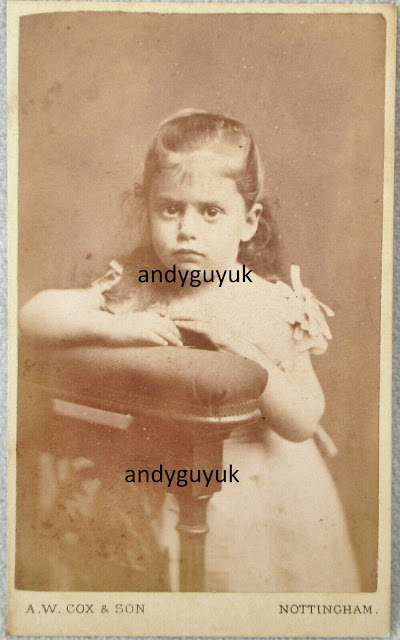
And then, I dipped in for just a moment, with my morning cuppa ... and I found these. Named. A family? And from name and face, clearly Jewish ...

Frederick Otto Feilmann

Paul Richard Lewenz

Agnes Gertrude Feilmann

Martin Ernest Feilmann

Julia Augusta Goldschmidt

Martha Rosa Lewenz

And, in case you hadn't guessed, the broken-up collection is being sold by one Andy Guyuk. And, if I'm not wrong, this is only a part of that collection. For there is a notable gap in this delightful 'family and friends' group. So, I'll have to pop in each morning at the risk of losing a working day.

So, who are they?  Not difficult. The three Feilmann children are three of the four offspring of a clerical worker from Oldenburg in Saxony, by name John Feilmann. John and his two sisters emigrated to England in the 1850s, where Louise (b 12 December 1840; d Elstree 15 August 1914) worked as a language teacher, and Johanna (d Hampstead 20 January 1916) became an 'authoress'.


John rose from his clerk's stool to become junior partner to Hermann Edward Flersheim (1828-1901), lace manufacturer, married Emilie Löwenstein, a Russian immigrant, fathered four children, succeeded prosperously to the head of J Feilmann and Co, and was involved in Nottingham's social and civic life up to his death in 1903. Emilie succeeded him at the head of them firm, along with her brother, Max Löwenstein.

Miss Goldschmidt was the daughter of another local Jewish worthy, silk-marchant Edward Goldschmidt from Hesse Cassel: alderman, councilman, sometime mayor. I'm not aware of any family relationship between the Goldschimdts and the Feilmanns, but there was certainly a social one.

The two Lewenz children are related to our family. Louise Feilmann married Pincus (Pius) Lewenz, a merchant from Hamburg. However, these are not her children. They are two of the four children of her husband's brother, Moritz, back in Germany. It is a family which has been extensively documented, so I shall leave it there, and get back to our photos.

The Feilmann children:

(1) [Martin] Ernest Feilmann (b 14 September 1874; d Swindon Rd, Cheltenham 4 November 1944) spent his life as a research chemist and a chemical engineer latterly in the government's service. He married Katherine Linnell (1876-1961) and fathered three children (John Linnell, Ruth, Anne).


(2) [Agnes] Gertrude Feilmann ('Gerty') (b 1876; d St Giles, Trumlands Rd, Marychurch, Torquay) became a schoolmistress and, at a young age a school principal. She remained unmarried.

(4) Frederick Otto Feilmann (b Waterloo Crescent, Nottingham 11 April 1881; d Hornsey Lane 20 August 1956) known initially as Otto until he dropped the name, and, with the rest of his family changed his surname to Fyleman in 1915. He appears to have been a 'merchant', to have spent time in Canada, and died unmarried.

(3) comes after (4) because we don't have a photo of Amy Rose Feilmann (b Western Terrace, The Park 6 March 1877; d Lemsford Nursing Home, St Albans 1 August 1957) which is a pity, because it is nice to have a complete set! But there are plenty of photos of Rose about, because she was the one who became 'notable'. After starting a nice career as a contralto vocalist, she became known as a 'poetess' and the acknowledged chronicler of the doings of Fairyland in a long series of children's books and radio broadcasts. And she penned the famous lines 'There are fairies at the bottom of my Garden' which, set by Liza Lehmann and purveyed by such as Clara Butt .. and Hermione Gingold! ... has propelled her into the world Dictionary of Quotations. As, of course, Rose Fyleman. She too was unmarried, so it remained to Ernest's two daughters to carry on the family line. And, presumably, keep the family photographs?1

Julia Augusta Goldschmidt (b Nottingham 1870) married one Karl Friedrich von Bose. I'm not sure what happened after that

The Lewenz (formerly: Levy) children:

Martha Rosa Lewenz (b Berlin 8 September 1874; d New York 9 June 1953) married Richard Jacob Friedländer and ... WHAAAAAAAT!  .. geni says 'Martha Rosa Friedländer is your first cousin twice removed's wife's first cousin's wife's uncle's wife's uncle's wife's niece' ...    

Paul Richard Lewenz (b Berlin 29 November 1882; d 4 April 1951)

You 


Dr Fritz Eduard Ganzl  
your father


Josef Ganzl  
his father


Julianna Gansl  
his mother


Amalie Sara Czuczka  
her sister


Fritz Czuczka  
her son


Charlotte (Lola) Czuczka  
his wife


Rosalia Felsenburg (Löwenberg)  
her mother


Rosalia (Sali) Sara Hofbauer  
her sister


Max Hofbauer  
her son


Gertrud Hofbauer  
his wife


Gracia Knoller  
her mother


Marcus Jaffe  
her brother


Hanna Jaffe  
his wife


Aron Luria de Lemos  
her father


Gabriel Luria de Lemos  
his brother


Emma Eva Luria  
his wife


Moritz Lewenz  
her brother


Well, its an extremely tenuous but nevertheless factual 'connection'. 

It was the fairies that done it, I am sure.

PS I wonder if this is grown-up Gerty ....


And this, from the same bundle. [Oscar] Paul Schwerin 'agent in Berlin' . Mr/Ms Guyuk has labelled him 'textile merchant', which I suppose was written in the album from which the pictures were taken. Its previous owner wasn't sure whether he was agenting in 1890 or 1900.


Ah! He's covered on the internet. I wonder why. German Jewish merchant.  ah! findagrave, as so often, comes us trumps ... he's a business contact rather than a family one.

'Sigismund Heinersdorff brought Paul Schwerin into the Berlin lace and tulle company Freudenberg & Meyer as an apprentice. He became well-established there, being appointed an authorized signatory. In 1875, he married Klara Antonie née Freudenberg, his boss’s daughter, and became co-owner of the business. Paul and Antonie Schwerin had two children: a daughter Martha, born in 1876, and a son Hans, born two years later. Martha married the merchant Sally Salomon, with whom she had three daughters: Käte (born 1900), Trude (born 1902) and Lotte Salomon (born 1908). (Source: Jewish Museum Berlin)'


And what about this lot. Edwin Waterhouse (1841-1917) accountant from Aigburth, with wife Georgina Emma Catherine born Thöl (1848-1896),  seen in the 1881 census at Hyde Park Street, London, with children Agnes Mary, Theresa, William, Nicholas Edwin and Ellen Penelope Mary. And six servants. Their photos are surely from the same collection ..

Edwin, of Price, Waterhouse (1868)


Georgina (1869)


Theresa


William


Ellen

Agnes Mary died at the age of 13 


and here is Gertrude, born 14 February 1884  ...


Sad, we've missed one member again. Unless this is Edwin II (aged 21) rather than Edwin I, as labelled elsewhere on the web.


Nicholas Edwin followed in his father's footsteps and became,'Sir Nicholas Edwin Waterhouse, KBE ... 'a British accountant who was senior partner of the firm Price Waterhouse & Company, and president of the Institute of Chartered Accountants. He was also a noted philatelist who was added to the Roll of Distinguished Philatelists in 1940'. I wonder in which capacity he was deemed dubworthy...

Agnes and the future Sir Nicholas

Well, a notable family ... but were they connected with the lacemakers of Nottingham? I've found no trace. But, then again, I had no idea that I was connected them either!


 I wonder which of the girls this was ..


*************************************************************************

PS: Always return to the scene of the crime. Not only has Mr/Ms Gűyűk broken up the family collection, but he/she has listed them in different daily clumps. But I was watching ... and here is John Feilmann


and here his sister, Louise. Mrs Lewenz.


z


Therese Feilmann née Cohn (1850-1926)


And her husband Bernhard Feilmann (d 25 November 1842; d Ohlsdorf 23 August 1914). John's brother? This branch of the family (they had seven children) scattered to various corners of the world ...


We have another Goldschmidt .. Alice Adolphine ... fourth daughter of Edward ... born Nottingham, 19 August 1877. 'Pianist'.  For 12 years Mrs Gustav Raphael Emden 'curtain manufacturer' of St Gallen and Zürich (b 16 December 1864, divorced 1911) ... daughter Anna Emden, son Paul  ..


And some Simons. Carl Joseph (recte Jacob, b 1 September 1850; d Hamburg 7 December 1924) son of Phillip and Auguste, with his wife Rosa Gabriele née Seckels (daughter of Julius Isaac Seckels and Adele née Wagner), then his mother, Frau Auguste née Behrens ..
They had children Phillip, Paula, Erna, Margarethe ..


Auguste seems to have hit the century, and died in London in 1924.

and a whole heap of 'my' Lewenz crowd ... Antonie Eva, Henry Iwan, Iwan, Minna Doris (Mrs Moritz) ...


Antonie (b Berlin or Brno 13 July 1878), daughter of Moritz and Minna, was to become Fr Lillienfeld and when the second war came round, left Europe for Brazil ... musicista, eh! She died in Chile 12 May 1950. Like so many displaced Jews, her sons Henry (Enrique), William (Guillhermo) and Robert were, by that stage, in Chile, Brazil and South Africa ...


Henry Iwan/Ivan


Henry Iwan Lewenz


Three portraits of Henry Ivan or Iwan (originally Izaias) (b Hampstead 7 June 1871; d Southsea 29 December 1957) married Gertrude Rusbridger (b 1 May 1882; d 1961). Engineer. Two surviving sons .. well, the second died aged 20, so really only one ..


Iwan (b Hamburg 1833; d 33 Belsize Ave 2 February 1919) can be seen in the 1861 census for London, in a boarding house in Islington '28, unmarried, general commission agent' ... He settled in England (I see him at the Nottingham Infirmary ball with Pius in 1868, and went into partnership with one G Sachs in Mincing Lane, as 'merchants'. And, good heavens, here are 'the brothers Lewenz' sponsoring a concert in Grantham! He pops up in the 1891 census with a wife, Ida née Simon (1847-1933), children Henry Izaias, Marie Adele, Paula Agnes (b 33 Belsize Avenue 14 August 1877) ... four servants ... and, well, well! Mrs Auguste Simon from Luneberg. The jigsaw is coming together!  He is now a tea merchant and naturalised Briton. In 1911, Iwan and Ida, Henry Iwan (sic), chemical engineer, Adele (sic) teacher at London University (she was actually a Fellow, and MA), the future Mrs Henry Iwan and granny Auguste, with five servants, can be seen in Belsize Avenue ...


Minna Doris née Eisenmann (b 11 November 1852; d New York 19 May 1946). Mrs Moritz. She fled to America with Antonie ...


This seems to be Henry Esaias/Ivan again ..


This one is labelled Henry Ivan Lewenz ..

and yayy!!! Here is papa Pius (Pincus b Hamburg 3 September 1837; d Hamburg 20 September 1886) ... the local Chamber of Commerce marked the passing of 'one of its most active members ... earnestness and zeal for the promotion of the commercial activities of the town'


Well, there are still some missing. Rose Feilmann. Hans Leo Lewenz (found! many months later!). And, of course, the Emma Eva Luria who binds this family into my family tree ...  come on the Gűyűk family ... cough up the rest of them. And tell us where you got them from ...


The Lewenz family (including those of whom I havent found photos) were prominent in Nottingham for over 100 years. I'll sign this out with two newspaper articles. 


and await developments ...

Next day! Here's the big feller ... Philipp Simon of Hamburg .. who started the whole thing. What a marvellous historical collection this is!  Or, should I say, 'was'.


Ida Simon Lewenz


Ida with her firstborn child., Henry Iwan


Hans and Paul Lewenz ...


Antonie and Martha


Paul and Fanny Feilmann


Hans and Erwin Feilmann


'Lily Hetty Simonis is your first cousin twice removed's wife's first cousin's wife's uncle's wife's first cousin once removed' says geni. And her brother Paul Borgzinner too ...
Born 15 March 1887 .. Mrs Henry Simonis ...


Isaac Julius Weinberg and his wife and his wife Agnes née Simon (Ida's sister)


Stop press: this blog has reached the family, and we are trying to buy the whole collection from Mr Gűyűk ...!!!!!
Stop the stop press. No go :-(

And still they come ..


Johanna Feilmann


Bella (Bilha) Borgzinner nee Luria (1860-1938)


Anna Goldschmidt

 The Luria brothers: Aaron Abraham, Joseph and Leo Jessaia

Joseph died in Manchester in 1925 unmarried. Aron and Leo were murdered in the death camp of Theresienstadt ...

And here is yet another. The brothers Jacob (1830-15 March 1900) and Isaac Julius (17 June 1832-1 January 1912) Weinberg, sons of Juda Weinberg and Zerline Simon ...


Jacob, lace merchant, married Adelheid Meyer from Altona, and fathered Nevile, Yitta (Mrs Abraham Levy), Mehir, Simeon, Zireli (Mrs Pierre Levy) and Judah [Harry].
Isaac, linen and Jute merchant, who is pictured higher up, married Agnes Simon, and fathered Frederick Simon, Herbert, Julian, Zerline, George Ivan, Henry and Gertrude. 

Much merchanting, much much money ...

And more ...

John ie Hans Leo Lewenz (b Nottingham, 28 August 1867; d Nottingham 16 May 1941), son of Pius. Director of Merchants Exporter Co ...  bachelor ...


John Leo Lewenz was born on 28 August 1867 in Arthur Street in the Sherwood sub-district of Nottingham. His parents Pius Lewenz and wife Louise Feilmann lived in Gill Street in Nottingham. In 1881, aged fourteen, he was one of ten scholars attending a small boarding school in Hampstead run by a German teacher with a PhD.

Only five years later his father Pius died. John Leo followed his father into Simon May & Co Ltd. In 1887 branch offices were established in France at Calais, and later at Caudry, and in 1920 the French subsidiary Company Société Simon-May was formed. The Calais organization was for many years under his management and he lived for over 30 years in northern France and became quite portly on the good cooking. John Leo Lewenz was remembered as a lovely man and very kind. He earned £2000 a year before the First World War which was a fabulous salary, but the war was ruinous and his wealth shrank substantially. In 1914 he was living at 5 Quai de la Tamise in the centre of Calais. He never married.

When the firm became a limited liability company in 1924, John Leo became Vice Chairman and in 1928 he took over as Chairman. From at least 1922 to 1930 he lived at 7 Clumber Crescent South, The Park, in Nottingham but by 1937 he had moved to 21 Newcastle Drive, The Park. He retired as Chairman in March 1941 and died two months later on 16 May, aged seventy three, at the Convent Nursing Home in Mansfield Road, Nottingham. His funeral took place at the Jewish Cemetery at Wilford Hill in Nottingham on 19 May and he was cremated.

The Nottingham Evening Post reported his death on 16 May 1941 as follows:

Prominent City Business Man - Death of Mr J. Leo Lewenz Nottingham has lost one of its most prominent and respected business men by the death today of Mr. John Leo Lewenz, of 21 Newcastle-drive, The Park. Mr Lewenz was born in Nottingham in 1867, and was educated at Nottingham High School and in London. He joined the firm Simon, May and Co., Ltd., lace manufacturers, Nottingham, at the time when Mr. Jacob Weinberg, who founded the business, and Mr. Pius Lewenz, deceased’s father, were partners In 1887 he became associated with the Calais branch of the firm, and it was through his enterprise that this branch became the leading export house in Calais. Mr. Lewenz returned to Nottingham in 1918. He had been chairman of the company since the death of Mr. Paul Meyer in 1928. When he celebrated his 50th anniversary with the firm in 1934, his fellow directors presented him with a portrait in oils, painted by Denholm Davis, the Nottinghamshire artist. Mr. Lewenz was a member of the council of the Chamber of Commerce, and made valuable contributions to their discussions. His varied experience was of the greatest benefit to the Chamber, especially in connection with the currency problems. Mr. Lewenz was a member of the Reform Club. Musical Interests. He had wide musical interests, and was an accomplished musician, particularly as an accompanist. Science and arts claimed his keen interest. He was a great student of history and owned an extensive collection of historical works. As proof of his deep interest in the subject, he took with him, when he entered the nursing home a few weeks ago, volumes relating to two histories of Greece, which he hoped to read during his convalescence. Mr. Lewenz possessed a generous nature. His acts of kindness were manifold. Never did he seek publicity.

He left £3400. His will gave a third of his estate directly to his nephew Humphrey, bypassing Humphrey’s parents Emil and Frida, and two thirds to his brother Walter. The intention was for Walter to divide this between his own daughter Edith and his second wife. 

Edith Lewenz


Frida Lewenz

The magnificent oil portrait of John Leo Lewenz, mentioned in the newspaper article above, about three feet by two feet, painted in 1934 by Denholm Davis, was inherited by his niece Edith Simons. On Edith’s death, the portrait was passed to her son Martin Simons (Simon Goodman, geni)

Here's Hilda Marianne Lewenz, daughter of Walter Lewenz. She died at the age of eight. 


And I guess the chap belongs here too. Joseph Herrlich, b Cassell 1850; d Conaught Square, London 9 April 1892. Lace warehouseman and merchant .. sometime of Nottingham


And who is Mabel Marx ...?

And a year later, Mimi Feilmann?


And more ..   this one labelled May Lewenz ....