Tuesday, February 11, 2020

Singers of Somerset: (2) Edward Rolle


.

ROLLE, Edward (b Putney 11 December 1879; d Crickhowell, Brecon 18 March 1865)

When one writes of James Garbett, there is an automatic roll-on to the name of Edward Rolle. All through the 1810s and 1820s, where you saw/heard one, you almost always saw/heard the other: singing together in duet, trio, and many a glee party. The Bath Harmonic ‘professional members’.

But the two men were alike only in that way. They had wholly different lives. Whereas the tenor, Garbett, seems to have led a quiet and comfortable bachelor life in Bath, with little or no other interest or activity than music, the bass Rolle was twice wed, with half a dozen children, at least two or three ‘day jobs’, fingers in all sorts of pastries … and he still managed to rack up a career as a vocalist at least as well-furnished as that of his friend, over an even longer period, and eventually outlived Mr Garbett by over thirty years.


Edward Rolle was born in London, so the birth registers tell us, the son of a ‘barrister (Esq)’ of the same name and his wife, Teresa Elizabeth Ann née Crawford (m 13 February 1789). I think ‘barrister’ might have been exaggerating things a little: I see an Edward Rolle inducted as a law clerk in 1790, and spending time in Fleet Prison, presumably for debt, in 1792. But maybe that was a different Edward Rolle. There were one or two of them about. One of them was a Rev down Wiltshire way. ‘Of Salisbury Cathedral’, they said at his death, in 1791. Which puzzles me just slightly, because when our Edward first comes into view he is … ‘of Salisbury’. A relative of some sort? But throughout his life he always filled in ‘Putney’ as his birthplace. And two brothers were born in London, before I lose track of the 'barrister branch' of the Rolle family.

The first post-baptismal viewing mentioned comes when he is still ‘Master Rolle’. Boy soprano. It is 1804 (22 August) and he is billed as a solo treble at the year’s Salisbury Festival, where Mrs Billington is prima and one of the Mr Harringtons features. Now, a boy soprano who features in a Festival in a cathedral town has, I reckon, almost certainly, to be a chief singing boy from the cathedral choir. And I am sure that that is what teenaged Master Rolle was. Does it seem too much to assume, then, that E Rolle 14-year-old cathedral choirboy at Salisbury was in some way connected to the late Rev Rolle of Salisbury Cathedral? I can’t find it said anywhere. I suppose it could just be a coincidence. But ...

Skip on a bit. When Rolle died, aged 75, it was said that he had served over half a century, latterly as a College vicar choral, at Wells Cathedral (that was one of his ‘day jobs’). But here we are, a further decade earlier. Even though no one mentions Salisbury Cathedral. Just ‘of Salisbury’. Oh well.

Edward only had a couple of seasons in the soprano limelight. But he was clearly the star boy of the area, appearing in concerts and Festivals with the favourite singers of the time and place, as well as such national identities as Mrs Second, Bartleman and Vaughan, and I see him, several times, featured in a solo piece of Handel or Carnaby while the men contented themselves with performing in the part-music. 28 November 1805, I see him at the Salisbury New Rooms in a ‘Lord Nelson Memorial’, and then … quiet.

Quiet for some two years, until he re-emerges in the small print of the Salisbury Festival 1807 (26 August). He is now Mr Rolle. Bass. And still ‘of Salisbury’. Over the next few years, I spot him singing at Winchester, Devizes, Andover, and other places between and beyond, time and again on bills with Mr and Mrs Harrington, until, in February 1815 his name appears on the programme (‘his first appearance at these rooms’) for Andrew Loder’s concert at Bath, with Loder and James Garbett, the Misses [Sarah] Wood and [Julia] Bartlett, Mrs [Mary] Ashe …


Those folk, the gentlemen and the ladies, were to become some of his most frequent collaborators over the years to come, and by 1817 he could be billed as ‘Mr Rolle, [late] of Bath’. The next chapter had begun. It was a chapter which would continue, voluminously, through the 1820s, and musically it so resembles the musical life of James Garbett, that I shall not repeat the details here. Just the differences.

Firstly, Edward Rolle was married (2 February 1812) to Miss Mary Ann Lambo[u]rn of Christchurch, Hants. At St Thomas's, in Salisbury. Their son, Edward was born the following year. There were to follow daughters Eliza (Mrs Frank Good), Mary Teresa (Mrs John Webster Hallam), Mary Ann (Mrs Orlton Cooper) and Amelia, and apparently one more son, Henry Jennings Rolle, who became a Bath chemist. And all of these were ‘born Wells’. So, it look as if 1813-5 marks Edward’s move from Salisbury Cathedral to Wells Cathedral, and to the city and church where he would spend most of the rest of his life.

Wells Cathedral

I have spotted one or two wee Rolle-ian landmarks as we wander through the 1820s. An 1822 directory of Somerset has him living in Close Hall, Wells, described as a music teacher. But 1826 sees a vast change of occupation. His second ‘day job’. Edward Rolle became the landlord of the Swan Inn or Hotel, 18 Sadler Street, Wells. And there he would stay (with occasional ‘sellings up’ and diversions to the Piper’s Inn in Ashcott) for some thirty years. Now he didn’t just sing at those jolly festive club dinners and civic beanfeasts which supplied so much of a singer’s wages, and gentlemen’s entertainment, he catered for them as well!


Both the Star Inn and Pipers still exist 200 years later, alas not in pristine form

In the 1830s, his singing activity somewhat decreased. But life carried busily on. He became a city councillor and then, in 1841, wife Mary Ann died. Edward and unmarried daughter Amelia continued at the Swan. They are still there in the 1851 census, in spite of several attempts or ‘attempts’ to sell the lease, and seemingly some liquidity problems, which seems to have been caused by a feckless son-in-law.


In 1855, Rolle remarried, a widow lady, Elizabeth Weston, 'relict of John Weston of Wells', and they can be seen in the 1861 census, no longer at the Swan (which seems to have been taken over by one Frederick C George) but back at Vicar’s Close, Wells. Elizabeth died there 7 November 1862. I don't know why Edward died in Brecon. His schoolmistress daughter, Eliza Good, and her ne'er-do-well vet husband had moved to Wales, but ...  But, anyway, he had lived a truly full life: not least, as a Somersetshire singer... 

A false exit


NB I havent followed up the children, but I find it interesting/amusing that Edward chose to christen his younger son 'Henry Jennings Rolle'. Because that was the name of the 17th century Somersetshire gent whose family went on to become the Lords Rolle ... connection or pretension?

PPS the family historians have had a hell of a go at this one, perverting the name of Rolle into Rollo or Kolle ...


Friday, February 7, 2020

Singers of Somerset: (1) James Garbett

.
One thing leads to another…

A week or so ago, I was investigating Miss Atkinson the mysterious Mancunian soprano. On my way through her early days, I encountered Miss Field ‘of Bath’. I remembered that Mary Field was subsequently Mrs Belville Penley and a pillar of Bath music-making, so I wandered off to Somersetshire to dally a little with Mrs Penley, and there I met a whole lot of other singing folk …

I was pretty sure they would all have been documented, as musical life in the fashionable watering-place of Bath was, in the first decades of the 19th century, thriving industry. Second, only, the London itself. But they haven’t been. Oh, there are books: quite a few of them, which deal wholly or partly with the period, starting with Mr Belville Penley’s own The Bath Stage, going on to studies of the Loder family who were so long pre-eminent in music-making in the city, and, of course, tales of the famous singers – Braham, Mrs Billington, Angelica Catalani, Mrs Salmon – who appeared there … but the Bath people themselves, those artists who appeared month after month in the Assembly Rooms Subscription Concerts … who were they? Mr Garbett, Mr Manners, Mr Magrath, Miss Bartlett, Miss Owens …

So I thought that I would spend a day or three in trying to find out a little more about this little band of Somersetshire ‘professors of music’.

James GARBETT (b c 1780; d Orange Grove, Bath 13 September 1832)

I don’t know why I decided to start with Mr Garbett. Probably because he seemed to turn up in just about every concert in and around town for more than twenty years. I have a seven-page list of (some of) his engagements between 1808 and 1832. And he even sang at a concert the very day before his death.

Mr Garbett first appears in the Bath billings and reviews as a member of the Bath Harmonic Society, the fief of Dr Henry Harrington and the Rev John Bowen. There is a whole history behind the Harmonic Society and the quarrels which resulted in its creation in about 1797. Musical societies in Bath were as much about fashion as melody, it was very much a case of ‘noblemen and gentry only need apply’, and the Dr and the (part-time) Rev, sincere gentlemen though they may have been, were as much into hobnobbing as harmonizing. And their successors … well, the Harmonic headlined an 1831 bill with the names of their president (a baronet), and stewards (1 Lord, 1 KCB, 3 esqs, 1 Colonel, 1 Capt RN, 1 Rev) …

Unfortunately, I haven’t been able to discover what Mr Garbett’s social qualification was for becoming a leading Harmonic member. But I think there was actually still space, alongside the Esqs and Barts, for men (and sometimes even women) who could really sing. But I suppose he could have been related to the Rev Richard Garbett of Exeter, for it was at Exeter that I first spotted him, with Dr Harrington, in concert in June of 1808, billed as ‘of the Bath and London concerts’. James sang Stevenson’s popular ‘Faithless Emma’ and duetted ‘Fair Solyma’. 

(Postscriptum) Ah! I see. Note from 1816. I was right. If you weren't noble or gentle, but could simply sing, you could be a 'professional member'. 'The Noblemen and Gentleman of the Harmonic Society', at their 1816 beanfeast determined that 'so delighted were the Members with the exertions of the professional members that they determined to patronise Mr Garbett's approaching concert ...'


But, wait! already, in 1802 (1 April), also in Exeter a Mr Garbett can be seen at Mr Pilbrow’s Subscription concerts singing ‘Comfort Ye’/’Every Valley’ and joining in the Judas Maccabeus trio, ‘Disdainful of Danger’. Is it he? Or did the Rev Richard, or Richard the organist of St David's, or his father sing as well? Whichever it is, he is out again 17 May 1804 giving his ‘Every Valley’ and ‘Sound an Alarm’ et al at the local hotel. ‘Tickets at Mr Garbett’s, Catherine Street’. Doesn’t sound very Rev, does it? So, is Mr Garbett actually an Exeter man? There he is again, July 1805 singing for the local hospital (‘a large and genteel audience’). And in April 1807 giving ‘glees, duets and songs’ alongside a seven-year-old ‘prodigy’. It has to be he. Mr Garbett of Exeter = Mr Garbett of Bath. Did Harrington head-hunt him for the Harmonic? I think not. There he is at Warminster, already, in 1807, glee-ing with Messrs Loder, J Ashley and W Lacy … Bath men all.


Well, glee-ing and other concerted music was very largely to be his future once he settled in Bath, for that it was which was the principal diet of the gentlemen’s (and sometimes the odd lady) societies in which he would spend the rest of his life. He brought out Shields’s ‘Tell her I love her’, Braham’s ‘On this cold flinty rock’, solo or harmonized versions of ‘Faithless Emma’, Davy’s ‘Sigh not for love’, ‘Return, O God of Hosts’, ‘Lord in Thee’ on occasions, but more often than not his name was bracketed with two or three other men (and occasionally a lady) to deliver the concerted music that made up much of the vocal part of an early 19th century concert. At some stage, he harmonized with most of the singing gentlemen of the era, but the staple team was based on James Garbett, bass Edward Rolle and Andrew Loder, with such as John Cole or William Manners as a fourth, and the featured ladies of the Harmonic – Julia Bartlett, Eliza Owens, Sarah Wood – when a soprano line was needed.

His list of credits grew impressively through the 1810s: the Catalani concerts at Bath, the Bath and Somersetshire Festival (2 June 1809) topbilling Braham and Mrs Billington, the 1812, 1813 and 1814 Covent Garden oratorios (at that time under the direction of Ashley of Bath), the Edinburgh Concerts (1812), the 1813 Bath Festival with Catalani heading the bill, the Devon and Exeter Festival (31 August 1813), the Bristol Festival (14 June 1814), the West of England Festival (1 October 1814, with Mr R Garbett in the orchestra), the Halifax Festival (11 October 1815, another Ashley gig), the Camarthen Eistedfodd (July 1819), a gratis job via the Rev Bowen which earned him and his Harmonic team the honorary title of ‘Royal Bards of Cambria', regular tours of south Wales with the Harmonic professionals … the grander occasions interleaved with concerts and banquets and civic affairs, including a regular Mr Garbett’s concert.


In 1832, he was still going strong, gleeing with Loder, Croft, Millar and Manners at Mrs Palmer’s concert, at the Assembly Rooms with Croft, Millar, Aldridge, Bennett et al; at the Abergavenny Music Festival teamed with Croft and Howells, at Portland Chapel with Manners, Millar, Croft; at the Devizes Bear Club, and then, though unwell, at local politician H W Hobhouse’s dinner …


The record of Mr Garbett’s public, professional life is liberally to be found in the pages of the south of England press. His private life is barely, ever mentioned. He was unmarried. He apparently owned a house at 1 St James’s Street, but preferred to live in lodgings at Orange Grove. When his friend, Andrew Loder went bankrupt in 1827 it was Garbett whom he nominated as his ‘next friend’ to whom monies owing to him should be paid. And when James Garbett’s possessions were sold up, after his death, the list showed the taste of a gentleman of modestly classical tastes (I’m not sure about ‘Lord Rochester in disguise’ by Kneller) and featured both ‘a fine old violoncello’ and a viola, as well as a variety of card tables … 


Well, after all that … a little death notice in the Exeter and Plymouth Gazette: ‘formerly of this city’. So Mr Garbett of Exeter did equal Mr Garbett of Bath. So was he related to Richard the boot-and-shoemaker, Richard of St David's Church, Mrs Westgate née Garbett ...?


Monday, January 27, 2020

Miss M A Atkinson: I persist


This article, penned a decade ago, as part of my Victorian Vocalists collection, originally read as follows:

ATKINSON, Miss M[ary] A[nne] 

‘This one is a disappointment. She started so well. I managed to sew together the various parts of her career … and get back, even, to exhuming tiny snippets about her personal life … and then: concrete wall. Which is a shame, because the lady was clearly a pretty fair vocalist. Well, not quite ‘fair’, it seems. Apparently she was a big lush voice on a rather fat, squat body. But if I know what she was, I’m afraid I don’t yet know who she was’.

The following was what I had managed to winkle out of the pages of the past.

‘She turns up first to my eyes, ‘Miss Atkinson of Manchester’, along with John White, her music teacher, in June 1830, in W J Hammond’s company at the Leeds Theatre. She is ‘first singer’ and was dubbed ‘a very clever girl’ with ‘a voice of most extraordinary power’. She and Mr Wilson sang in The Beggar’s Opera ‘weeded of its objectionable passages’, and concluded their engagement with a concert on 20 July. I suspect, however, that this might not have been quite the young lady’s first appearance, as the same month a duet ‘Gentle zephyr, appear’, was published, bearing the label ‘sung by Miss Field and Miss Atkinson’. Miss [Mary] Field (the future Mrs Belville Penley), from Bath, had been the previous, well-established first singing lady at the Manchester Theatre Royal. So, when did they duet together, I wonder. Odd.


I spot Mary Ann (assuming that’s what ‘M A’ stood for) singing with White, in July 1831, at Cheltenham (Guy Mannering), 3 October 1831 they are at Edinburgh doing Love in a Village with Miss Byfeld as Rosetta and Miss Atkinson as Madge ('her voice ... rather de trop for the simple ditties of Madge'). She stayed in Edinburgh until 'the spring of 1832' (Julia in Guy Mannering 'very prettily performed') ...


And then John White died. The Leicester violinist and dance coach, Charles Guynemer, took up the young lady with the big voice, allegedly for no payment, and, as far as I can see, he re-launched her in public at the Leicester Winter Concerts, 30 January 1833 (Mrs Waylett’s popular ‘Come, dwell with me’), and the York Subscription Concerts 19 February (‘Ombra odorato’, ‘With verdure clad’, 'Come, dwell with me’, 'Di tanti palpiti’). ‘[She is] highly recommended by the first professional characters in London and already a considerable favourite at the private concerts of the nobility and the gentry…’ Really?. Anyway, she fulfilled hopes. Leicester nodded ‘[she] has a splendid voice and is a correct and ladylike singer. She does not aim at those prodigious flights of execution so common to the stage but rather seeks the higher qualifications of sentiment and grace’. York gave her a small audience but a rave review and told us ‘she is the daughter of the late Mr Atkinson, architect … her father was an amateur of no mean proficiency’. Great! Not great.

To speak of ‘Mr Atkinson, architect’ in York or Manchester, at this time, was like speaking of a Mr McGregor in Glasgow. Half the top architects in the area seemed to be Atkinsons. The Peter Atkinsons of York and their descendants, the peculiar Thomas Witlam Atkinson of Manchester, a William 'of Manchester' ... well, I dug. No Mary Ann anywhere. A Martha, but she married. Eliminate Thomas the elder. He died 1798. Eliminate Thomas W, because he was still alive. Eliminate the sons of the second Peter, for the same reason, but could she be a sister? But hang on, is Peter II dead? Wisdom says he died in 1822, but when his wife died in 1825, she was not a widow! Sigh. Eliminate the elder Peter, unless he had a daughter at 80. Maybe eliminate the Manchester William, too, he seemingly didn’t die till 1839. And is this another Peter? But I know this Peter. He married the very considerable soprano singer Joanna Goodall, in 1826. A second marriage, perhaps. But if Mary Ann were a step-daughter to the well-known Miss Goodall, surely someone would have mentioned the fact. Especially as, in the same week of Miss Atkinson’s York debut, Mrs P Atkinson (late Miss Goodall) was giving a Benefit in the same city! But, sigh: he died in 1843. And he was ‘of York’. Eliminate … everyone? Like ‘Miss Chambers the Banker’s Daughter’, she’ll just have to be ‘Miss Atkinson, the architect’s daughter’. For now.


She appeared in London at Guynemer’s concert (‘great promise’), she sang at the York Assizes Concerts to great predictions, she sang ‘delightfully’ at Dr Camidge’s Benefit with local tenor Elijah Walton, she sang at the concert given by the Queen’s Pianist, Mrs Anderson (10 May), who was somehow connected with Guynemer, she sang at Henri Herz’s concert (‘a very promising young lady’), and then her teacher shot for what seemed to be the stars. In October, he apparently took her to Covent Garden to audition for Alfred Bunn. It was reported that she sang the Sonnambula scena, indelibly connected with Malibran, and was successful.


Miss Atkinson, however, was already out in fine company. I see her in December 1833 giving a concert in Windsor with Bochsa and Mori!

Bunn duly gave her a 'debut', 31 December 1833, as Rosina in Il Barbiere di Siviglia, alongside Phillips, Seguin and Templeton, and the occasion was pretty much of a success. She sang rather loudly (‘squalling’) with sudden drops into softness, she interpolated the entire ‘Non più mesta’ and made other alterations (‘all the original music’) to the already musically-mangled Bishop version of the opera, but, largely, it was agreed that when she was good she was very good. The Atheneum, however (who knew perfectly well who her teachers had been) was making no allowances


On 10 November she made a second debut in the inevitable Artaxerxes, with Phillips, Wilson and Harriet Cawse at her side. This time there was no doubt: ‘her performance of Mandane was a most successful one’ and her ‘The Soldier tir’d’ was judged by more than one critic as better than anyone’s … excepting only Mary Ann Wood.


But, her short and not unsuccessful engagement over, Miss Atkinson left Covent Garden, for Bath, and the management of Davidge, never to return to the Bunn boards.


Advertisement: 'The Hunter of Tyrol' sung at the Theatre Royal, Bath by Miss Atkinson where her reception has been most enthusiastic... delighting crowded and overflowing audiences by her exquisite singing'.


I suppose she sang in the provinces over the next years -- I do see it mentioned in 1835 that she was allegedly in treaty with Davidge, for the Surrey Theatre, and 9 November 1835 she is back in Edinburgh singing Diana in Rob Roy  -- but I don’t spot her in London again until she turns up at the English Opera House, in May 1836, featured as the Countess Lannoy (‘Let us be gay’, ‘Come to the dance’) in a rather weak George Linley operetta entitled The Queen and the Cardinal. Her ‘very clear powerful soprano and neatness of execution’ were praised but the material judged ‘vulgar’. Curiously, in October, when she appeared in concert at Aylesbury, she was billed as ‘from the Theatre Royal, Covent Garden’. Er … not recently.

In November of the same year, however, she spent some time at the Surrey Theatre performing Love in a Village, Love or Hate or the Exile of Genoa, Rob Roy and Malvina with Leffler, Sinclair, Lenox and Edwin. ‘This young lady sings well in tune and has a good round soprano voice which tells well in concerted music. If she could show more passion in her manner and singing it would be an improvement’. ‘We are glad to perceive the rapid progress of this young lady. She exhibits in a high degree that fine cultivation of voice which particularly distinguished the pupils of Crivelli … great power and brilliancy’. She exhibited them, on this occasion, alongside ‘the Bedouin Arabs in their surprising Evolutions’.

From the Surrey, she moved on to Salisbury (Sweethearts and Wives, The Bottle Imp, Apollo in Midas), Elisha Walton’s Leeds concert (12 April), and to Newcastle and, there, the local press (as so often in the provinces) gave us a delicious wee pen-picture of the lady ‘whose bust is stout and high, and her neck short withal, [and] would hardly lead a stranger to suspect she was possessed of an organic development so capable of producing tones of not less force than delicacy ... volumes of pure sustained sound .. remarkable compass ... perfectly under control … liquid sweetness ...’. Miss Atkinson spent much of the next year at Newcastle (Guy Mannering, Der Freischütz, Perfection, Philharmonic concerts etc), and then, after a period at Birmingham, where she starred in opera with Templeton (Sonnambula, Cinderella), 


returned to London for an engagement at the Olympic Theatre (March 1840), to play Mrs Major Mortar in The Ladies’ Club, a role which sounds as if it may have been better physical casting than the juvenile lead, Cicely, in The Gentleman in Black. That piece over, it was back to Newcastle, now billed as ‘of Drury Lane’, for Guy Mannering with Templeton and another long engagement, leading to a season at the Theatre Royal, Carlisle … In 1841-2 she seems to have been a part of the company at the Theatre Royal, Windsor.


In 1842, she was hired as second soprano to Miss Forde at the Grecian Saloon, but she stayed only three months, leaving her spot to the Misses Mears and Crisp, and continued on to the Manchester Theatre Royal, where she repeated her Amina and Zerlina alongside Donald King and Lenox. ‘A full round voice and a fair share of flexibility; its tone is not first rate, that we cannot expect, or Miss Atkinson would not be here, but it is far from being disagreeable and she sings with firmness and discretion…. Her figure is against her in parts of this cast’, wrote one decidedly unchauvinistic critic about the ‘native of Manchester … daughter of a highly respected inhabitant for many years’. For her Benefit night she played the title-role Bishop’s Maid Marian.

From here on, Miss Atkinson seems to fade away. In 1843 a report from Ludlow says ‘business has been bad, notwithstanding Miss M A Atkinson and Mr Mahon have been singing in opera’. I spot her singing at Gravesend in 1845, in Barker’s Benefit at the Olympic (13 July 1846), in October 1850 at the Holborn Vocal Concerts, and then – for heaven’s sake – in 1850-1, back at the Grecian, where Julia Harland was now prima donna and Mary Ann Crisp well installed as second. I see her appearing as Clorinda in Cinderella, First Fairy in A Midsummer Night’s Dream, in the burlesques The Sleeping Beauty in the Wood and Jason and Medea, in the Bishop operetta First Love

It was over twenty years since the lass from architectural Manchester had first hit the platforms … it now was apparently, the end of her career as a vocalist.

What became of her? Is it she at the Dramatic College Fete in July 1862, presiding at a stall? Surely not the Miss M A Atkinson, sentimental vocalist, at Liverpool’s Oxford Music Hall in 1863. Why can I find her in no census, even that of 1841 when she was surely in Newcastle, or 1851 when we know she was singing at the Grecian? No birth notice, no death notice, no family, no identification … just ‘Miss Atkinson the architect’s daughter’, ‘from Manchester’. Pupil of White and Guynemer. And Crivelli?. And, I assume, not to be confused with Miss Eliza Mary Atkinson RAM ‘pupil of Crivelli’ who sang at the oratorios of 1828 ...
I’ve looked. I’m still looking’.            


Well … ten years later I decided to redig and … a clue! Which led to another clue. Which unravelled a whole heap of other clues ...

STOP PRESS. Sudden Decease of an actress. Died December 25 (1863), Mrs Henry Lindon, sister of the late Miss M A Atkinson of vocal celebrity …. ! Will it be another concrete wall? Well, ‘Lindon’ was evidently a nom de théâtre, so it could be ...

Mr and Mrs L were, from 1856, in evidence at the City of London Theatre. Mrs seems to have been better value than Mr. But I see that, at her death, Mrs was playing Fairy in panto at the Pavilion, Whitechapel, the cast of which also included the little Misses J or I Lindon (Cat) and A Lindon (Humpty Dumpty), aha! … and yes!! there they are in the 1861 census: 216 Hoxton Town, Henry W Lindon actor 37 born Norwich, Martha W 30 actress born London (not Manchester!), Isabella 9, Agnes 8, George 5 (b Plymouth) … they all seem to have the same W middle initial, which I suspect is their real surname …. Hope is not entirely lost. I plug on!
Oh, with them is dwelling a something-in -law (Sharpen your quill, man!) Mary A Penson … widow, 52 from Manchester … Ohhhhhhhhhh! Is it she …?


Mary Ann Penson (sic) born 1811ish, died 1863 106 Carlton Road, Kentish Town, aged 55; buried All Souls, 17 February 1863 … Penson? How come Penson? Widow?

1871 census 12 Union Place, Lambeth: Henry Lindon comedian 47 widower b Norwich, Isabel and Annie musical artistes, George scholar. The Ws are gone …

died George Lindon, brother of the ‘Sisters Lindon’ aged 28, 17 February 1883 …

1886: The death is announced of Miss Agnes Lindon of the Sisters Lindon, the well-known character duettists … died 17 February 122 Hainton Street, Cleethorpes, buried 19 February Cleethorpes as Agnes Lindon Wilson … Wilson! gotcha!

1851 census: 4 Villiers Street yayyyyy! Henry Wilson 27 comedian, wife Martha 21 singer, Alicia Benson (oh! Penson?) b West Indies. .. ? 40 mother, servant, Mary A Atkinson 30 (!) teacher of music b Manchester … Whaaat!? That muddles things up! But I’m a bit suspicious of this entry … We’re not there yet. West Indies be blowed. Mother? Whose mother? And who is the thirty-year-old?


Died 28 December 1876 at Charles Street, Sheffield Henry William Wallace Lindon aged 53 … (registered as Henry Wardlaw Lindon Wilson aged 54).

Henry Wardlaw Wilson married Martha Cranmer Penson 29 September 1850 … Whaaaaaa …. Ah! Of course. Mary Ann was daughter of the LATE Mr Atkinson … Martha clearly is at best a half-sister! Twenty-two years younger …? Er … sister? Something is buzzing ‘[illegitimate?] daughter’ in my ear.

Henry Wardlaw (sic) Wilson baptized Norwich 3 May 1823 son of Robert Wilson, draper, and Henrietta ..

Martha Cranmer Penson, by George Penson, music master, out of Mary Alicia, born Cumberland Market, London 10 March 1830 … Oh, damnation. Mary Alicia? ‘M A’.


1861 Shoreditch census: Henry Lindon, actor b Norwich, wife Martha, children Isabelle, Annette, George. And Mary A[licia] Penson, independant, b Manchester 52 ... 

Died Martha Cranmer Wilson aged 33 ...

Died 26 April 1897 7 Borough Rd, Birkenhead, Isabel Lindon, late Sisters Lindon (registered as Isabel Mary Lindon Wilson, aged 44) … her death notice was posted by her buddy Lizzie Villiers (clog dancer and vocalist) with whom she had been playing in dates such as the Ilkeston Poplar Palace of Varieties. Isabel sang ‘with taste and precision’, but I would guess nowhere near as well as her .. er ... relation, Mary Ann. Or was it Mary Alicia? Or each, in turn …

End of dynasty. And, I think, end of my search.

But wait! George Penson ... oh, blimey! Not the George Penson, vocalist and musical comedian, the celebrated Figaro of Covent Garden, the English Opera House and Drury Lane, son of John Penson of the Salisbury, Lymington, Blandford and Newport Theatres, who drowned himself in Dublin, March 1833, aged 38 … it must be!

Of course! He was playing at Covent Garden when ‘Miss Atkinson’ arrived from the north … did they marry at some stage? Did they dally? And was Martha Penson, as I divined, not Mary Alicia/Ann’s sister but her ?illegitimate daughter. But that would have meant that they would have to have connubed at the end of 1829, when Miss Atkinson had supposedly not yet made her first appearance, anywhere. And was theoretically in Manchester studying with Mr White. So, was that bit about ‘[She is] highly recommended by the first professional characters in London and already a considerable favourite at the private concerts of the nobility and the gentry…’ not just puff, but true ..?  And SHOULD I, then, be 'confusing' our 'Miss M A' with Eliza Mary Anne Atkinson RAM (pupil of Crivelli) of Manchester, born 15 January 1811, daughter of William and Eliza Lindon Atkinson …


William Atkinson, architect, married Eliza Rawlinson Manchester 26 February 1809 …


Christened Manchester 31 January 1810, Mary Alicia Atkinson ...
Christened Manchester 18 April 1811 Eliza Mary Ann Atkinson ...

There are TWO of them? Does this explain the 1851 census entry? Does this explain the punctilious 'Miss M A Atkinson' ...

Argh! Christened Manchester 31 January 1813 Emmeline Spencer Atkinson ... THREE of them!


Sob. Christened 29 January 1819 Charlotte Maria Atkinson (Mrs John Twiddy d 1848) and William Rawlinson Atkinson (d Uckfield 8 June 1888) and Richard Latham Atkinson (d Bishop's Walk, Lambeth September 1834) ....

Wait …. Eliza LINDON Atkinson? Well, that's where the 'Lindon' bit came from.

Oh, hell!  Do I have to start all over again ...?

Anyway, I have to amend my article's header. But which sister is which? It now reads:

ATKINSON, Miss M A [ATKINSON, Mary Alicia] (b Dobcross, Manchester, x 31 January 1810;  ? d 106 Carlton Road, Kentish Town February 1863) 'Mrs George Penson'

or [ATKINSON, Eliza Mary Ann] (b Dobcross, Manchester 15 January 1811)

And which sister is this the tale of?

And I have to tack a half-dozen years of additional material on to the beginning of my career summary…

Admitted to the Royal Academy of Music 1823, soon after the opening of the institution’s doors. Sang at the RAM concert 5 July 1823. Aged thirteen.

16 May 1827: Madame de Vigo’s concert chez Sir Francis Burdett. Pasta sang ‘Di tanti palpiti’. Miss Stephens, Miss Wilkinson, Mme Brizzi and Miss Atkinson were the lady singers. Braham topped the male list.

26 May 1827: The London Eisteddfod. ‘pupil of Crivelli’ 'her first appearance in public' who sang ‘On Logan Banks’ and ‘Should he upbraid’ ‘most sweetly’.

11 July 1827: Surrey Theatre. ‘The delightful opera of Rosina afforded great amusement, and was rendered peculiarly interesting by the debut of a young lady named Atkinson … her success was complete. Her voice appears to be one of rare excellence. It is a true soprano: rare in tone, extensive in compass and combining brilliancy and sweetness in a very eminent degree. Many of her tones reminded us strongly of Miss Stephens when she first appeared at Covent Garden … Miss Atkinson is of the middle stature, with a fair complexion, and light brown hair; looks to be about sixteen years of age, and is very Lady-like in her appearance. She has evidently had a musical education and adds to a splendid voice, considerable cultivation … On the whole, we should be at a loss to account for so promising a debut at a minor theatre did we not remember that the Manager [Elliston] is himself one of the first actors of the day. (Morning Post)

5 September 1827: Surrey Theatre: Paul and Virginia, 13 September: Rosina

19 September 1827: Surrey Theatre The Padlock Leonora: Miss Atkinson Leander: Mr Benson Mungo: Mr W West

18 October 1827: Surrey Theatre Paul and Virginia. Paul: Miss Graddon, Virginia: Miss Atkinson Dominique: Mr W West

October 1827: Surrey Theatre The Siege of Belgrade. Seraskier: Mr Philipps Lula: Miss Graddon Catherine: Miss Atkinson

November 1827 'Mrs Atkinson, the mother of Miss Atkinson of the Coburg Theatre was charged by the driver of hackney coach no 533 with refusing to pay her fare ..'

30 January 1828: Drury Lane Concert under Henry Bishop, with Pasta, Feron, Misses Love, Cawse and Grant. ‘Her first appearance’. ‘Miss Atkinson sang ‘Angels ever bright and fair’ with considerable success. She has a promising voice, but as yet she is without style’. ‘This lady promises well, but she wants cultivation’. 'much delicacy and distinction'


22 February 1828: Covent Garden. The same team, with Paton replacing Feron. Arne's 'Hymn of Eve'.


28 July 1828: Brighton: ‘Miss Corri[e] closed her engagement at the Marine Library to return to the Theatre, Saturday. Miss Atkinson is to be her successor, a pupil of Crevelli (sic) who is highly spoken of .’

August 1828: Brighton ‘At Tuppen’s Marine Lounge Miss Atkinson is in high favour; where she has been recently joined by Mr Yarnold, and the duets between them, with the piano accompaniment of Mr Bond, have been in the first degree pleasing, and skillfully performed’

1828 ‘Miss Atkinson, the young lady who sang last season at the Surrey Theatre is at present delighting the fashionable world at Brighton. Tuppin’s Library is crowded whenever she appears. She has been most successful in a new song by [Robert] Guylott called ‘The Fairies’ Invitation’, which she is always obliged to repeat …’ 'Miss Atkinson maintains her vocal celebrity there '


‘The vocal talents of Miss Atkinson and Mr Yarnold … continue nightly to crowd the Library with elegant company…’

And, then, I suppose, came Mr Penson. Penson was playing at the English Opera House in the summer of ’29. The female side of the company was strong – Abby Betts, Harriet Cawse, Miss Goward/Mrs Keeley, Eliza Jones, Fanny Kelly – but, apparently, no Miss Atkinson.

1829 July Brighton: Rosina with John White as Belville
1829 September Brighton: Concert with Miss Atkinson, Miss Pearson, Mrs Bland, Mrs Evans (late Miss P Glover), Messrs White and Newnum ... 'the whole of the operatic performers ..'

I’m wary of 'supposing' anything about this story. I ‘supposed’ that ‘Miss M A Atkinson’ began her career at Leeds. I ‘supposed’ that she wasn’t the same person as the RAM lady in 1823. I scorned, wrongly, the suggestions which claimed Drury Lane and Covent Garden and the posh concerts as her teenage credits. One is so accustomed to false claims (‘prima donna, La Scala’) in these years. But in among the thistles, there are sometimes flowers to be found, and an historian mustn’t reject anything that just might be a clue. So I’m feeling slightly chastised. But, at least, I didn’t go public with the story of Miss Atkinson until I’d sorted her out. Or have I?

And, fancy, she was the grandma of the music-halls' Sisters Lindon! Well, one of them was ...

I notice in the 1881 census brother William (clerk) and his wife Mary Jane née Duplock (milliner) living in Church Street, Uckfield. Their daughter Leila Evelyn [Mrs Jonathan Corbett Neale] is listed as 'pianoforte teacher'. In 1891 she has a little Leila Alicia Corbett Neale ... there's that Alicia again ...

Ummm .. which Mrs Penson is that at the St James's Theatre for Braham in 1836-7 ... ? Alicia!!


Wednesday, January 22, 2020

An American A in altissimo: Evangeline Florence

.
In the later nineteenth century, if the words 'an American soprano' appeared, in European music-press paragraphs, you knew what, not always (vide Durand, Escott et al), but most often, it meant. The Continental music press knew what it and they meant whe they wrote it, anyhow. A lass with a light, often extravagantly high, mobile, voice, but, all too often, little or nothing more. Scores of such young ladies passed through the schoolrooms of such well-publicised teacher-agents as Mathilde Marchesi, a decidedly reduced proportion of them got to the operatic stage, a few made some sort of career ... most, finally realising that height was not everything, went home disappointed and poorer, to give their G in alt to hometown concerts. But not all. The cream, as it does, did float to the top. From the days of the earliest, outstanding New York coloratura soprano, Laura Harris, onwards ...


Which brings us, decades on, to the tale of Evangeline Florence Houghton. A part of the cream. Who did not fall into the hands of the Italian and French 'star-makers', who did not sing Amina at Rimini, Lucia at Valetta, and then go back to Massachussetts ... but who made a fine, long career doing what she, as her excellent (American) teacher had done, did so well. A in alt in her baggage. On the concert platform. 

Here's my extract of her grand career ...
.

FLORENCE, Evangeline [HOUGHTON, Florence [Ev]angeline] (b Cambridge, Mass 12 December 1867; d Kensington, London 1 November 1928)

Stratospheric American soprano who made her career and life in Britain.

‘Miss Florence’ was born in Massachusetts. Her birth was registered in Cambridge, she always said she was born in Cambridge, yet the family seems to have lived in Charlestown, where they can be seen in the 1870 census. Father Henry, from West Gardiner, Maine, working as a cooper, mother Julia (née Rowell, m 11 December 1858) and their surviving children Ella, Frank, Emma, Angeline, and twins, Albert and Alfred. Julia would manage one last child before her death, aged 30, on 17 November 1871.

‘Evangeline’, of course, being listed in the 1870 census, obviously wasn’t born in 1873 or 1874, as most reference books tell us. She was born in 1867, and we don’t know what her forenames officially were, as she was registered just as a ‘female child’. But she’s Angeline in the 1870 census, and Florence in 1880. By 1880, Henry is listed as a pork-cutter and he has a second wife, Dora R née Jones (m 13 August 1873) …

And the music? Well, we are told in a biographical note that (a) she studied with the fine Boston soprano, Edna Hall, and that (b) she made a debut as Henrietta in Martha at the age of 18, when ‘she created a sensation by her singing of ‘The Last Rose of Summer’ an octave higher than originally written’. Well, you would think that something as vulgarly catchpenny as that would surely have made the press, but I haven’t yet found it. Of course, ‘aged 18’ could be anywhere between 1886 and 1892. We are also told that she was ‘a Worcester girl’ and sang in the local church. I can’t find that either. But I do spot her, at Wellesley College (14 July 1891), Miss Evangeline Houghton ‘of Worcester, singing’ … oh no! Alabieff’s ‘Nightingale’ already, Bachmann’s ‘Everywhere’, and Ambroise Thomas’s … what?

Imgene Busk from Baltimore had been an earlier dancer on the leger-lines


Parentheses. At this stage, I called for help. My Californian friend, Betsy, waded through the Boston and Worcester press archives (not available to foreigners) and she not only came up with all the answers, but also nailed the odd inaccuracy.

(1) The Boston Herald of 18 March 1888 says that ‘La Sonnambula is to be given at Music Hall on 27th under the direction of Charles R Adams with Rose Stewart, Evangeline Houghton, Carita Benedict, Charles R Adams, Fred Marston, Harry Young, Dr George R Clark.’ (As Lisa, I imagine)

Then, (2) a brief clip in the Boston Journal of 15 March 1889 tells us that Martha was presented in Odd Fellows' Hall at Winter Hill, Somerville, last evening, complimentary to Evangeline Houghton. She was Lady Harriet ‘and was well supported.’ Hm. Scarcely a ‘debut’. And, not unexpectedly, twenty-one, not eighteen.

(3) The Boston Herald, 16 November 1890, said she was to take part in the 12th annual festival of the South Eastern Massachusetts Musical Association, directed by Carl Zerrahn. The sopranos also included Clementine de Vere.


(4) Finally, the Worcester Daily Spy of 22 November 1890, has an ad for ‘Miss Evangeline Houghton, Assisted by Her Three Brothers, Vocalists, and Orchestra of Six Pieces’ at Piedmont Church, Tuesday, November 23. Reserved Seats 50c. Admission 25c.’ Her brothers! Frank the farmer? Albert the plumber? Charley the Insurance Man? Excellent.

Evangeline, as we obviously have to call her, made her London concert debut on 11 May 1892, at a concert given by Marguerite Hall, the singing daughter of Edna. Apparently there had been some advance publicity for her high notes, for the press reacted, without total enthusiasm: ‘the reports concerning the phenomenal compass of her voice proved to be in no way exaggerated. Whether this young lady’s highest notes are absolutely pleasant to listen to is another matter. For our own part, we prefer her singing when she remains within the limits of reasonable compass. All the rest savours too much of claptrap. Her voce is very pleasant in quality and she possesses great ease of execution’. ‘In the cadenza of Alabieff’s Nightingale Song, she proved that she possessed a voice of extreme compass. Otherwise there is nothing remarkable about her voice’.


So, was she to be yet another American soprano, with more height than quality, who would find that, for Europe, top Z above Q, alone, wasn’t enough? No. Because Miss Florence had other attributes. To add to the lightweight vocal gymnastics, she had a sweet and appealing tone of voice and pleasing performance talents, and it was these, rather than her A in altissimo, that was to bring her more than a decade of engagements and success on the world’s concert platforms.

She followed up her ‘debut’ swiftly, with appearance in a number of second-tier London concerts, and then headed to the provinces. Here, there was no pudeur in the advertising: Manchester and Glasgow billed her as ‘the sensational American soprano’, Chester more sagely as ‘the new high soprano’, and, somewhere along the lines, someone advertised her as ‘the Eiffel soprano’ (not, pace Sterling Mackinlay, ‘the Eiffel Tower soprano’, and anyway the embarrasing tag only lasted one campaign). Her ‘birdlike melodies were much enjoyed’. In September she sang at the Eisteddfod.

She was now taking lessons from Georg Henschel, so it was no surprise to see her featured at his London Symphony Concerts, and in other Henschel affairs, for a number of years, but there was an even greater opportunity coming. On 7 December 1892, she appeared, for what I think was the first time, at the Boosey Ballad Concerts. She would sing at many, many more of these. Even if they were no longer in their heyday, the Boosey programmes were still a feature of the London concert scene: and, by the turn of the century, Miss Florence would be the soprano queen of the series. Mind you, like others, she did not stick to what could, even by a stretch of the imagination, be called ‘ballads’. I see her singing Eckert’s frilly ‘Echo Song’ and David’s extravagant Perle du Brésil aria ‘La Chanson de Mysoli’. Even Henschel’s successful new ‘Spring’ (‘charming interpretation’) was scarcely a ballad. But they would come.


‘[She] appeared in the first production of Parry's Job, given by the Highbury Society’ says the biggest press biog. No, wrong again. Job had been premiered at the Gloucester Festival, the Highbury Philharmonic Society merely gave it a London suburban showing, on 16 January 1893. The little part of the shepherd had been cast with a boy soprano, but the laddie fell sick. So, Evangeline sight-read his music.

She sang at the Boosey concerts, at the Albert Hall, at Lane’s Manchester concerts (‘the Eiffel note soprano’) with the most bat-squeaky bit of her repertoire, with the Liverpool Philharmonic Society, and at Chester in Bridge’s cantata, Rudel. She sang the Choral Symphony for Henschel, and at his Wagner concert at St James’s Hall (14 March 1893). I’m not sure if this is the concert where the biog asserts that she sang Elsa’s Dream, but anyhow she didn’t. She sang a piece of the Elsa/Ortrud duet with Marie Brema. Not bad, already. ‘… a voice of wonderful sweetness and purity as well as great range and power’ wrote one scribe after another concert. Power? Really?


On 1 July 1893 she sang on Llandudno pier, and a few days later sailed for America. But it was only an out-of-season visit. She was soon back in Britain giving the north her ‘Russian Nightingale’ with the A in alt, ‘Spring’, Handel’s Alessandro aria and a song, ‘Butterflies’, by the pianist-songwriter Felix Corbett. She would revisit Middlesborough for Corbett annually, and promoted several of his songs. (‘Her style is exquisite and her voice of great clearness and purity’).

She sang with the Scottish Orchestra Company under Henschel, at a number of northern ‘ballad concerts’ (‘Spring’, the Viardot-Chopin ‘Aime-moi’, Couplets de Mysoli), and was back in town for the Boosey concerts, and a host of other Queen’s Hall concerts, in the early months of 1894. She also put in an appearance at the Crystal Palace (‘Hirt am Felsen’, Mireille waltz ‘Non muta il core in me’), before returning north to sing, less conventionally, Goring Thomas’s The Sun Worshippers and Walthew’s The Pied Piper of Hamelin with Ben Davies at Sunderland, The Spectre Bride at Middlesborough and give ‘Butterflies’, ‘Spring’ the Mireille or the Perle du Brésil couplets, from Cardiff to Llandudno Pier.

In September, she took a part in the Three Choirs Festival at Hereford, singing the first performance of Bridge’s The Cradle of Christ with Charles Santley (too low...'), the high-set role of the Angel in the Christmas Oratorio, and joining Anna Williams and Edward Lloyd in the Lobgesang.

Then she popped off to America again. With a purpose. On 17 October 1894, Miss Houghton married America-based Scotsman Alexander Crear, ‘West Africa merchant’, in Somerville.


Back in Britain, in November, she took up the concert rounds again. If the Boosey concerts and the annual series of northern concerts staged by Percy Harrison made up, as they would for much of her career, the bases of her season, there was some variety in performances such as Felix Mottl’s Wagnerian concert, in which she joined Minna Fischer and Agnes Janson as a Rhinemaiden, alongside Marie Brema’s Brünnhilde. At the concerts, she featured Madame Gassier’s famous Venzano Waltz, Solveig’s Song, Cowen’s ‘Love lies asleep in the Rose’, the Dinorah Shadow Song, and, still and always, her Mireille and Perle du Brésil as well as the hardy ‘Butterflies’. A new song, ‘The Nightingale’s Courtship’, fashioned for her by Corbett didn’t catch on. 


Hull gasped ‘the gifted lady’s voice is of a range rarely heard in a concert room’, ‘exceptional compass and light and flexible in quality’ nodded Birmingham when she gave Goring Thomas’s The Swan and the Skylark.

In 1895, Evangeline made a scheduled 30-concert trip to Australia, under the management of C J 
Stevens and P A Howells of Adelaide, in a party with contralto Lily Moody and pianist Mark Hambourg. They opened at Adelaide, 8 August, and over the following weeks progressed to Melbourne and Sydney to an excellent reception. ‘Miss Evangeline Florence's voice is wonderfully beautiful, a perfectly-trained, pure soprano’. Evangeline, of course, trotted out her Mireille, her Perle du Brésil,‘Aime-moi’, ‘Butterflies’, the Alessandro aria, Eckert’s Swiss Echo Song, The Russian Nightingale, Solveig’s Song, the Shadow Song and the other staple items of her repertoire, but also gave songs by Chaminade, Schumann, Rubinstein, Anna Kinnison’s ‘Love Song of the Mavis’, Henschel’s setting of ‘I Once had a Little Doll, Dear’ and, contrastingly, the Mad Scene from Thomas’s Hamlet. The tour was a decided success, before, on 5 October, the team returned to London.

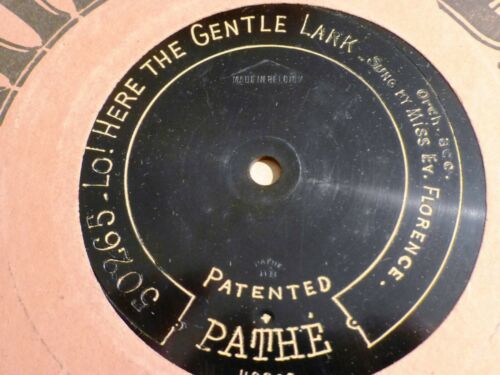
Back in London, it was into the Boosey concerts and the Harrison concerts – Cowen’s ‘The Swallows’, Delibes’s ‘Les Filles de Cadix’, Bishop’s florid ‘Lo, here the Gentle Lark’, an ancient Pastorella (‘Meco verrai su quella’ ‘arranged by A L’) from the 1744 opera, Rosalinda, by Francesco Maria Veracini, which would become a frequently-sung regular -- Henschel’s London Symphony concerts (Choral Symphony), a visit with Hambourg to the Crystal Palace …

In September, she featured in the Queen’s Hall Promenade Concerts with the most familiar of her standard coloratura arias and songs, and she made a venture into oratorio with The Golden Legend at Crystal Palace and The Creation at the Queen’s Hall. She ‘sang very sweetly’ but was soon back on the concert platform with ‘The Swallows’, her Veracini, and a new Corbett ballad, ‘Blossoms’.


However, another new piece was to have a much longer life than the not unsuccessful ‘Blossoms’. At the Monday Pops of 14 December 1896, a new song cycle for four voices was given its first public performance. Liza Lehmann’s Omar Khayyam cycle In a Persian Garden had been performed in private, with Albani in the soprano role; for the Pops, it was Evangeline who was teamed with Marian MacKenzie, Ben Davies and Thomas Meux. The men had the gems of the set, but the whole cycle was a great success. Davies and she were also the soloists for another novelty, Erskine Allon’s The Oak of Geismar, mounted the following month by the Highbury Philharmonic Society, but not destined for a future.
The Boosey concerts continued, with their quota of songs new(ish) – Stanford’s ‘The Calico Dress’, Burns’s ‘Thou hast left me ever, Jamie’, German’s ‘Who’ll buy my lavender’ -- and old – ‘Who is Sylvia’, ‘The Swallows’, the Veracini – and, at the same time, she gave Handel’s ‘Caro selve’ at the Pops, the Brahms Requiem at Henschel’s concerts … and then she was off again. Not on a concert tour this time, but for ‘a year in the Black Forest’ ‘studying in France and Germany’.

Well, it wasn’t a year. More like six months; from April to September. And I have not found any indication of with whom she is supposed to have studied in Europe. Suffice it that, in October 1897, she was back, engaged for a small appearance behind Albani and Brema at the Birmingham Festival (King Arthur), and for another round of Harrison concerts.

On 4 February 1898, Evangeline Florence mounted a concert of her own at St James’s Hall. It was not a concert of the old stuffed-full-o’-stars Benefit type, but a recital, in which she was joined by Mark Hambourg. Neither was it a tiresome salvo of As in alt. She sang Mozart, Brahms, ‘Mein Herz ich will dich Fragen’, ‘Caro selve’, ‘Fairest Isle’ (King Arthur), ‘Orpheus with his lute’, ‘Fleur des alpes’, Godard’s ‘Reveillez-vous’. And then it was back to the Harrison circuit, until the Queen’s Hall called again. On 26 February she sang in the London showing of Michele Esposito’s Irish cantata Deirdre.

During the year she sang her usual round of Boosey concerts – with material from the inexhaustible Perle du Brésil to Liza Lehmann’s ‘You and I’ and ‘The Minuet’. She had, apparently, now become part of the Lehmann music-factory: and was taking lessons from Mrs Amelia Lehmann. She sang at the opening of London’s latest concert room, the Salle Erard, ‘sweetly warbled’ Cowen’s music at his concert, visited Brighton for Wilhelm Kuhe, trekked to Ireland for a little more oratorio, and north for more Harrison concerts. Dundee sighed ‘her voice retains its wonderful flute-like clearness and purity of tone and [her] range is as marvellous as ever… [she] sang with even more charm of manner and grace and expressiveness of style than when we last heard her’. 


In late 1898 and the early part of 1899, she gave a series of concerts on the Continent, under the management of Alexander Rosé, with pianist Carrie Townshend (Vienna, Graz, Lemberg, Cracow, Brünn, Budapest), visited Paris to sing at Jean ten Havé’s concert (21 April Handel, Henschel and … Veracini) and an Orphanage concert, with the Clara Butts (2 May) and many Baroness patronesses, and in September returned to Worcester, Mass, to sing The Creation in the city’s 42nd Music Festival. In between times, Boosey and Harrison continued to call upon her frequently and she delivered her Venzano, her Veracini, her Eckert, her Viardot ‘without her exceptionally high notes’ as well as such ditties as Alicia Adelaide Needham’s ‘The Fairy’s Lullaby’ and ‘Little Orphant Annie’, to audiences round the country. Maybe, in fact, the exceptionally high notes were gone because the newest American high Q above Z exponent – Miss Ellen Beach Yaw – was in town, purveying her Q sharp.


However, the most interesting engagement of her professional year of 1899 was that for the North Staffordshire Musical Festival in Hanley. Evangeline, Herbert Grover and Andrew Black gave Paradise and the Peri, and, on 26 October, premiered Samuel Coleridge-Taylor’s The Death of Minnehaha, the second leg of his Hiawatha trilogy. Although nowhere near as successful as the first, it nevertheless won repeat performances, and Evangeline was called upon to repeat her ‘creation’.

Through 1900, she interleaved the usual concert engagements with performances of The Light of the World, Mackenzie’s The Dream of Jubal, The Creation and Hiawatha and a second engagement at the Birmingham Festival behind Albani, Esther Palliser and Marie Brema. Her share of the Festival’s soprano work included Parry’s De Profundis, Byrd’s Mass and the Brahms Requiem with David Bispham. Albani sang Hiawatha. Following the Festival, she took part in the Farewell Tour of the great tenor, Edward Lloyd. She sang the ‘Voce di primavera’ of Strauss, Mrs Needham’s ditties, the inepuisable Venzano waltz, and Leicester voted ‘no more beautiful soprano ever charmed the ears of a Leicester audience’.

Ellen Beach Yaw

The high notes had, incidentally, Miss Yaw or no Miss Yaw, not disappeared wholly from Evangeline’s repertoire. She revived the brilliant Arditi Waltz, ‘L’Ardita’ (‘with much lightness and grace’) at the Boosey concerts, interpolated an F in alt into ‘Lo, Here the Gentle Lark’, ended her Mireille on an F sharp in alt ... and when, in 1902, she went with Antoinette Sterling on that lady’s Farewell tour, she brought out La Perle du Brésil, yet again.

Her work and travel-loads had now, however, largely decreased. She gave the odd Messiah and even an Elijah, she turned out in concert. or in a work such as Cowen’s The Sleeping Beauty or Hiawatha, and she made up a party presenting Lane Wilson’s song cycle Flora’s Holiday, and then his less successful Dorothy’s Wedding Day. And she had time out with peritonitis.

But she was still visible, although the notices were not quite what they had been. When she sang at a Halle concert, giving ‘Zeffiretti lusinghieri’ and an aria from Graun’s Passionmusik, the Manchester critic wrote: ‘she has a voice of no great volume and of a somewhat colourless character, but the possession of a very considerable range, especially upwards, and a facile vocalisation enable her to give prettily effective rendering …’
She toured with old colleague, contralto Ada Crossley – but now it was Ada who was in the large print while Evangeline did her ‘dainty vocalising’ behind – and again with Carmen Hill, Lloyd Chandos and Ivor Foster. She sang at the Savoy Theatre – offstage – the soprano music in Marie Brema’s inventive staging of L’Allegro, she turned out for the Lehmanns, and at Kensington Town Hall singing the ballad, ‘The Slumber Tree’, composed by a young man named Ivor Novello …

In 1911 she topped the less than exciting bill for the 45th season of the Boosey Ballad Concerts, now at the Albert Hall.

By now, Evangeline Florence was more likely to be heard on record or radio than she was in the flesh, but she continued to appear in pieces such as dancer Ruby Ginner’s Love and the Dryad and Harrison Frewin’s Pan and the Woodnymph (1914), and, in 1916, she was announced to appear … in opera. Mr Thomas Harrison Frewin’s Opera Company was not bulging with known names, but it did not lack ambition. The repertoire included La Juive, Tannhäuser, La Traviata … and Evangeline Florence in Faust and Rigoletto.

Madame Florence had been, for some time, teaching, and the occasional pupil from her lists made the concert reports, while she herself continued to be heard by the medium of the radio. 


Her husband died in 1921, and she in 1928, but she was still to be heard on the airwaves. And, to this day, on you-tube, there are her rusty recordings of ‘Lo, here the gentle lark’ and the Couplets de Mysoli , which seems to exist solely for their high notes. But I think, for quite a while there, she was more than just a something-or-other-in-alt.


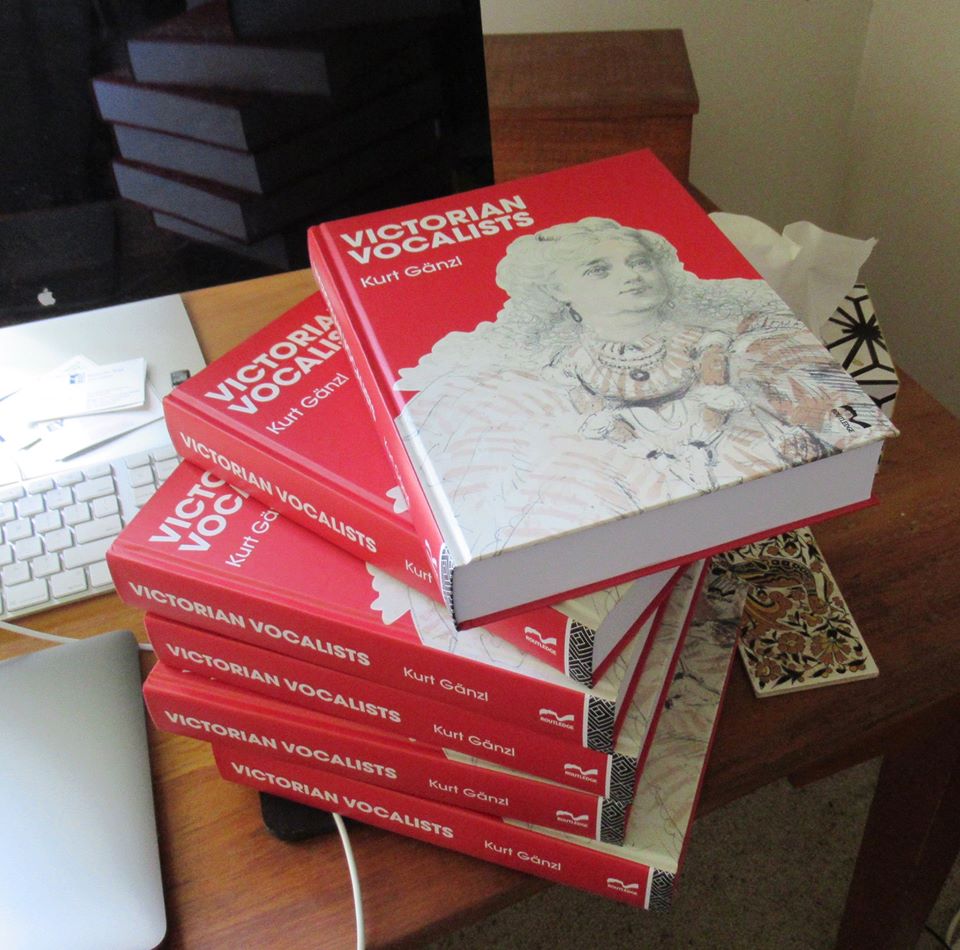
Nota bene: full biographies of Laura Harris, Marie-Louise Durand and Lucy Escott, America's greatest sopranos of the nineteeth century, are included in my book, Victorian Vocalists (2017). Miss Busk didn't make the cut, evidently, but I have her article in my files, should anyone be interested.