Sunday, June 8, 2008

Three Saints in One Day


It’s been a variegated Wightish weekend. Weekends being traditionally busy on the roads, as England and its over-speedy vehicles invade the island, Fred has been given a couple of days off, and when Saturday dawned fair but slightly biting, I gave myself the day off too, and devoted my time to the story of Mr Valentine Smith, tenor, instead of to walking and exploring.

However, Sunday it was less breezy, promised 25 degrees, and as soon as I’d devoured my smoked salmon and scrambled eggs, I strode into action. The key point of today’s walk was St Catherine’s Lighthouse, on the coast beyond Niton. I knew it was the latter day replacement for the ineffectual ‘pepperpot’, but I knew little else. I do now.

I tootled across the moors, and dove down Bury Lane. After five days with no rain, the grass and nettles were less aggressive and the underfoot less perilous, and I reached Niton in no time. Today being Sunday, the church was open, too, but folk were worshipping, so I tiptoed by and down the roads and paths to the coast. St Catherine’s is your ‘ideal lighthouse’. Spectacularly ur-lighthouseish and glistening white, with the glint of some devilishly modern instruments showing, where a very different kind of light had been when it was built in ... I plumped architecturally for 1835, and I was only four years out. 1839. The old guidebooks say you used to be allowed up inside, but today there are ‘Keep Out’ signs on the gates. A shame. But the lighthouse and its support cottages are lovely to look at and also, I know now, possessed of a history as an important place in the development of lighthouses in general.


From St Catherine, I headed on towards two other saints. Lawrence and Radegonda. St Lawrence is a village on the ‘Undercliff’, St Radegonda’s was the way leading from there back towards the village of Whitwell and, ultimately, to my home downs. It looked a casual stroll on the map, but I hadn’t done my Wightish homework properly. I didn’t really know about the ‘Undercliff’. I do now. In person.


There was no way out from the lighthouse, except back up the steepish route I had come down, to a spot half a mile inland where the ‘coastal path’ was signposted. Odd. Why was the coastal path half a mile from the coast? I know that a metre drops off the edge of the Isle of Wight each year, but surely this was counting for 800 years. A bit excessive?

The path, not wholly unexpectedly, rapidly shrank in size as it rose. It was a delicate walk rather than a stride out. And then something flashed past my right foot, way below. A car? I looked down. Oh mon Dieu! Below that right foot was nothing but a sheer cliff face … and that car was many, many metres down.

I am not good with that sort of heights. I am the man who had to be carried, catatonic, off the see-through floor in the Paris museum. I tried to concentrate on just going forward. What was this?
Well, what it is, I can now tell you, is the Undercliff, the biggest landslide in the world. The reason the coastal path is half a mile inland, at the top of a bloody precipice, is because this path is the original island and everything from there out to the sea is one great big world-famous slip .. eight miles long by half a mile wide!

According to my map, there was only one way off this terrestrial tightrope, down the track to St Lawrence, and I was mightily pleased when I came to a fork in the path and started down. Only there isn’t only one down-path and, instead of the big one, I’d taken a very minor, very steep, very crumbly, slippery, nettly goat-track. I was shamed out of my terror by a couple of elderly locals, cheerfully climbing upwards, but I was excessively glad when I reached the road by which I could tarmac into St Lawrence. Speeding Englishmen notwithstanding.


I climbed where those out-of-proportion folk are going!


If St Lawrence has a village centre, a church, Lord Yarborough's Marine Villa and a pub, I missed them. Every step I took was further downwards, and I knew I’d just have to come back up, so I elected instead to take what the map called ‘St Rhadegund’s Path’ up to Whitwell. It turned out to be a wide farm road (which was once a mediaeval pilgrim’s trail), and it had a nice information board telling me all about this unfamiliar Saint.

Radegonda or Rhadegund (depending whose version you read) seems to have been a useful sort of a saint. One who devoted herself to the poor and the sick (when she wasn’t saying hundreds of prayers) rather than merely getting herself flayed, boiled or eaten by lions, as too many Christian saints seem to have done to gain their entry to sainthood. Anyway she was a sixth century German royal who became a nun in Poitiers and she’s in Whitwell because the old overlords here were Normans and they liked her.
Whitwell’s church is named for her (conjointly with the Virgin Mary) so I thought I should pay a visit. It was open, the lady organist made me welcome, and I was able to admire a charming little Norman-plus-C15th extensions church which, like the Brightstone one, is well alive and active today.

From Whitwell, I headed on to the very small village of Bierley, and thither across the fields to Wydcombe, from where the Downcourt Lane trail leads, up the downs, to the Hermitage.

Well, I’m getting used to eccentricities in the Isle of Wight (don’t mistake me, I absolutely love them), and Wydcombe is certainly one. The main building, which is I believe ‘the Manor’, reminded me of Snow White’s castle in Disneyland with 1950s extensions. The large, unkempt cottage next door (which I don’t doubt was originally part of the same complex) had a more simple and sophisticated charm. I’d been sparing on photos today, so I snapped them both.


There has to be a story behind this place, and I shall find it out. (Good heavens, the web says it goes back to Domesday – not the house, which starts only from 1697 – and that it was owned by the same Major Dawes who ‘revised’ the Hoy Monument!).

Up the downs, through thick green fields with thick white sheep, and four and a half hours after take off, I rolled into Hermitage Court Farm with its welcome shower and cold Guinness. A fascinating day …

Thought. Having got Radegonda in place, I’m wondering about St Catherine. There are an awful lot of St Catherines in the panoply, but I really only know about Joan of Arc’s one, the irritating virgin who got wheeled and beheaded in ancient Alexandria. What would she be doing in the Isle of Wight?

Friday, June 6, 2008

Brightstone and Mottistone

*
In one way, today’s outing was less successful than those of the previous days. For I didn’t accomplish what I had set out to do.
I had decided to drive to the Brightstone Forest, and then take the rather unnecessarily christened ‘Tennyson Trail’ from the country carpark, through the trees, some 10 km on foot to Carisbrook. Carisbrook, of course, has a famous castle which needs to be seen, and also I wanted to haunt the churchyards and see if I could find any trace of the Jupe family, the ancestors of Greg, partner to brother John.
I didn’t get there. I marched for 5km along vast wide tracks (bigger than many of the island’s roads) with only occasionally lovely sylvan views of overhanging trees and beds of ferns, which truthfully couldn’t excite someone brought up around the fabulous forests of New Zealand, until the track suddenly died. A signpost saying Carisbrook 3 miles pointed directly at a quagmire. How long is a quagmire? I suppose I could have clambered up the hill through the trees to see if, a few hundred metres further on, things got better, but what if it all got worse again in the next 5km? Irritated, I aborted and returned to the car park.
However, if the Tennyson Trail was a first class failure, the rest of the day was anything but. The drive to the forest via Chale Green and the really delightful villages of Shorwell and Brightstone was without a doubt the prettiest ‘inhabited’ drive I’ve done here yet. Glorious countryside, truly beautiful buildings including a heap of non-threatening thatch .. look at this little wee feller in Brightstone!


But my favourite building was a fine elderly bourgeois mansion (?) in Shorwell. It was on a corner, so I didn’t get a proper look and, as ever in Wight, there was nowhere to pull in and stop (though the locals do, simply reducing the barely 2-way highway to a one-way street), so I planned to snap it on the way back. Alas, concentrating on the road, on the way back I missed it, so I will have to go there again.

In Brightstone I did find a place to stop. A little municipal carpark (free!). So I found Fred a spot, and I spent a good hour in this most charming of villages. To start with I visited its delicious old (thatched) post-office. Not only was it there and open, it had a red King George postbox that worked and it was manned by a delightful elderly gent who sold me a postcard of … Newport. There aren’t any, apparently, of Brightstone, which is crazy. I posted my cheque and Gerry’s card in the robust red box with a feeling of great satisfaction.


Brightstone also has a fine church, St Mary’s, with a surprisingly large graveyard. And, guess what, it was open. God lives on in Brightstone, even if He has fled some other places. It’s a splendid church, basically Norman with the usual accretions of later ages and it is also very much in use today. I took a photo of its nave and some of the fine stained glass, and the plaque to its famous rectors, including a son of William Wilberforce who became a Bishop, but alas it didn’t come out very well.
The graveyard was explained when I visited the little (thatched) town museum (free!), next to the post office. Brightstone has a considerable history, not least as a lifeboat station.

I glanced self-abnegatingly at a fine, cheerful pub and a busy tearoom-cum-B&B-cum-all sorts, but forewent them in favour of following the local heritage trail to an old mill. What purports to be the mill has been converted into natty lodgings, but the walk back along the mill stream (why is the race so far from the alleged mill?) was pleasant.
So is Brightstone. Thoroughly pleasant, thoroughly pretty, and thoroughly lively. My last glimpse, as Fred rolled out of town, was of the local schoolchildren playing shriekingly twenty-first century games on the green. Brightstone is a thoroughly living village.


If, from the country carpark, you walk in the opposite direction to the muddy Trail, you climb Mottistone Downs. Well, I’m game for anything downy, so up I went. Grand views, east back to whence I’d come (and my ‘pepperpot’ a speck on top of the hills), or west, where the cliffs of the Needles shine whitely through the intermittently cloudy air.


I scaled the downs to their peak, cast a brief eye at some bronze age tumuli (I’m sorry, tumuli are just like Pacific islands races to me: they all look the same), another at some jolly if baleful highland cattle who didn't seem at all fazed by me nor by the many folk walking their dogs, then plunged down the other side, turned off through the forest and returned by a leafier route.
And then, having nibbled my bread and cheese in the carpark, I wended homeward.
Carisbrook will be for another day. Of today, I have Brightstone and Shorwell and the Mottistone Downs to remember.

Thursday, June 5, 2008

Up, then down...


I could see from my bed, at 5am, that it was going to be another sunny day, so I leaned over and grabbed the ordnance survey map and my glasses …

A walking day, not a driving day (lucky Fred), and something where I could do a circuit, not a there and back. So I decided on the village of Chale. Up to the downs, down to Chale Green, along to Chale, round the coast to Blackgang, up to the downs again and home. The bridle paths were clearly marked. No problem.

So, after a sumptuous breakfast, I hoisted on my new backpack and set off for Hoy monument. Having read up on Mr Hoy a bit last night (my goodness those British merchants made a mint in early C19th Russia!), I enjoyed his folly even more, but I paused only to photograph the lush lands I was about to descend to (these two pictures are a panorama, notice the same cows in each) and plunged on down the indicated bridle way.


Hmmmm. I'm beginning to get a theory about bridle ways, which anyway certainly couldn’t take a horse the size of my Elena. They exist in theory rather than in practice. I think perhaps I should be sticking to ‘public footpaths’ instead. This one was muddy, overgrown with bramble, nettle, grass and other unidentified flora, and one didn’t ‘walk’, as you can on the downs, but rather scrambled down it. Still, someone else must have been using the thing, for I found two gates left culpably open.
The descent was uncomfortable but uneventful. I got a fright when, stopping for a pee (which one can do on bridle paths), a pigeon flew out of the grass at my feet. The fright was a retrospective one. I remembered a similar occasion in Australia, a decade ago, when, stopped for similar reasons, I had for audience a kangaroo and two sidewinder snakes. Here (although one field I saw was labelled ‘beware of the adders’), the main hazard was flies, and I was jerked back into song when one flew into my left ear and another right down my throat. ‘There was an old lady who swallowed a fly…’
What was a path, what public and what private, was almost impossible to tell. There was only one signpost in all the descent, so I was not surprised when I came upon a road which was not the one I’d been aiming for. I was at Upper Appleton Farm. Nice it is, too. But I was, for once, quite pleased to see tarmac.

The first event on the tarmac road was the village of Chale Green. Charming. Some nice houses, a pretty green, some thatch -- but this was non-threatening thatch that seemed intended as roofing not as a statement or an advertisement – but more stone and neat grey slate, and, heaven’s sake – a general store. I purchased a fresh bread roll and a bottle of Fanta, pulled out a box of Vache qui rit from my pack, and had a delicious morning tea on a bench by the green.

A mile and a half of delightful country road (a red road, but still not room for two cars and a pedestrian) and I arrived at Chale. This was supposed to be the scenic attraction of my walk – an old inn, a fine church, and (so the map said) a Post Office where I could post my ebay cheque to Brad and Beatriz, and buy a postcard for Gerry. I was disappointed. The hostelry is a vast and uncomfortably bitty affair rejoicing in the twee name of ‘The Wight Mouse’. And, guess what, it doesn’t serve food till midday. St Andrew’s church was fine indeed. From the outside. But it is Anglican, and thus it was closed. God, or his English representatives on earth, only receive the tired, the weary, the halt and the lame, by appointment on certain days of the week.
Still, from the comfy bench in the graveyard (dedicated to Florence Slater! No, not the Florrie Slater in my last book, but what a coincidence), I could see a lovely big red King George letter box. The post office! Strike three and out. The post office is gone, and the box’s mouth stuffed up with a piece of wood. Chale Green 2, Chale 0.

From Chale, I took the coastal path to Blackgang. Or tried to. Part of it was boarded out, and suddenly it came to a premature end. Road closed. The reason was obvious. The missing bit was in the sea. Goodness knows what went in with it, but the little group of very nearby houses looks in imminent danger. Several are abandoned, but the Merlin Tandoori Restaurant hangs grimly in, alongside lemon-walled Pixie Cottage and one other altogether-too-seaside house which has a notice up ‘For Sale’. You have to be kidding!

The Chine before Fantasy days


Avoiding the ‘Fantasy Theme Park’ that now occupies the once picturesque Blackgang Chine, I headed up the road, in search of the footpath back up to the downs. It was a bridle path. It was also invisible. So I guessed. And, thus, followed a sheep track right up the hill and splat into a man mending fences. I didn’t offer to help (my experience is limited largely to watching Wendy do it), just mumbled ‘sheep track?’ and headed off across the hillside to a visible bit of official path. It ended, hurrah!, at St Catherine’s Oratory. And so I sat down on what the map tells me is a bronze age tumulus and lazily consumed the other half of my roll and cheese and the rest of my Fanta in blissful, carefree, sunwarmed peace.

The downs are definitely my favourite bit of Wight so far. I shall be up here most days. Amongst the gorse and bluebells, the tiny rabbits, the crows and the pheasants (and, alas, I saw one stoat/weasel/ferret), and the mad monuments.

Today, they gave me a picturesque finale. As I headed down the slope towards the plateau, from the bush round Hoy Monument a horse galloped forth, heading across the downs in my direction. Instead of grabbing for my camera, I just gaped in delight. What a wonderful sight. To make it perfect, of course, it should have been a fine stallion with a flowing mane mounted by a sexy cavalier in a mighty cape… when we met at the gate, I was introduced to a nice little mare ridden by a cheerful middle-aged lady. But never mind. It was still a grand sight.

So now I’m home, showered, foot-bathed and ready to spend the afternoon out on the lawn attacking my article on Victorian Vocalist number 150, Miss M S Edwin…

This is the life!

Wednesday, June 4, 2008

Up on the Downs

*
A brief pause for emails, tennis results, the sandwich the Spyglass couldn’t provide and a small Guinness, and I set out on part two of my day’s plan. A trip back up on to the downs to investigate the two ‘monuments’ which I’d spotted in the distance and the mist yesterday.
‘Follies’ might be a better word. For both of them are indeed weird objects.


The first is known as St Catherine’s Oratory. I’m not sure why, because it’s a small 13th century lighthouse. The story goes that a local lordling once plundered a shipwreck of wine intended for the Catholic Church and was condemned as popish penance to build the light to prevent further wrecks. It looks a funny wee ‘pepperpot’ now, up there on its mound, and a gentleman I met at the site wondered where the monk had lived who had to light the watchfire each night. I suggested he might have muled in at dusk, but I was wrong. Wikipedia says (not that I usually trust Wikipedia after reading its curious article on myself!) that the tower was only part of a larger building, so I guess that’s where the oratory bit comes from.
Anyway, it’s a fun object with a fun history, and you get splendid views from around it, around and across the island.


From the Oratory, it is only a kilometre or so across the downs to an even more curious object, exactly five hundred years younger. In 1814 (a good year), to celebrate the visit of the Czar Alexander of all the Russias, a local gentleman by name Michael Hoy saw fit to erect, on a prominent point, a tall stone pillar with a ball on top, the whole suitably inscribed and making mention of the happy times Mr Hoy had spent dwelling in his Czarship’s regions. Well, I guess it was his money to spend.


But it gets better.

Forty-some years later, as the Crimean War raged, Russia’s Czar was no longer a friend but an enemy. Fortunately, instead of knocking Mr Hoy’s folly down, Mr W H Dawes simply replaced the inscription, and the very visible pillar-and-ball affair became instead a monument to those soldiers killed fighting the Russian forces at Alma and Sebastopol.
Nowadays, the original inscription has been re-added on the verso, so this particular folly tells two stories with very different attitudes. A splendid bit of history which now, nearly 200 years down the line, has its humorous side.


Five o’clock draws near. The sun is still out, but it’s not so hot as before … I think the picnic on the lawn may end up being a picnic on my bed..

Gosh, I’d better uncork the Chateauneuf du Pape …

Sunshine on Shanklin

*
This morning the sun shone. So, given that more grey weather is predicted, it seemed like a day to get into action. Breakfast over, I roused Red Fred from his lethargy and set off to have a little explore in Shanklin. Of course, during my frantic search for South Wight Rentals the other day, I’d covered what I now realise was a certain amount of the visitable town, but today I checked out such items as the old village, the seafront, the theatre.
The old village (speed limit 20mph) is very thatched. Not quite as aggressively thatched as Godshill where the whole ancient part of the village looks as if it had been built yesterday, but thatched enough. Much of it, too, seems to be devoted to serving food and drink. Two huge pubs opposite each other, with a cream tea ‘cottage’ challenging from alongside. I’m sure there are some antique dwellings somewhere as well (I tried ‘Rectory Lane’ hopefully), which may be a little more 'natural', but the public face of old Shanklin is very ‘jigsawpuzzle box’.


The seafront I scanned from above, up on the cliffs where the accent is definitely on accommodation. One large old hotel shoulders the next, almost every one sporting a large frontal extension, each and every one immaculate and welcoming looking, each one gazing out to the blue (today) seas, a Victorian and Elizabethan holidaymaker’s delight. For in Shanklin, of course, the accent is heavily on the holiday trade.


The theatre, too, without being particularly handsome, is substantial and attractive and just looks like a ‘real theatre’. And, for heaven’s sake, not only is my old friend David McAllister due to turn up there in Hello, Dolly shortly, but – good grief! – Tommy Steele, so long a part of our lives and now over seventy, is still trouping, still starring, this time as Doctor Doolittle. I was so shocked I didn’t even look for the dates. If it’s while I’m here … could I?

Shanklin is a nice town. It’s lively and bustling, full of modern life while retaining much of its Victorian charm. I like it.

From Shanklin, I pointed Red Fred along the coast to Ventnor. Ventnor is responsible for my being here, because it was my daytrip there with Andrew and Wendy Lamb this time last year that convinced me I could spend time here. Or, more specifically, there. Remembering the traffic affluence from last year, I had decided that I would leave Fred in a parking lot in the upper town, and walk to the seafront, but somehow I found ourself in a one-way system that sent us inexorably down … and there we were. And there was a reasonably middle-sized parallel parking place! I zoomed into it frontwards.
I photographed the result, but I’m too ashamed to reprint it here. Suffice it that I did not get a ticket. Oh, having parked in a fashion that is against all my principles, I then found there were large half-empty carparks at both ends of the boulevard. Grrrnch.
I strolled along the front, delighted to notice that the brightly-coloured, eccentric old house whose death I had last year predicted was still there, and bright as ever, watched the little ones playing on the dark tan sand alongside the colourful old-fashioned bathing boxes, and then lit out along the clifftops.


I’d expected this well-known ‘walk’ to be reasonably flat and uneventful but, no! Clifftop paths occasionally succumb and have to be realigned. This one has suffered much and been much remade. Anyway, I stuck with its ups and downs (as did many folk much older and less agile than I), passing through Castle Cove – where there is now no castle, the cretins of the sickly sixties having knocked it down for monetary gain – and Steephill Cove (well-named) where the newest and as yet incomplete addition to the heteroclite clutch of homes and food-and-drinkplaces is a wonderful hardiplank home-to-be with the airs of a plastic lighthouse.


At the top of Steephill Cove’s steep hill you arrive at the Botanical Gardens. It is mostly greenery at this time of the year, but everything is prettily laid out, and so quietly ‘labelled’ as to give you the pleasant feeling that you are simply strolling in someone’s private gardens, rather than being educated. There was a New Zealand section in which I recognised some flax plants … but not much else.
Back in Ventnor, I stopped in for a shandy and sandwich at the Spyglass Inn, where the Lambs and I had lunched happily last year. Alas, no food served before midday (why? don’t people eat in the morning?) so I contented myself with the shandy and returned to Fred.

Getting out of Ventnor is as inexorable as getting in. It is also all 1st and 2nd gear driving and very twisty. So I was quite relieved to find myself on the Whitwell Road and heading homewards. But Fred, whose sense of direction has been excellent so far, got a bit above himself and we overshot our yellow-road turning. Soon, I realised that he had got us lost. But he hadn’t. A few minutes later we rolled up at ... the Rookley co-op! Quite right, Fred. I emptied their shelves of Chateauneuf du Pape and Vache qui rit, grabbed a bottle of pickled onions that definitely wasn’t there on my last visit and some fresh bread rolls (for tonight is picnic on the lawn night), and let Fred take me safely back to Hermitage Court.

Part one of my sunny day accomplished.

Tuesday, June 3, 2008

'And the mists lie low on the fen..'

*

I’ve been two days now at Hermitage Court Farm on St Catherine’s Downs but I haven’t exactly started rushing around the Isle of Wight.
Reason number one has been the weather. Monday dawned grey, cool and drizzlish, and Tuesday has followed suit, adding for good measure in the last hour or so a healthy wind which is howling around this particular wuthering height in great gusts. Actually, I don’t know why winds are supposed to howl. This one doesn’t. It sounds more like an elderly washing machine trying to spin dry, or an effortful vaccum cleaner with the hiccoughs.
My little apartment here (‘little’ in the endearing sense not in the magnitude sense, for its indeed as luxurious in size as in appointments) is so comfortable, and the wifi so efficient, I don’t really feel like leaving it in such conditions. But I have.
First of all, I had to get to the co-op store to stock up on edibles and drinkables. So I pointed Red Fred back down the hill I had come up so nervously the day before and off I set. Oddly, I had the impression that the roads had widened just a tad overnight.
All went well, till I reached the crucial junction with the main (haha!) road. Across it was a stationary van with a pair of legs sticking out from under its bonnet, and a barely sufficient gap left for me. And vehicles coming both ways outside. Well, both vehicles stopped, the one I could see blinked, and I squeezed through. I felt rude not stopping to see if the legs had a head that needed help, but I’d be the last person likely to be useful in such a case.
Rookley co-op is not large. In fact, its more the size of your old-time corner store. But it had two shelves of wine and beer, a plentiful choice of cheeses and ham, a few pickles (Branston but no gherkins), no biscottes but Carr’s 'cheese melt' crackers, the odd nut and crisp, and the lady even managed to dig me up a bottle of olives which I suspect had been long awaiting a buyer. So I drove home well-stocked, ready to fill to bursting the little cooler Chris has installed in my room.
After such a sterling effort, I lunched on cheese and crackers, wrote half an article on Victorian vocalist Tom Travers, had a long, luxurious lavender bubble-bath in my wondrous bathroom, changed, and generally relaxed until dinner time. Jayne does ‘in’ dinners for the occasions you don’t go out (which in my case are likely to be frequent), so I was treated to a really great vegetarian lasagne which went down perfectly with the co-op’s bottle of Chateauneuf du Pape (yes!), and took me through to a comfy bedtime in my kingsized bed. Something of a shock after 3 ½ months of a bunk.
Today I simply had to walk. Fred has been given the day off, and I sat over my breakfast (prunes, thick-cut smoked salmon and sour cream, with tea and brown toast…) looking through the latticed windows at the grey and the damp and wondering if the forecast improvement would come. At 11.30 I decided it wouldn’t, so I donned my woolly jacket and Turkish beanie and set off to wander along the damp and drizzlish downs and down to the village of Niton.


It was an invigorating walk if slightly hazardous. Knee-length wet grass is, to a man in shorts, not charming. Knee-length nettles even less so. And the bridle path had had more than brides on it: 4x4 tracks showed here and there, and devolved ultimately into a series of muddy potholes. But, hey, country walks are country walks!
Niton is a pretty little village with a large church (Anglican, thus locked), a post office, an antiquarian bookdealer (by appointment only) and a quaint general store which actually had the two things I wanted: an ordnance survey map and a tiny backpack to replace the blue plastic bag in which I was carrying my map, camera, hat, knife, water bottle etc. The plastic bag is not practical when jumping muddy potholes.
Niton was taken in swiftly, as the drizzle was getting insistent, so I struck up the sodden return track towards the descending mists. When I reached the heights they were certainly wuthering, but picturesque indeed with the whiter than white sheep glowing out of the gloom as I strode along with my voice raised in song. Gilbert and Sullivan. ‘The Ghosts’ High Noon’. Well, the sheep did look ghostly but it was the line about ‘the mists lie low on the fen’ that jolted me into music.


I was pretty muddened and damp, not to say nettled (in spite of my best efforts), when I reached home base, but now that I’ve spent far too long in the bubble-bath, changed (I shall run out of clothes soon), nibbled a little of my stores, brewed a cup of tea and downloaded the only two photos I took, I shall turn my attention back to Mr Travers until dinner time. Yes, I’m ‘in’ again and its chicken tonight. I have a nice bottle of bubbly that should go a treat with that.
Sigh of contentment.

PS I have discovered something about the width of the roads from the map. Red roads are normal. Orange roads are ‘generally over 4m wide’, yellow roads ‘generally less than 4m wide’. The roads that lead here are green, which don’t even rate a mention, or white, which are listed at the very bottom, like very minor choristers in an operetta programme, and are just dubbed ‘others’. I wonder how wide Fred is.

Sunday, June 1, 2008

From one island to the next

*
So it’s off with Jersey and on with Wight. Yes, I’ve moved on.

I spent my last few days in Jersey lazily. I will be there many more times, so I’m not obliged (now Kerstin’s ticket has expired) to rush around sight-seeing as if I were never going to return. On Tuesday, Ann-Marie and I went out for a quiet dinner at – where else – the Roseville Bistro, at the end of which I just gave in and booked in there for each night up to the end of my stay. So the famous five restaurants that I was supposed to visit during my fortnight never saw me, and they probably now never will. Why change a winning combination? Kurt plus Bayview plus Bistro. I like it.


I wandered my favourite streets, lazed in the sun when it was around and wallowed in beer with my host and my fellow guests when it was set, snapped a few last photos, and recharged my batteries ready for The Big Move – the one in my schedule with the most ‘movable parts’: Jersey to Portsmouth via Guernsey, taxi from Portsmouth Continental Harbour to the Wightlink, FastCat ferry to Ryde, train from Ryde pierhead to Shanklin, walk from Shanklin station to Sought Wight Motors to collect my car, and finally drive up to Catherine’s Down and the haven of Hermitage Court Farm. Plenty of opportunities for disaster amongst that lot, but, in spite of one threatening a couple of times, none occurred.

The ship to Portsmouth was, of course, my friend the Commodore Clipper due to set sail for Guernsey at 1900. But at 1850 several hundred people bound for St Malo were crowding the gate to security and I was in confusion. A kindly couple of locals came to my audio-impaired rescue as the Condor staff shepherded the couple of dozen Guernsey-Portsmouth foot passengers out a back door. Whew! The ship was rather more full than last time and, having dumped my bags in my nice, modern little cabin, I snaffled the last of the verandah bar’s few tables and ordered the pint I wasn’t going to have. But space was too rare not to share, and that’s how I met Richard, Sarah and Oliver from Guernsey (below) with whom I spent a thoroughly enjoyable crossing … and devoured another pint or three! I told you, didn’t I, that I was going to have to have another go at Guernsey. All the Guernsois I’ve met on my travels have been so friendly and nice to know. Especially Oliver.


At 5 this am, I crawled out of bed and down to the brasserie to devour a sausage sandwich and an orange juice, and at 6.30, bang on schedule, we disembarked at Portsmouth. I zoomed to the Brittany Ferries counter to book my outward trip to St Malo for 1 July, to a cash machine for British money, then to a taxi rank. Wightlink, please. There are several. So he took me to the Hovercraft port. It was closed (reason: a ladies charity footrace was to pass by). So we hurtled off to the FastCat dock where at 7.13 I stepped on board the 7.15 to Ryde. I’d counted on the 8.15. Oh, well. I could sit by the sea in Shanklin till the car office opened.

The FastCat takes just minutes to get to the Isle of Wight, and you next get onto a nice little train right out there on the pierhead. 25 minutes later I was in Shanklin. What a smooth bit of travel. I had my little map of the town, from last year, so off I headed to 10 Osborne Road, lugging my impedimenta. Disaster. There were no offices in Osborne Road, and number 10 was a C19th semi. So where was South Wight? I climbed laboriously back up the hill to the Tourist Information. Closed. I asked a strange brown shopkeeper for a sight of his phonebook which became a saga and brought no result. Finally, I sat down on the steps of a bank, pulled out my Macbook, and started to look back through old e-mails for the sign of another address. I had just given up, with evident dismay, when a laddie with a nice big dog pulled up in front of me. ‘Anything wrong?’. ‘Frankly, yes’. I explained. And he directed me. Number 10 Osborne has a street down its front and a street down its back. The front street is Osborne, the back one is a 20th century affair called Palmerston Street, and no-one ever got round to renaming and renumbering the subsequently sub-divided house. So the company’s address is of the next door street, rather than the one it is on. No comment.

Anyway, the boys at South Wight had fitted me up with my red Alto as promised. Red Ted’s very much younger brother with, I was to discover, many a refinement, not all to my taste – eg, they’ve lifted the car’s rear, thus its back window, and I can’t see out properly. Yet. For a nearly new car it was distressingly mini-scratched and bumped which made me pass instantly poor judgement on car-hirers in general. But I was soon to find out why.
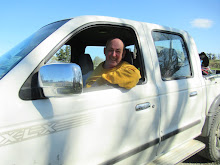
I wended out through the previously plotted streets of Shanklin and headed up the main road north, with my hostess’s detailed itinerary on the seat beside me. First shock: I was going 25! Of course, MILES. Oh heck, those old things. Second shock: this is a MAIN road? Barely room for two vehicles to pass, especially when one is a bus. And then a bus stops in front of me and I have to overtake! Through Godshill with its festival of thatched roofs (did I take the correct fork? yes I did), through Rookley. Not many shops. No petrol stations. Not even all that many houses! And why are the roads getting even narrower? And narrower? Just before the last narrowing I meet someone coming the other way. There are no roadsides here, nowhere to pause and read a map for example, so how do we pass? I edge gingerly into the grass and brambles (THAT’s why the vehicles are scratched) and stop, and let the cheery other feller get on with it. And then, at last, Hermitage Court Farm comes into view. I made it! My first ever drive in a rented car, and I made it!


I’m going to be here for a month, so you’ll hear a good deal about Hermitage Court. But, God bless the world wide web (which only lies sometimes), this is a perfect spot for me. I have a lovely big room, with a grand bathroom, green birdy views from my window, perfect peace and quiet, delightful hosts – Jayne and Chris, plus Jack and Charlie – and a list of country walks which I’m sure even I sha’n’t be able to exhaust. But I shall try.
Tomorrow I shall venture forth in Red Fred and try to find a food shop to stock up on walker’s picnics. I fear Fred might be in for an easy month! The places to walk look so inviting!
But we all know what happened to my intentions, good and otherwise, in Jersey, so let’s wait and see. Me, I can’t wait! But today is R&R, and that lovely looking bathtub is calling me.


Tuesday, May 27, 2008

Off to the races

*

It poured through the night, was grey in the morning, and at eleven o’clock I’d given up on a day at the races. But by twelve the sun was out, and I headed for the bus station. There I met Brian and Linda from Yorkshire (via California) and together we found ourselves the right bus to take us to Les Landes, in the furtherest top left-hand corner of the island. A fifteen minute walk from the bus stop, and there we were, at one of the most picturesque race tracks I’ve ever visited.
It’s a decidedly old-fashioned track. Like, eighteenth century? A large paddock with a one-mile oval of extremely uneven lush green track laid out with bright white and mostly plastic railings and with the inevitable cows in the middle. There is no such thing as a grandstand, nor indeed anywhere to sit and watch the racing at all. Just a manufactured green mound reserved for members only, or 3 pounds extra on top of the mammoth ten you have already had to pay to get in if you want to stand there. But there is the splendid ground-level view out over the cliffs to Guernsey and Sark which is not for members only and which I guess is the ten pounds worth.
The other facilities are equally minimal. One large food and drink marquee (members only, the club is not hospitable to visitors), one small beer tent, an ice-cream van and a hot potato and burger vendor who sold me the best burger I’ve eaten in a decade with Fanta at a pound a can. Plus a brand new office and toilet block under the green mound. Maybe that was the ten pounds worth.
The racing itself was fun. It reminded me of the picnic race-meetings of half a century ago. More enthusiasm than class. Some of the horses, I fear, wouldn’t get near a race-course in New Zealand. And the obviously well-established local hierarchy was mostly respected. Three strong favourites duly obliged, but a 34-1 outsider added a little spice to events, and gave hope to all those kiddies who were wagering fivers and tenners on hopeless outsiders with one of the half-dozen busy bookies on the course.


The five races gave us a bit of everything. We had a hurdle race with a tearaway leader which folded utterly with a mile to go, leaving the favourite to stroll home by a good margin


We had a seven furlong sprint, an eight and a half furlong flat race, and a mile-and-a-quarter one which produced the best finish of the day.


The programme ended with a mile and three quarters race in which the hottest favourite of the day led throughout and left them to it on the hill up to the winning post.


And most of the time the sun shone. So a good day was had by all, even if, after four hours of standing (the grass being too wet from the nightly rain to sit down upon), we older folk were feeling mightily weary.
But Geoff and Carolyn from Bayview being, happily, on the course, I was brought home in automobile comfort to a very long shower, as much cold beer as a man can take and an earlyish bed.

Monday, May 26, 2008

The Sunflower Gate


I thought this picture deserved a little section all to itself.

As I came down the hillside into Gorey, I stopped dead. Who … who, I wondered, would have the courage to perpetrate such a piece of wonderful eccentricity? Someone left over from the aesthetic movement, perhaps? I had to photograph it. And of course, as I did, a gentleman belonging to the property drew up in his car.

People love it or hate it, he said. I assured him that I was one of the lovers. I hoped I might get an invite to see what was inside the gates, but alas, no luck.

So it was just the gate. Which is pretty much, all on its own.

Jersey on foot

Well, I’ve been out and about in and around Jersey these last few days, and just as well, for it now looks as if the weather may turn nasty.

I’ve even been to the theatre. On Thursday night the local Gilbert and Sullivan Society was giving The Sorcerer at the Opera House and, since it must be 35 years since I saw that piece, I decided to give it a go. And I’m glad I did. I enjoyed the show (its always been one of my preferred G&Ses), and the performances were mostly very respectable. As so often in amateur productions there was one singer who easily outshone all the rest but, surprisingly, in this case it was the tenor. A splendid voice, with no break, ringing out and easily filling the auditorium. He also had the burlesque style of the piece down to a ‘T’, looked nicely almost stout and young in his red uniform, and in the days of the Carte company I suspect he would have been swiftly exported to London. Not all was up to his level. The direction was – as so very often chez les amateurs -- fairly awful, and for some reason some of the cast were dressed up semi-1920s style as if they had costumes left over from an old production of The Boyfriend. Also, the leading lady had voice production problems and was quite outshone by the excellent Constance of the evening. But all in all, an enjoyable night out, with the tenor being the cherry on the cake.

Friday, having inherited a Tourist Card with three ‘live’ days on it from my friend Kerstin who was returning to Geneva, I started touristing with a visit to the Jersey Museum. I see this museum has won lots of awards and I’m not surprised: it’s great. Its nicely housed in just one C19th ex-dwelling, and wonderfully laid out with everything explained in a clear and relevant way which I was soon to find is typical of the sites run by Jersey Heritage. There wasn’t a room which wasn’t interesting, and at the end of my visit I felt as if I’d read a 10-volume illustrated history of Jersey and its people.

Saturday the rain came. It was my day for a little sight-seeing with my local friend Ann-Marie and her car, but alas! there was little to see – although Saint-Ouen beach, with the tide out and glooming clouds roiling around was rather impressive. We toured to the Old Smuggler’s Inn at Noirmont – near to Portelet where I holidayed forgettably in 1969 -- for a splendid (but huge!) fish pie and Guinness which required a two-hour snooze to work it off.

Sunday, being the last day of my Card, and also a beautiful sunny one, I thought I had better get on my feet and be a real sight-seer. So I set out after breakfast and pounded out into the country. First stop, the Neolithic site of La Hougue Bie (no, I don’t know what it means), set on one of the island’s highest points and thus also used as a command bunker in the second war. I spent 45 minutes around the Christian chapel and the ancient burial mound, with swift visits to the little museum and the bunker, now set up as a memorial to the slaves used by the Germans to fortify the islands, and I particularly liked an exhibit devoted to the neo-Gothic tower and house which was built over the chapel in the C18th. Alas, some dumb local worthy who thought Gothicism out-of-fashion ripped it down in 1924.


From La Hougue Bie, I headed on through some really delightful countryside to Gorey. Last year when I visited Gorey, Mont Orgeuil castle was closed, today it was open, I had a ticket, and in I bowled. I am very glad I came back – Gorey is delightful, especially in the sun – and most of all I’m glad that I didn’t miss the castle. I wandered up and down battlements and stairs and ramps, through endless rooms filled with interesting little exhibitions and tales, the most striking of which was a colourfully gory wood sculpture (taken, I believe, from a mediaeval drawing) illustrating the how and where to wound a mediaeval fighting man.
The view from the castle, too, stretches out over the bay in a most picturesque way, and Mont Orgeuil really is a fascinating and beautiful place to spend an hour or two.


Ten-pounds’ worth of beer (not cold enough) and sandwich (Mother’s Pride and shop ham) on the waterfront (at the yellow hotel in the picture) and, rejecting the idea of the bus, I turned my feet back towards St Helier. Last year I walked the sea-coast, this year I took an inland road, and some small lanes. Much, much better.

I rolled in at 3pm, put my tired feet up, and debated whether to take the walk out into the harbour to Fort Elizabeth, the 17th century successor to the originally 13th century Mont Orgeuil, before my card ran out. Well, I did. I dragged myself down to the waterfront, finally found the little causeway that leads into the sea (everything here is labelled for the motorist but, alas, not the pedestrian!), and plodded across. Fort Elizabeth is wholly different to Mont Orgeuil. It has none of the older place’s magnificence, also – as an active fort until the 20th century -- it has suffered much more modern batterings and refortifications. The 17th century keep is crowned by a 1940s concrete emplacement. The thing that made the visit worthwhile for me was another outstanding historical exhibition, over which I (who am accustomed to zoom through such things with little care) lingered until, as the tide rose, it was time to walk back across the causeway and limp home.


I had just enough energy left to limp to the Roseville bistro for crab cakes and bubbly.

So, that’s my sightseeing done. Today I may go to the races – its Bank Holiday and race day – if the weather clears… and I think it may be doing so…
We shall see.

Wednesday, May 21, 2008

A mysterious prima donna

*
I’ve just walked in after a morning trek to Mont à l’Abbé Cemetery, St Helier. And I’m a happy man, for there – with a little bit of help from my friends -- I put the finishing touch to the solving of a ‘Victorian Vocalist’ mystery that no-one else has ever succeeded in unravelling.
I should save this story of ‘teckery’, I suppose, for the book. For my forthcoming encyclopaedia of 19th century singers. But it’s such good fun, that I’m going to spill it while it’s hot.
Once upon a time, 1853 to be exact, a new young singer burst upon the London concert scene. Her name, she said, was Giulia Amadei, she was ‘prima donna contralto of La Scala, Milan’ and she was such an impressive performer (and such a very large lady) that the press immediately offered comparisons with the great (and large) Marietta Alboni. Madame Amadei remained a much appreciated feature of the British musical scene for half a dozen seasons but, at the end of the 1850s, she vanished, without comment, never to be heard of again.


Where did she go? But that was only half the puzzle. The other half was ‘where did she come from?’ Who was this lady, whose name was not Giulia nor Amadei, who had never sung at La Scala and, for all that the press slyly confided that she was not Italian but English, actually wasn’t English either! I needed to know, but where do you start looking when simply everything that might be a clue is a fib?
My first-found fact came in the shape of a clipping from a Jersey paper of 1861. There was Madame, two years after her disappearance from London, singing in a concert in St Helier! 1861? I hastened to that year’s census, turned up ‘Jersey’ and there she was, living at 20 David Place, Isabella J Amadei, born Rome, with a 12 year-old son named Thomas Fry, born Sussex.
Well, some of that was true. The Mrs Isabella Fry bit was true. But how to know that? And to know the rest wasn’t?
I hastened to the Free BDM website, and dug around for any Isabella marrying any Mr Fry around the right date. There wasn’t one. Dead end. And so, for many months, my quest stalled, until this week, when I arrived in Jersey. I hastened to the library and scoured the Jersey directories of the 1860s. There she was: ‘Madame Amadei, teacher of singing’ in 1863, 1864 … and then no more. So had she died? Remarried? Left the island? On to the splendid Jersey Archive for an afternoon of digging. Starting with a quick check of the death registers for 1864. I had my answer in five minutes: died, St Helier, Giulia Isabella Smith Fry. And someone had inked in Amadei between the Smith and the Fry.


I was packing up triumphantly to leave when I noticed the cemetery records on a shelf, and – as one does – automatically and idly turned up F for Fry: and there was the record of the purchase by Mr George Fry of a numbered burial plot for his wife!
So that is how and why this morning, after breakfast, I hit the road towards the pretty hilltop cemetery on the other side of town. The Parks Department man who was mowing the grass joined me enthusiastically in my gravestone hunt and, when we got nowhere, picked up his mobile phone and telephoned cemetery HQ in town. Ten minutes later a man from HQ drove up with a map, and together the three of us tracked down plot 201. Alas, the stone thereupon was so weathered that, even using Braille, it was impossible to read more of the inscription than the ‘In’ of ‘In memoriam’. So no date of death for my encyclopaedia.
But I was on a roll. On the way back, I popped into the Jersey Registrar’s Office to see if could lay hands on a death certificate, and within two minutes I held in my hands not a certificate but the original register in which is inscribed the death at 26 Midvale Rd, St Helier, on 13 February 1864 of Mrs Giulia Isabella Smith Amadei Fry, nee Lamonte, wife of Dr George Fry MRCS, at the age of 34.
Well, some of that was true.
Isabella Hume Fry, born Lamont in Edinburgh, Scotland, and married there to her doctor (which was why I couldn’t find her in the English records!) was actually 37. But, hey, what’s one more fib amongst so many?
So, give or take the Smith bit, ‘Madame Giulia Amadei’ is no longer a mystery – thanks to one little concert review in an ancient paper, a bit of intuition, and the grand and friendly Jersey Archive. And whether that actually is her gravestone or not, I’m saying it is, and thus tying up a case history that had so long seemed to be impossible to decipher.
Very satisfying!


Postscriptum: Ten years after I wrote this wee piece, and the full-scale biography of 'Isabelle Amadei' had been published in my Victorian Vocalists, I came upon the portrait now included above, mislabelled (but signed) on ebay. So now we know not only all about poor 'Madame Amadei', but we even know what she looked like!

Tuesday, May 20, 2008

Guernsey Great and Guernsey Ghastly

*

I couldn't resist this. Just to prove my point. If it needs proving.
Standing up in one of the high places of the town, alongside some fine ancient buildings ..
You look one way and see how an architect has made a whole new suburb which fits seamlessly into the fabric of the old town


and then you look the other way, and see where some hack has thrown a tatty glass and (seemingly) 3-ply shack on to one of St Peter's Port's most visible hillsides. Why? Oh, why?

One Day in Guernsey (part 2)

*

The main roads done, the shopping streets, with their uncomfortable cobbles, zoomed through, I started taking some of the little stairways and tiny stone streets which run up the hill at every turn. Delicious stuff. Lovely little hidden-away houses and gardens, trees, rooftops – so many rooftops! I’m very fond of rooftops


Surprise buildings, too. Here’s the St James’s Hall, an impressive hulk which was clearly once a church, and which has been converted to an auditorium et al


I passed another church, also past its churching days, with smashed stained-glass and boardings, which looked as if it were ready for its remake. Here, it seems, nothing worthwhile goes to waste.
But I can see why some of the town’s churches are being reconverted. There seem to be almost as many of them here as in a French town. And, in a way, this town reminded me most happily of some of the southern French villages I once knew. More, strangely, than those of Southern England. But then, I guess les iles anglaises de Normandie were originally French.

The guide book had gone on and on about the town’s culinary delights, so, as I weakened, I thought a little hot lunch might be nice. But I couldn’t find anything I liked. I didn’t want burgers and pizzas, thank you, I didn’t want a large waterfront tourist caff disguised as a resto, I wanted a nice little family restaurant where I could have a bowl of soup and a piece of fresh fish … and the only likely ones I came upon didn’t do lunch. In the end, at 3pm, I decided on a prettily situated, quiet place in La Plaiderie which advertised home-made soup. It was called La Pâtisserie which should have warned me. While other folk had coffee and lavish cream cakes, I put away some fair cauliflower and bacon soup, a würsteln dish, because I thought it might be warming, and two glasses of wine and realised I’d spent the same amount as I’d paid for my sea bass the night before. Lesson learned.

Slightly warmed, I set out on my feet again, accomplished a few more ruelles and escaliers, and passed a shining Boer War memorial which completely outdoes any other monument on the island – the Alberts and Victorias are nowhere in comparison -- and also just about any other war memorial I’ve ever seen. Look at this. It’s surely a candidate for one of those competitions where you have to invent a caption. What do you think he’s saying …


At four o’clock I gave up. My feet were tired and, though the sun had peeped through, that sea breeze was still biting my waist. I thought I’d given St Peter Port a fair going over, and so I headed for the wharf.
I’d chosen to return by the ‘slow’ ferry and I suppose I’d thought it would be an older less speedy version of the morning one. But , no! The Commodore Clipper is a proper ship! Carrying containers … I felt quite at home. Its also very comfortably set up indeed, with a delightful windowed verandah bar from where you can watch the whole trip in a way quite impossible on the Vitesse vessel. And, perhaps because it takes twice the time to make the trip, there were only a small number of people travelling. Delightful!
I sat in the window, with a succession of pints of warming local beer before me, and looked back on St Peter Port glistening in the late afternoon sunshine and looking far prettier than it had before. Then I watched the islands – Herm, Sark, Alderney, I presume -- go by as we rolled along at a comfy 13 knots across the waters and round the scenic coast of Jersey to St Helier. On this trip, too, I chatted to my first Guernsey folk. So friendly. I wonder how I – usually hyper-gregarious – had got through my time on the island without exchanging a word with anyone but a waitress. I guess because – and you’ll have guessed it from the way I’ve hardly talked about anything but architecture – I never really got into the place.


So, in a way, nothing became Guernsey so much as my leaving it. The trip back was the highlight of the day. And I promptly went to the ticket office and booked myself back on the same ship for my exit from Jersey, to Portsmouth, over the night of 31 May.

I think I need to give Guernsey a second and wider go next year. Even if it’s just to have another ride on the Commodore Clipper.