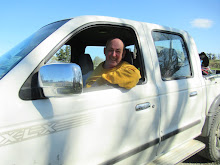
It is five weeks today since cheerful Eliza and her ambulance zoomed a prostrate and pain-filled me off to Christchurch hospital. Thirteen hours, thereafter, spent in an uncomfortable day bed, with leg screaming (my hip was broken), were alleviated only by the comforting of delicious Dan ... finally, I made it to a hospital bed ...
Anyway, I was out of there (4 days), just as soon as my acting ability made it possible ... the blessed Wendy and a lovely bloke from dear old Hokitika (may Zeus bless him and it!) ... somehow bundled me and a nifty little 'gutter frame' into the car and ... HOME. It isn't Paradise, it isn't Paradise (or is it?) but it is HOME ....
The last month has been ups and downs. A lovely little lass named Syvannah comes 3 times a week to watch me take a shower. I guess bathroom floors are perilous. I don't tell her that I hav'n't showered so frequently for years! I have had two visits from Tom, the physio, who is getting me to do the sort of ballet exercises that I used to teach the blokes on the NORTHERN STAR half a century ago. Thank you ACC, he too is encouraging. And pleasingly companionable. But .... while this 'National Health' care is agreeable, if (barring accidents) largely unneccesary ... what I would rather have is a GP overlook me weekly. But GPs, it seems, don't travel in the 21st century. And, er, sorry my little walker-gutter-frame don't fit in my wee car.
SO. 'Tied to my chair in an empty room like Andromeda tied to the rock...' ...
What do I do? Sleep mostly at first. I sleep a very great deal. Watch Masterchef. I KNOW it's fixed, well, let's say HEAVILY EDITED. I enjoy it, and would do more so were the edits not so obvious, and the presenters didn't SHOUT.
Watch the racing (harness). Shame so much of it is after my bedtime, but the bit I like best is daytime. When Entain took over HRNZ, the coverage of the 'trots' improved vastly. Less extraneous rubbish and stuff-on-the-screen. A fair panoply of Presenters with an A team who don't gabble, who pronounce properly ... However, the B and C team ... Can we get that amateurish thing called OUT THE GATE (grammar?) off the TV.
Soon our very own EMILY will be back on track after her six month convalescence ...
But I have wandered. Passive cooking and racing don't satisfy the needs of a boy's day. I need something active. Since this cannot, perforce, be physical, I head for the 19th century and the world of the Victorian Vocalist. There are still many of my singers whose real identity, after 10 or 20 years, remain undiscovered. And the 'undiscovering' of one of them is always an incommensurate thrill ... so ...
Usually when I go in for a session of 'try again, Johnny' midst my list of Mysterious Musicians, I start at letter "A". This week I didn't. A query from an American scholar, about tenor Thomas MILLAR, had me rootling around in the "M"s. And after 'Millar' came 'Mills'. Basso Watkin Mills had long fallen under my pen, but then there was soprano Jessie MILLS of Llanelly, well-liked prima donna ('a nice unpretending voice ... very considerable personal attractions') of several of the smallest opera companies on the British road in the later 1860s and the early 1870s. Her page was desperately empty. I determined, at the umpteenth try, to crack her.
It wasn't easy. She wasn't 'Miss', she wasn't 'Jessie', she wasn't 'Mills', either Miss or Mrs, and there was no opera singing lady that I could find living at Cac Glas, or Talbot Terrace, in Llanelly ...
Well, amazingly I got there. I sha'n't detail (oh! how many details!) how I did, but via one tiny clue, some siblings, husbands, other people's babies etc, I did. 'Jessie' -- born Gloucester 22 February 1846 -- was the youngest of ten (plus) children of a Littleworth cordwainer by the name of William Lane (1799-1872) and his wife Sarah née Mills (m 21 September 1818). Yes, Mills. 'Of the Angel Inn, Monmouth'. Seven of the brood were girls -- Elizabeth, Jane (Mrs James Wilson), Ann (Mrs William Henry Beard Bining), Matilda (Mrs Wilson) Thyrza, Eliza (Mr William Whitaker) and 'Jessie'. Several took an interest in singing. And several husbands, too. Several succeeded.
Jane's husband was vocalist and publican James Wilson of Monmouth. The 'Running Horse' in Barton St Mary, must have been a merry musical pub, because 'Jessie' worked there as a barmaid as a teenager (see C61), James and Jane's daughter, 'Hilda' was to become one of the great oratorio contraltos of the era, and her younger brother, Henry James Lane Wilson (b Gloucester 26 December 1864; d 27 Castellain Road 8 January 1915), a baritone singer who was to make himself a name as an arranger and composer as well as a vocalist and accompanist. Annie (Mrs Bining) sang in concert, and was a soprano member of the Gloucester Festival Choir and its contingent to the Crystal Palace in the 1870s, Eliza sang locally and I imagine also with the Choir ...
But let's try to track Jessie, as I will call her. I spot her in 1865, singing (as Ellen Lane) at the Monmouth Athenaeum, alongside Mrs Bining. How she got from there to being 'prima donna of the Manley Opera Company', a year or so later, I know not. But she did. I need to explain: the Manley Opera Company was a tiny outfit put together by reasonably reputable tenor Henry Manley to feature himself, his family and a microscopic company in every popular opera under the sun. And they did OK in the smallest venues of the country. Especially when Mr Manley hired little Miss Lane from Monmouth to be his 20 year-old opposite number. As 'Jessie Mills'.
Jessie must have been a fast learner or, more probably, Mr Manley's 'versions' were decidedly Cibberised, but I see 'Miss Mills' advertised within months as starred in La Sonnambula, Il Trovatore, L'Elisir d'amore, Le Fille du régiment, Maritana, The Bohemian Girl, Maritana, The Rose of Castile, Fra Diavolo, Faust, The Barber of Seville ... and her reviews were very nice. At Exeter she sang Lucia di Lammermoor. Then it was Norma. And so it went on for some four years.
Then came my first Clue. 28 February 1870, Mrs Whitaker née Lane gave a concert at the Gloucester Corn Exchange ....

and Jessie's identity was revealed ...
Annoyingly, I still couldn't find 'Nellie Lane' thereafter. Until I found this ...

Mrs Ellen Waddle. Brother-in-law as witness.
After giving birth to a daughter, Minnie Helen, Mrs Waddle went back to the opera, touring with some of Britain's tiniest opera troupes with Isidore de Solla, Francis Gaynar, Henri Dunthorne and Adairine Tisdall, H D Glover, Ella Collins, G S Bradshaw, Mr Aubrey, T C Goodwin, Jessie Clayton and other stalwarts until she joined up with Henry Haigh's more consequent troupe. The more consequent Mrs Haigh ('Madame Haigh-Dyer') was the company's leading lady, so Jessie's load was lesser and lighter. In 1878, she tried London, but soon returned to Llanelly and quasi-retirement.
Jessie died at the age of 54 on 1 September 1900. She left a comfortable sum. Hugh outlived her (d 1906) and daughter Minnie survived till 26 March 1946 (a month after my birth!). Unmarried, she left a large sum and her diamonds (and her dog) to her lady friend(s) ...


If that was the end of the direct descent of 'Jessie Mills', it was decidedly not the end, as I have said, of her family's association. Niece Matilda was to reach the upper echelons of Britih music-making:
WILSON, Hilda [WILSON Matilda Ellen] (b Monmouth 7 April 1860; d Bournemouth 10 December 1918).
Hilda Wilson was one of the most prominent contralto singers in the British musical festivals of the last decades of the 19th century.
Her father was a certain James Wilson, originally a shoemaker in Monmouth and, by the time of Hilda’s birth, an innkeeper in the same town. Biographical notes insist that he was also bandmaster of the Monmouth Volunteer band, but his occupation is listed as ‘publican’, so I guess the musical side of his life was an amateur one.
In 1849, he married Jane Lane, a shoemaker’s daughter from Gloucester, and Matilda, their first child, was born in 1860. Shortly after, the couple shifted to Gloucester, where James, who became mine host of the ‘Running Horse’, apparently kept up his musical activities (Brown and Stratton says he held ‘important posts’), and where the three remaining Wilson children were born. All four of James and Jane’s family would make a career in the world of music.
Matilda – quickly become Hilda – started in her early teens, as a member of the choir at St Mildred’s Church, and with the Gloucester Choral Society, where she quickly became a soloist. I spot her at the age of fourteen singing in Birch’s The Merrie Men of Sherwood Forest at Iley, alongside male soloists – Thomas Hunt and Waddams -- from the Cathedral choir, and the following year at Gloucester with Julia Jones and H T Bywater, at Lydney in selections from Elijah with Thomas Brandon, Sarah Ferrabee and George Hunt, and at Northleach with Brandon and local amateurs Miss Ferrabee and Walter Jakeway.
By 1876, Hilda was travelling freely, to Cheltenham and to Wales, with a selection of songs ranging from ‘The Lover and the Bird’ and ‘Love Hailed a Little Maid’ to ‘The Fisherman’s Wife’, frequently with Brandon, Hunt, William Mann Dyson and other members of the Cathedral forces, or the Welsh vocalist Charles Videon Harding. When she sang in Cardiff 22 November 1876, the press spoke of her as ‘a promising contralto of about 16 with an exceedingly good though not powerful, voice. Her vocalisation is clear and truthfully in tune … she has already acquired a very good style and is likely to become a great favourite’.
On 2 January 1877 she sang The Messiah at Cheltenham (‘Miss Hilda Wilson, a very promising contralto, sang ‘O thou that tellest’ and ‘He was despised’ with much feeling, and was warmly and deservedly applauded’), and sang the same work in Sheffield, Denbigh, Hull, Swansea et al in her ‘rich and clear’ voice. Agnes Larkcom, Bywater, Harper Kearton, Charles W Fredericks, Julia Jones and other local artists were occasionally joined by such as Mathilde Enequist (Messiah Swansea) to give young Hilda her first taste of Town Hall company.
In 1878, Hilda was enrolled at the Royal Academy of Music, and after a farewell concert in the Gloucester Corn Exchange (29 October) with her teacher, William Shakespeare (‘received a perfect ovation and had to repeat her exquisite and touching rendering of Sullivan's ‘Lost Chord’’) she headed for London.
Her studies in London did not prevent her from continuing to perform intermittently from Bristol and Ipswich to Glasgow and Swansea, and in 1880 she won her most significant engagement to date in the Three Choirs Musical Festival in her home town of Gloucester. With the indomitable Janet Patey, the admired Grace Damian and another local singer, Mary Wakefield, also billed in the contralto department, Hilda’s share was necessary small. She sang the spare bits in Elijah, took part in the Palestrina Stabat Mater and gave ‘Che faro’ in concert. However, this was the beginning of an epoch. In the next quarter of a century, Hilda Wilson would be a contralto soloist – supporting, starring and then supporting again – in the highly fashionable (and rather hidebound) Three Choirs Festival, churning out annual Messiahs and Elijahs in a thoroughly impeccable English oratorio style, plus introducing the occasional new and/or interesting work.
Other Festivals – mostly not annual – picked up on this ideal and always-praised oratorio singer, and Miss Wilson became the contralto
flagbearer of the Festival scene, in succession to the great Dolby and Patey, in the later years of the century.
In 1881, still a student, Hilda was awarded the Westmoreland Scholarship at the RAM (and she won it again the following year), and visited Worcester for the Festival. She shared the solos of Elijah with Patey (‘as well as has been done by any artist of late years’) and took part in The Messiah, a Jephtha selection and gave Gounod’s popular ‘The Worker’. In 1882, she won the Parepa Rosa medal, and sang in the Hereford Festival, taking part, notably, in the premiere of George Garrett’s cantata The Shunamite alongside Anna Williams, Frank Boyle and Frederic King, and in Molique’s Abraham.
On 22 June 1882 she made what was called her ‘London debut’ at the home of the Bishop of Gloucester and Bristol: someone was conveniently forgetting that in 1880 she had appeared in the Trio Concerts at St George’s Hall and the Twopenny Concerts at Kensington Town Hall.
Furth afield, she was being widely heard in oratorio The Legend of St Cecilia at Gloucester, Elijah at Portmadoc, The Ancient Mariner at Worcester, Judas Maccabaeus at Southampton, Redemption at Edinburgh and Glasgow, The Messiah at York and Oxford, Psyche at Worcester, St Paul at Nottingham and on 23 February 1883 she appeared in Redemption with the reconstituted Sacred Harmonic Society alongside Mary Davies, Henry Guy and Charles Santley.
For the Gloucester Festival of 1883, she shared the contralto music with Patey and apart from the inevitable Elijah and Messiah and the currently ubiquitous Redemption, took part in the first performance of Dr Stainer’s St Mary Magdalene with Anna Williams, Lloyd and King. The following month, she sang at the Leeds Festival, where Grace Damian joined the two contraltos from the Three Choirs, and Hilda’s part included the creation of Cellier’s cantata Gray’s Elegy with the same solo team as Stainer’s work.
Hilda Wilson was now, at 23, established as one of the country’s top contraltos, and she appeared in all the best places. After Leeds, she was heard in Walpurgisnacht with Santley at the Crystal Palace, with the Albert Hall choral society in Redemption, at the Monday pops, at St James’s Hall in The Messiah, with Willing’s choir in King David, in between visiting Huddersfield for Eli or Bradford for Moses in Egypt.
At the Albert Hall she teamed with Emma Albani, Edward Lloyd and Charles Santley in a foursome which would become highly familiar to audiences.
In 1884 she sang in the first London production of Mackenzie’s The Rose of Sharon (7 November) by the Sacred Harmonic Society, and repeated the piece at the Crystal Palace, where she again gave Redemption. During this season she appears to have sung less out of town, and for the only year of her career did not appear at any of the Festivals. The following year, her name was again missing from the Three Choirs Festival lists, in favour of Eliza Enriques, but she joined Mrs Patey for the Chester Festival in July, and fulfilled a busy programme round the country including repeated performances of The Rose of Sharon, appearances with the Bach Choir (first London performances of Parry’s Prometheus Unbound, Friedrich Kiel’s Star of Bethlehem), the premiere of Charles Thorne’s The Last Sigh of the Moor at St James’s Hall, and performances with the Sacred Harmonic Society (The Mount of Olives, The Woman of Samaria) and at the Albert Hall, where she sang with Albani, Lloyd and Santley in the first London performance of Gounod’s follow-up to Redemption, Mors e Vita (14 November 1885).
In 1886, Hilda Wilson returned to the Three Choirs Festival. Janet Patey still topped the bill, but Hilda had plenty to do including two news works: C H Lloyd’s cantata Andromeda in which she sang Cassiopeia to the Andromeda of Anna Williams, the Perseus of Edward Lloyd and the Priest of Watkins Mills; and W S Rockstro’s The Good Shepherd. The following week, she took part in a Wolverhampton Festival and introduced another new work: Frederick Corder’s Walter Scott cantata The Bridal of Triermain with Alwina Valleria, Henry Piercy and Santley. After a return to London to sing The Messiah at the Covent Garden Proms, she moved on to the Leeds Festival, but ill health forced her to relinquish most of her programme.
The feature of her 1887 season was the Norwich Festival (11 October). Mme Patey was not engaged, and Hilda Wilson was billed a principal contralto. The week prior to the Festival Hilda had taken part in a Huddersfield Festival for which Ebenezer Prout had specially written a cantata The Red Cross Knight. Hilda joined Annie Marriot, Lloyd and Mills in the first performance, and Prout dedicated his ‘The Song of Judith’ to her. It got its first showing at the Norwich Festival, alongside another new piece, by Bottesini, The Garden of Olivet. Later in the year, the original cast (Marriott/Wilson/Lloyd/Santley) repeated Bottesini’s piece with the Sacred Harmonic Society.
Hilda’s final creation of the year was at a so-called Walthamstow Festival, staged by local musician J F H Read in order to give his cantata Harold a hearing. She and Mrs Hutchinson took the female roles.
On 19 April 1888 Hilda made an appearance with the Philharmonic Society, introducing ‘The Song of Judith’ to London, in June she sang Elijah at the service marking the completion of the Bristol Cathedral, and in September joined Eliza Enriquez as the contralto soloists for the Hereford Festival (The Woman of Samaria, The Golden Legend, ‘God thou art great’ etc). A North Staffordshire Festival featured Elijah with Henschel as the prophet.
In Oxford she sang with Anna Williams, Kearton and Mills in a Missa Solemnis by J H Meo, before returning to the Golden Legends and Messiahs, as well as a Joshua with Prout’s Hackney Choral Society and the newly produced Parry Judith, and a rare operatic moment in concert, when she took part in the Rigoletto quartet with Antoinette Trebelli, Maybrick and William Foxon.
The early part of 1889 found Hilda singing Brahms’ Gipsy Songs and Schumann’s Spanisches Liederspiel in concert, and taking part in the Her Majesty’s Theatre’s proms season, before taking to the Festival circuit at Lincoln (Elijah, with younger sister Agnes in the cast), at Gloucester – now established thoroughly as prima contralto (Stabat Mater, Elijah, Judith, Messiah, Golden Legend, Prodigal Son) and at Leeds where more adventurous programming found her singing in Schubert’s Mass and in a new work, The Voyage of Maeldune by C V Stanford (Albani/Wilson/Lloyd/Foote) and the ‘church cantata’ Last Night at Bethany of the conductor C. Lee Williams (Albani/Wilson/Lloyd/Brereton).
On 14 December 1889 she sang in the premiere production of Frederic Cowen’s St John’s Eve at the Crystal Palace.
The season of 1890 found Hilda in a new hat. In April she produced a series of concerts at the Steinway Hall, with a programme made up entirely of members of the Wilson family. Hilda was, of course, the big attraction in ‘Sleep gentle lady’ by Emily Phillips, Cowen’s ‘Absence’, Ernest Birch’s ‘I heard the voice’, or ‘The Day of Life’. This last was the work of her young brother, Henry James Lane Wilson (b Gloucester 26 December 1864; d 27 Castellain Road 8 January 1915), a baritone singer who was to make himself a name as an arranger and composer as well as a vocalist and accompanist. Henry took part alongside Agnes [Rose] (b Gloucester 8 October 1864; d 39 Beaumont Street 27 April 1907), a capable soprano who filled a number of provincial engagements during her career, and William [George] Stroud Wilson (b Gloucester 20 May 1868; d Barnes, Surrey, 22 March 1901) some time violinist at the Italian opera and a church singer.
After this venture, Hilda returned to her usual tracks – a Choral Symphony at the Philharmonic Society, the Worcester Festival where she introduced the role of the Queen in Bridge’s The Repentance of Nineveh, the Bristol Festival (Redemption, Messiah, Judith) and the Cheltenham Festival where the Bridge cantata was given a second hearing. The Festivals finished for the year, she was off to Liverpool for Theodora, to Cardiff, Bristol, Belfast, the Albert Hall for another Rose of Sharon and then to Oxford for a concert – with Albani, Lloyd and Henschel – for Antonin Dvorak.
And so it continued. The Bach choir, the Albert Hall (Mors e vita), the Crystal Palace, the annual Good Friday Stabat Mater at St James’s Hall, another little series of family and friends concerts at St Luke’s Schoolrooms, the Crystal Palace Handel Festival, followed by the Hereford Festival, with the introduction of C H Lloyd’s cantata A Song of Judgement, and the Birmingham Festival where she joined Albani, Iver McKay and Watkin Mills in the first performance of Dvorak’s Requiem. Then back to the Albert Hall for the Choral Symphony, The Golden Legend, the Dvorak Requiem, and to the Bach choir.
1892 brought the Lincoln and Peterborough Festival (The Return of Israel, Last Judgement), the Gloucester Festival with Lee Williams’s new Gethsemane, the Cardiff Festival with Dvorak’s Stabat Mater on the programme, and the Leeds Festival (Mozart Requiem, Bach Mass), 1893 included Festivals at Worcester, Cheltenham (Festival Odeby Berthold Tours) and Bristol and a performance of Cowen’s The Water Lily at the Crystal Palace, 1894 the Festivals of Hereford (Bach Christmas Oratorio, the Dvorak Requiem etc), where Agnes was included among the minor principals, and Birmingham where two more new pieces were produced. Hilda took part in the premieres of Hubert Parry’s King Saul, singing the part of the Witch of Endor, and in Georg Henschel’s version of the Stabat Mater.
In 1895 (7 February) King Saul was given it first London showing at the Albert Hall with Hilda in her original role, in April the Bach Choir mounted a Festival with the B Minor Mass featured, and in August the Queens Hall proms started up, with Hilda and brother Henry both featured. Hilda included, alongside her Schubert songs, her brothers ‘Voices of the Angels’. The Gloucester Festival saw the premiere of Cowen’s Transfiguration, but her engagement for the Leeds Festival was compromised by illness.
Hilda was now running a slighter schedule. She was a prolific teacher, and an examiner and judge for the Royal Academy and the Guildhall, but she retained her Festival dates – Worcester and Bristol in 1896, Hereford in 1897 and only sang for her final time at the Three Choirs Festival in 1904.
She introduced Reginald Steggall’s scena Elaine, she sang in the oratorio performances at the Queen’s Hall and at the Crystal Palace … and she appeared as a vocalist with a telepathist’s show.
On 15 November 1897 she and Henry mounted a concert at Steinway Hall (‘O Willow’, ‘The Slighted Swain’, ‘Ombra mai fu’) and they repeated the effort, with a pupil of Agnes’s on 9 December. Henry was doing well as a vocalist and in 1898 he was hired, as well as Hilda, for the Three Choirs Festival where he took a considerable part in the baritone music, including Rosalind Ellicott’s Henry of Navarre. He appeared on other occasions with Hilda, singing ‘In a Persian Garden’ at Steinway Hall, at the Queen’s Hall in Dvorak’s Biblical Songs and Bendl’s Gipsy Songs, and in 1900 (28 September) at Steinway Hall in another concert of their own. His own nine-part song cycle ‘Flora’s Holiday’ was premiered at Steinway Hall in 1902, and was much performed thereafter.
In 1904 Hilda Wilson married a young accountant and would-be writer, Ashley Richard Hart (b Clifton 1868, d Wilwyn, Findon Rd, Worthing 2 April 1945). In 1924 he published Dead yet living: the mysteries of life and death, but I find nothing else, by which I presume he was more accountant than author.
The Wilson family, however, proved ill-fated. William, married in 1898, died at the age of 32 in 1901, Agnes followed in 1907 and Henry in 1915. The eldest of the four siblings, Hilda, survived the longest, reaching the age of 60. William and his wife, Clara Barclay, produced a son, who as Robert James Barclay Wilson (1899-1988) FGSM, a teacher at the Guildhall School of Music, made his name as an organist, conductor, composer and author. He introduced to the radio a piece called Nymphs and Shepherds a pasticcio of Elizabethan tunes (‘by himself’) which was subsequently published as being by Hilda and Henry, associated with F Keel and A[rthur] Somervell. And with the suffix MA following Hilda’s name.
The M. was in some kind of teaching, and appears to have occurred in 1909.
Alongside her career as a vocalist and teacher, Hilda Wilson also penned a number of songs (‘My Roses’, ‘When birds do sing’, ‘The Message from the sea’, ‘From Oversea’, ‘The first and last kiss’, ‘Work still to do’), some under the pseudonym Douglas Hope.
I have a feeling this family may ramify more widely ... if so, I shall add later. But Auntie Jessie seems, till now, to have gotten forgotten. A lassie who sang a major lead in a major opera every night for years ... all round the British Isles ...

No comments:
Post a Comment